It is the “High Temp vs Low Temp” debate.
Choosing the wrong machine can cost you $5,000/year in chemicals or electricity. According to ENERGY STAR®, water heating accounts for a massive portion of a restaurant’s energy bill, so efficiency matters.
This guide breaks down the math, the chemistry, and the pros/cons of each system so you can decide which one fits your operation. The dish machine is the bottleneck of the entire restaurant. If the plates don’t come out clean and dry, the food doesn’t go out. Period.
The fundamental choice you face is: High Temperature (Heat Sanitizing) or Low Temperature (Chemical Sanitizing).
This decision impacts your utility bills, your chemical budget, your glass breakage rate, and even the taste of your wine.
The Science of Sanitization
According to the FDA Food Code, you must sanitize dinnerware to kill pathogens. There are two legal ways to do this.
1. High Temp (The Thermal Kill)
- Mechanism: The machine washes at ~155°F and then blasts the wares with a final rinse of 180°F (82°C) water.
- The Kill Step: At 180°F, bacteria and viruses are denatured instantly on contact.
- Equipment Requirement: Since standard water heaters only output 120-140°F, you typically need a Booster Heater (either built-in or external) to bridge that 40°F gap.
2. Low Temp (The Chemical Kill)
- Mechanism: The machine washes and rinses at 120°F-140°F.
- The Kill Step: A chemical pump injects Chlorine Sanitizer (Bleach) into the final rinse water at a concentration of ~50 PPM (Parts Per Million).
- Equipment Requirement: No booster necessary. Just three buckets of chemicals under the counter (Detergent, Rinse Aid, Sanitizer).
The Economics: Buying vs. Operating Costs
This is where most owners get confused. Low Temp machines are cheaper to buy, but High Temp machines can be cheaper to run.
High Temp Costs (e.g., Hobart AM16)
- Upfront Cost: $$$$ (Machine + Hood + Booster).
- Note: You almost always need a Type II Condensate Hood because of the steam release.
- Energy Cost: High. Heating water to 180°F takes a lot of electricity (often requires 3-Phase power).
- Chemical Cost: Low. You only buy Detergent and Rinse Aid. No Sanitizer.
- Water Usage: Surprisingly efficient. A modern Hobart AM16 uses 0.67 gallons per rack.
The 2026 Revolution: Ventless Heat Recovery
The biggest change in the last decade is Ventless Technology.
- How it works: Instead of venting steam into a hood, the machine captures the steam, condenses it, and uses that heat energy to warm the incoming cold water.
- The Benefit: You save $5,000+ on hood installation and reduce HVAC costs because you aren’t pumping AC out the roof.
- Result: High Temp is now gaining market share even in small cafes.
Low Temp Costs (e.g., Jackson Conserver)
- Upfront Cost: $$ (Machine only).
- Note: Usually “Ventless” (no hood needed), which saves you $5,000+ in installation.
- Energy Cost: Low. No massive heating elements.
- Chemical Cost: HIGH. You are “renting” the chemistry. A busy restaurant can spend $200-$400 per month on sanitizer alone.
- Water Usage: Less efficient. Many low temp units use 1.1 – 1.5 gallons per rack to ensure the chemicals are flushed properly.
The Break-Even Point: If you run < 50 racks a day (Bar, Cafe), Low Temp is cheaper naturally. If you run > 200 racks a day (Full Service), the cost of chemicals for a Low Temp unit will exceed the energy cost of a High Temp unit within 18-24 months.
Operational Reality: The “Flash Dry” Effect
This is the single most important operational difference for your dishwashers.
Scenario: It’s Friday night, 7:30 PM. You are out of dinner plates. The dishwasher runs a rack.
-
High Temp Machine: The rack comes out sizzling hot (180°F). The physics of evaporation take over. You shake the rack once. Within 30 to 60 seconds, the plates are bone dry and ready to be plated.
- Result: Speed. The line keeps moving.
-
Low Temp Machine: The rack comes out warm (120°F). The plastic cups are soaking wet. The ceramic plates are wet.
- Result: You have to let them air dry for 5-10 minutes. Or, your dishwasher grabs a dirty towel and wipes them dry (Health Code Violation!). This kills your turnover speed.
The “Wine Glass” Factor
If you serve expensive wine, do not buy a Low Temp machine.
- Chlorine Residue: Even at 50 PPM, chlorine can leave a faint odor. If you pour a $20 glass of Cabernet into a glass that smells like a swimming pool, you have failed.
- Etching: Over time, harsh chemicals can etch glass, making it cloudy.
- High Temp machines leave zero chemical residue/odor.
(However, for beer glasses, see our “Glass Washer” guide—sometimes Low Temp is actually preferred for cooling reasons).
5-Year Maintenance Outlook
High Temp Maintenance
- The Enemy: Scale (Lime). Heating water to 180°F precipitates minerals out of the water instantly.
- The Fix: You must have a water softener if you have hard water. Otherwise, your heating elements will calcify and die in 6 months.
- Booster Heaters: These are high-fail items. Expect to replace a contactor or element eventually.
Low Temp Maintenance
- The Enemy: Squeezing Tubes. The chemical pumps use “peristaltic” squeezing tubes. They crack and leak.
- The Fix: Replace squeeze tubes every year.
- Injector Clogs: Dried chemicals clog the injection ports. Regular delime cycles are critical.
Top 3 Commercial Dishwasher Recommendations
This is the heartbeat of your kitchen. Don’t go cheap.
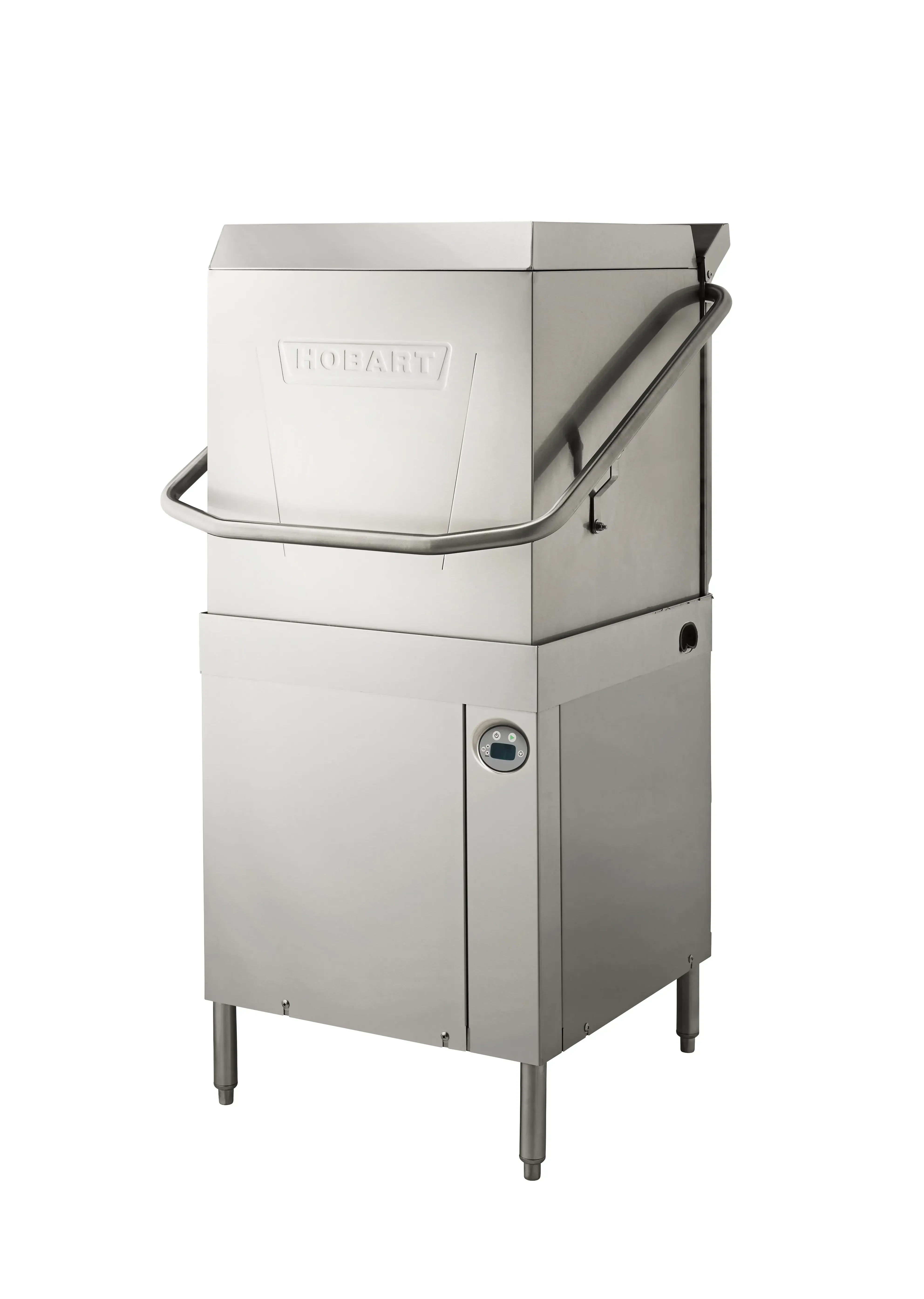
1. Best Overall (The High Temp King): Hobart AM16
- Best For: High Volume Restaurants, Hotels.
- Why It Wins: It’s a tank. The “Sense-A-Temp” booster ensures 180°F rinse every single time, meaning plates flash-dry instantly.
- Efficiency: Uses only 0.67 gallons per rack.
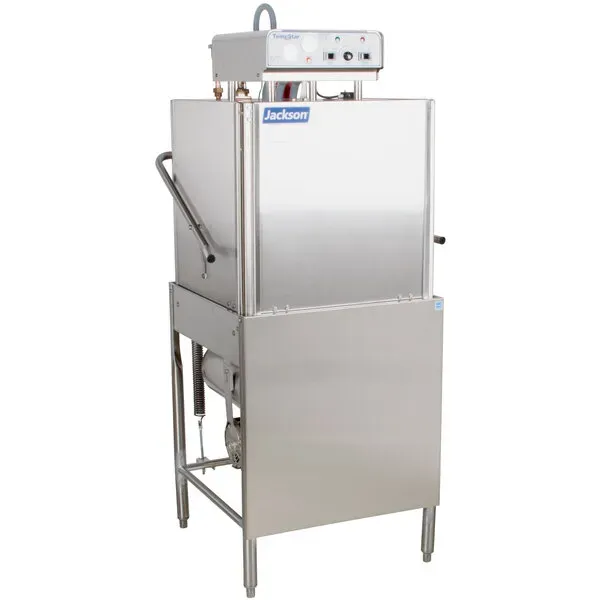
2. Best Value (The High Temp Workhorse): Jackson TempStar
- Best For: Mid-Sized Restaurants.
- Why It Wins: Features a built-in “Sani-Sure” heater at a lower price point than Hobart.
- Speed: Clean 58 racks per hour. Fast recovery time between cycles.
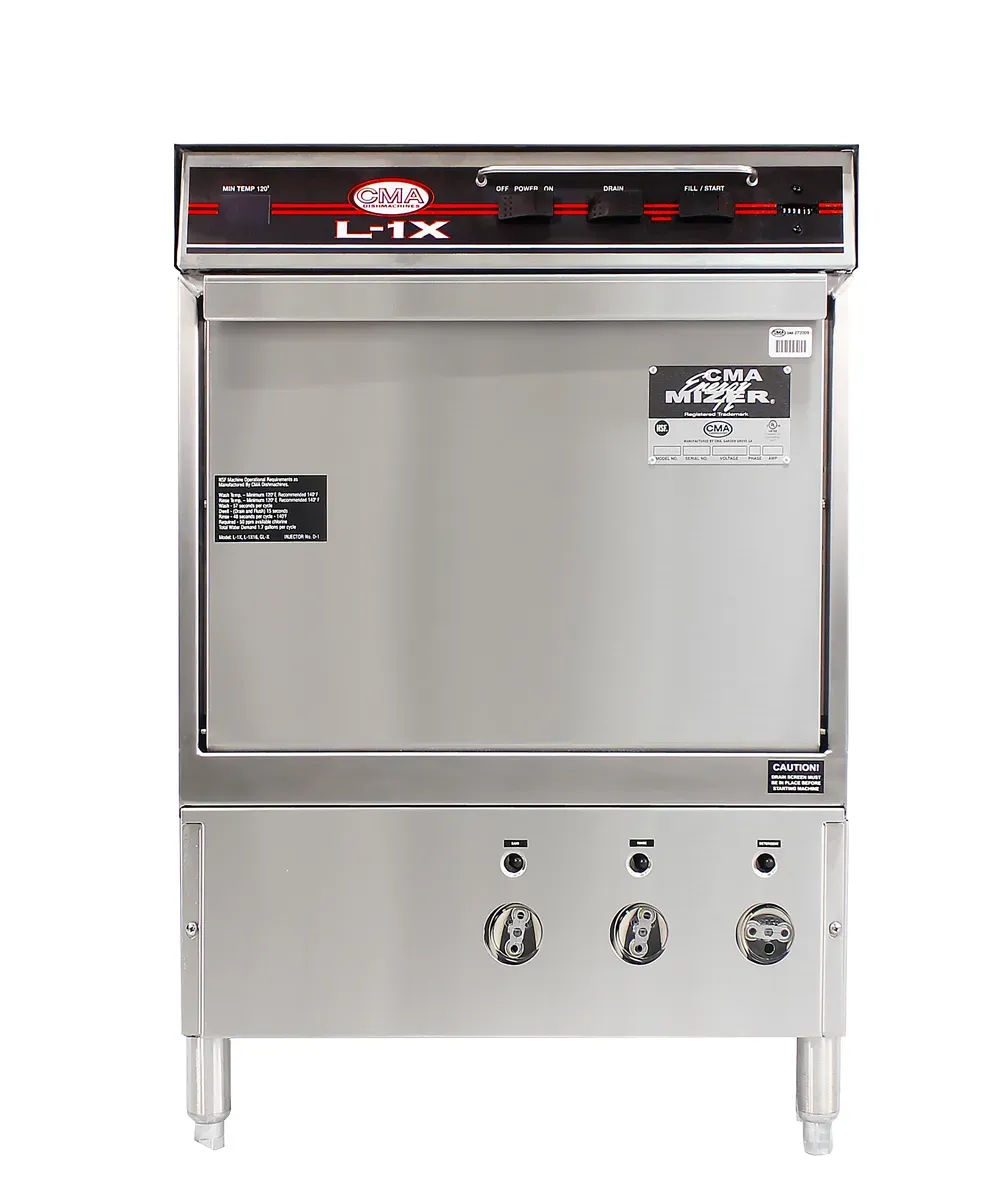
3. Best Low Temp (The Budget Play): CMA Dishmachines L-1X
- Best For: Bars, Coffee Shops (Under 100 racks/day).
- Why It Wins: It is simple, chemical sanitizing, and cheap to repair. It runs on standard 115V power (no expensive electrical upgrades).
- Note: Your chemical bill will be higher, but your upfront cost is lower.
Final Summary
If you need Speed, buy Hobart (High Temp). If you are on a Budget, buy CMA (Low Temp).
Chef Marco’s Rule: If you can afford the hood and the booster, buy the High Temp. The labor savings from the “Flash Dry” effect alone will pay for the electricity difference. Your staff will be faster, your plates will be cleaner, and your wine will taste better.
Frequently Asked Questions (FAQ)
Q: Do I need a hood for a commercial dishwasher? A: It depends. High Temperature machines usually require a Type II Condensate Hood. Low Temperature machines often do not. However, new “Ventless” High Temp machines (like the Hobart AM16-VL) eliminate the need for a hood.
Q: What is the difference between High Temp and Low Temp? A: High Temp uses 180°F water to sanitize. Low Temp uses Chlorine (Bleach) to sanitize. High Temp dries faster (“Flash Dry”), while Low Temp leaves dishes wet longer.
Q: Which is cheaper to run? A: Low Temp is cheaper to buy, but High Temp is often cheaper to run in high-volume kitchens because you save money on chemicals.