The most expensive mistake in a kitchen design is under-sizing the dish pit.
If your line cooks can put out 200 meals an hour, but your dishwasher can only clean 100 meals an hour, your restaurant’s capacity is 100 meals an hour. The dish pit is the governor of your speed.
This guide will move beyond the brochure specs (which are often lies) and help you calculate the real capacity you need for 2026.
The Metric: RPH (Racks Per Hour)
Manufacturer specs are based on “Theoretical RPH.”
- Theory: Start immediately after the door closes. Reload instantly. No human pauses.
- Reality: The dishwasher is chatting with the server. The rack isn’t full. The plates need scrubbing.
Chef Marco’s Rule: Real World Capacity = 70% of Manufacturer Rating.
- If Hobart says “50 Racks/Hour”, plan for 35 Racks/Hour.
Step 1: Calculate Your Load
Do not guess. Do the math. Sit down with your menu and seat count.
Formula variables:
- Seats: Number of seats in the house.
- Turns: How many times you flip a table in peak hour (usually 1.5).
- Items Per Guest: The killer variable.
Typical Items Per Guest:
- Fast Casual (Chipotle style): 2 items (Tray, Basket).
- Casual Dining (Applebee’s style): 5-6 items (Plate, Side plate, fork, knife, glass, napkin equivalent).
- Fine Dining: 10-14 items (Charger, App plate, Main plate, Bread plate, 3 glasses, 5 silverware, dessert plate).
The Calculation Example:
- Scenario: 100-Seat Casual Restaurant.
- 1.5 Turns = 150 Guests/Hour.
- 6 Items/Guest = 900 Dirty Items/Hour.
- Plus Prep: Add 10% for kitchen pans. Total = 990 Items/Hour.
Convert to Racks: A standard 20x20 rack holds roughly:
- 18 Dinner Plates
- 25 Glasses
- 100 Silverware
- Average: We use a conservative 20 items per rack.
Final Requirement: 990 Items ÷ 20 per rack = 49.5 Racks Per Hour.
You need a machine that can handle ~50 REAL racks per hour.
Step 2: Select the Machine Type
Now that we know we need 50 RPH, let’s look at the hardware.
1. Undercounter Dishwashers (The “Home Style”)
- Example: Jackson Conserver XL-E (Low Temp) or Hobart LXe (High Temp).
- Theoretical RPH: 30 racks/hr.
- Real World RPH: ~20 racks/hr.
- Efficiency: High Labor. You have to bend over to load it. You cannot “slide” racks in; you have to lift them.
- Verdict: Good for bars (glassware only) or tiny cafes (< 30 seats). DO NOT put this in a 100-seat restaurant. It will die, and your dishwasher will quit from back pain.
2. Door Type / Single Rack (The Standard)
- Example: Hobart AM16.
- Theoretical RPH: 50-70 racks/hr.
- Real World RPH: 35-50 racks/hr.
- Layout: “Pass-Through” design. Dirty table on left, machine in middle, clean table on right. You slide the rack; no lifting.
- Water Usage: Extremely efficient (~0.67 gallons/rack).
- Verdict: The standard for 90% of restaurants (60-200 seats). If you did the math above and got “50 Racks,” this is your machine.
3. Conveyor Dishwashers (The Beast)
- Example: Hobart C44.
- Structure: A tunnel. A moving belt pulls racks through wash/rinse zones.
- Theoretical RPH: 200+ racks/hr.
- Real World RPH: 150+ racks/hr.
- Efficiency: Highly automated. One person loads, one person catches.
- Verdict: Hotels, Hospitals, Universities, or Casinos (300+ seats). Overkill for most independent restaurants.
Technical Deep Dive: Hobart AM16 (Door Type)
Since the Door Type is the industry workhorse, let’s look at the 2026 specs of the market leader, the Hobart AM16.
- Capacity: Rated for 58 racks/hr (Hot Water sanitizing).
- Cycle Times:
- Cycle 1 (Light): 1 Minute.
- Cycle 2 (Standard): 2 Minutes. Most common.
- Cycle 4 (Heavy/Pots): 4 Minutes.
- Water Efficiency: 0.67 Gallons per rack. This is incredibly low compared to older models (which used 1.5+). This saves you thousands in water heating costs per year.
- Connectivity: SmartConnect™. Yes, the dishwasher has Wi-Fi.
- Why? It tracks “Sanitization Compliance.” If the water didn’t hit 180°F, it logs an error. Great for HACCP logs and Health Inspections. It also tells you if you are using too much chemical/water.
Workflow Design: Soil to Clean
Buying the machine is only 50% of the battle. The tables matter more.
- Soil Table (Dirty Side): Needs to be large enough to stack incoming bus tubs. Ideally 6-8 feet long. Must have a sink with a Pre-Rinse Spray Arm (high pressure) to blast off food.
- Rule: “Scraping” is the most important step. If you put meatloaf in the dishwasher, the water gets gross instantly.
- Clean Table (Landing Zone): Needs to be long enough to hold 3-4 racks. You need space for racks to “Flash Dry” (steam off) before you unstack them.
Common Sizing Pitfalls
1. The “Glassware” Forgotten Factor You calculated plates, but did you calculate wine glasses? In a fine dining spot, a table of 4 might use 12 wine glasses. Wine glasses take up massive rack space (wider footprint) and often need to be washed separately (gentle cycle).
- Fix: If you have a heavy bar program, get a dedicated Glass Washer for the bar. Take that load off the main dish pit.
2. The “Peak Burst” Your average might be 100 guests/hr, but on Mother’s Day, it’s 200/hr for a 2-hour burst.
- Fix: Size for the Burst, not the Average. It’s better to have a machine idle for 10 mins than to have a 45-minute wait for clean forks during a rush.
Top 3 Commercial Water Heater Recommendations
If you run out of hot water, you close.
1. Best Overall (The Tankless King): Rinnai CU 199in
- Best For: All Restaurants.
- Why It Wins: It never runs out of hot water. You can “Cascade” them (link 3 units together) for unlimited flow.
- Redundancy: If one unit dies, the others keep running.
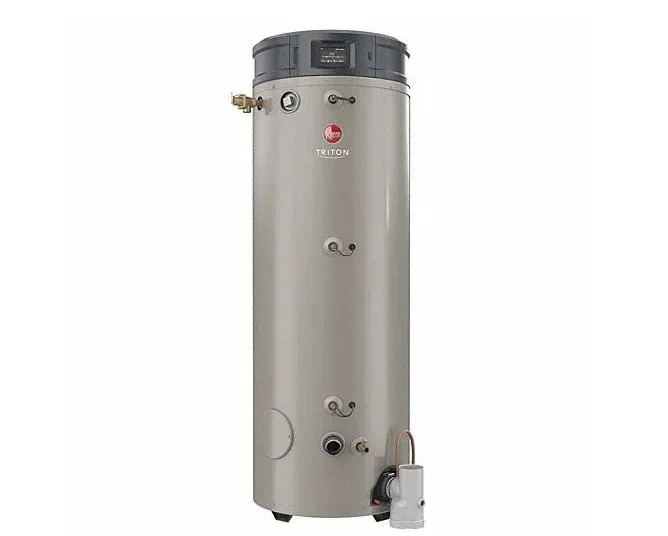
2. Best Tank (The Standard): Rheem Triton Series
- Best For: Locations with low gas pressure or hard water.
- Why It Wins: The “Triton” has built-in smart monitoring that tells you before it fails.
- Efficiency: 98% thermal efficiency.
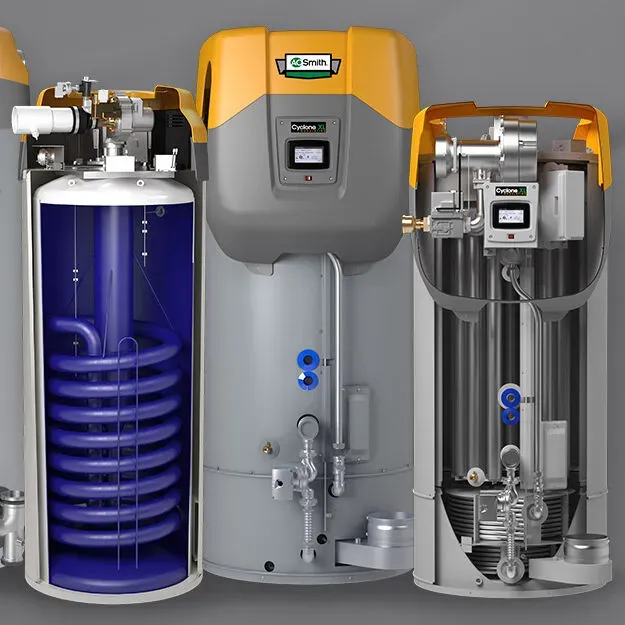
3. Best Value (The Workhorse): A.O. Smith Cyclone
- Best For: High Volume, Traditional Setup.
- Why It Wins: It is the most common commercial heater in the USA. Parts are in every plumber’s van.
- Durability: Glass-lined tank resists corrosion.
Frequently Asked Questions (FAQ)
Q: How many racks per hour does a 100-seat restaurant need? A: A typical 100-seat casual restaurant generates ~50 racks of dishes per hour during peak times.
Q: What is the difference between Theoretical and Real World Racks Per Hour? A: Manufacturer specs are “Theoretical” (perfect conditions). “Real World” capacity is typically 70% of that number due to loading/unloading time.
Q: Does a commercial dishwasher need a water heater? A: Yes. High Temp machines need a booster heater to reach 180°F. Low Temp machines need a reliable commercial water heater delivering 120°F-140°F water.
Final Summary
If you want Unlimited Hot Water, buy Rinnai. If you want Smart Monitoring, buy Rheem.
Don’t save money on the dishwasher. A slow dishwasher slows down the busser, which slows down the table turn, which prevents you from seating the waiting list. It literally costs you sales.