If the range is the engine of the kitchen, the Prep Table is the chassis. It is where 80% of the menu is assembled.
Yet, I see new owners buy the wrong one constantly. They buy a “Sandwich Unit” for a Pizzeria (disaster) or a “Pizza Table” for a Subway-style line (overkill).
Compliance is also key. The NSF/ANSI Standard 7 dictates that these units must keep food below 41°F even with the lid open, a challenge that separates professional gear from the cheap stuff.
In 2026, the technology has split into two camps: Forced Air (True/Hoshizaki) and Cold Wall (Continental/Delfield). Choosing the wrong one can cost you thousands in dried-out cheese and failed health inspections.
The Two Main Species
1. The Sandwich / Salad Unit (The “TSSU”)
- The Design: The food pans sit flush or slightly recessed into the top of the cabinet.
- The Cutting Board: Typically 10 to 12 inches deep. Just enough for a sub roll or a salad bowl.
- The Airflow: The cold air from the bottom cabinet is forced up and around the pans.
- Use Case: Sub shops, Salad stations, Garnish stations.
- The “Mega Top”: A variant of the Sandwich unit. It fits 50% more pans (3 rows instead of 2).
- Trade-off: You lose cutting board depth. You cannot roll a pizza on a Mega Top board.
2. The Pizza Prep Table (The “TPP” or “Raised Rail”)
- The Design: The ingredient rail is Raised above the table surface, often angled toward the cook.
- The Cutting Board: Massive. 19 inches deep (or more). You need this real estate to slap out a 16” dough skin.
- The Cooling: Often uses “Cold Wall” or specialized “Liquid Wrapped” rails to keep toppings cold without blowing air on them.
- Use Case: Pizza (obviously), Burrito assembly (Chipotle style), high-volume assembly lines.
Technical Deep Dive: Cooling Technology
This is the most argued topic in refrigeration sales.
Team Forced Air (True, Hoshizaki)
- How it works: Fans blow cold cabinet air up and around the pans.
- Pros: Fast recovery. If you leave the lid open for 2 hours, the cold air keeps pushing temperature down.
- Cons: The Drying Effect. If you slice provolone cheese and leave it in a forced-air unit for 4 hours, the edges curl up and look like plastic. The moving air dehydrates the food.
- The 2026 Fix: Modern units (like Hoshizaki) use “low-velocity” ducted air to minimize drying.
Team Cold Wall / Conductive (Continental, Delfield)
- How it works: Copper pipes carrying refrigerant are wrapped directly around the metal pan rail. The metal gets cold, which makes the pan cold, which makes the food cold. No fans blowing on the food.
- Pros: Zero Drying. Your cheese stays moist. Your meats don’t oxidize as fast.
- Cons: The “Freeze” Risk. If the thermostat is set too low (e.g., to pass an inspection), the walls get so cold they can freeze the lettuce in the metal pans.
- Maintenance: Easier to clean because there are no air vents in the rail to drop crumbs into.
Decision Matrix
The “HACCP” Nightmare: Flexible Cutting Boards
Here is a tip that will save your health inspection score.
The Problem: Standard white poly cutting boards warp. When they warp, they lift off the table.
- Warmth: The cold air escapes.
- Filth: Slime molds grow in the gap between the board and the unit.
The Solution: Replace the standard board with a Richlite (Composite) Board.
- They don’t warp.
- They are dishwasher safe.
- They are darker, hiding stains better.
- Yes, they cost $200, buy it anyway.
Maintenance: The Coil of Death
Prep tables live in the worst environment: The active cook line.
- Flour Dust: From pizza skin stretching.
- Grease: From the fryer next door.
The “Coil of Death” Scenario:
- Flour mixes with airborne grease.
- The condenser fan sucks this “batter” into the fins of the prep table.
- The batter hardens into cement.
- Airflow stops. The compressor overheats.
- Result: A $1,200 repair bill and 50lbs of spoiled pepperoni.
Protocol: You must brush the coil Monthly. If you are a pizzeria, Weekly. True’s “Reverse Fan Motor” helps, but it does not replace a brush.
Top 3 Commercial Prep Table Recommendations
Don’t let your cheese sweat.
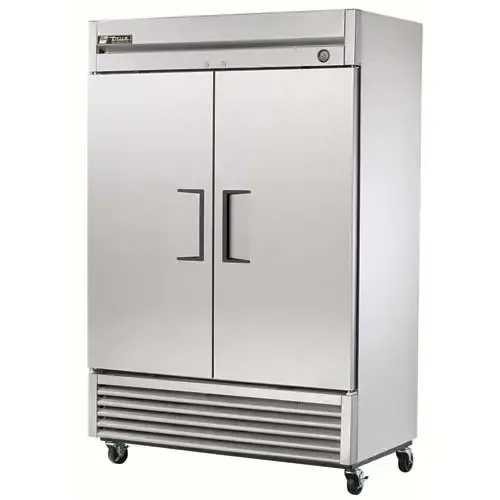
1. Best Overall (The Standard): True Manufacturing TSSU Series
- Best For: Sandwich Shops, Cafes.
- Why It Wins: The most reliable forced-air system in the game. The patented “Reverse Condensing Fan” helps keep the coils clean (but you still need to brush them).
- Availability: You can get a replacement fan motor in any city in 2 hours.
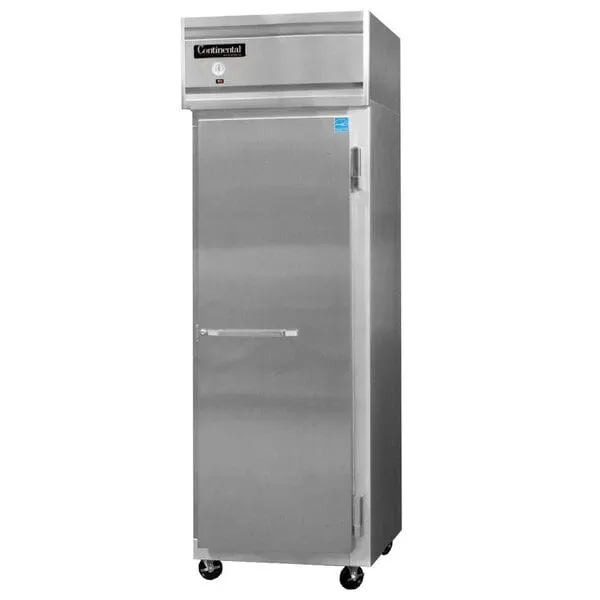
2. Best for Pizza (The Dough King): Continental Refrigerator
- Best For: High-Volume Pizzerias.
- Why It Wins: Uses “Cold Wall” technology alongside forced air. It keeps toppings cold without drying them out (no “plastic cheese”).
- Capacity: Their raised rail holds 1/3 size pans comfortably, which is perfect for heavy topping usage.
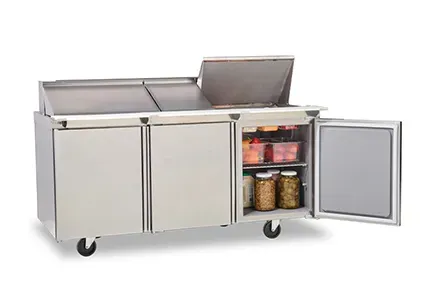
3. Best Flexibility (The Space Saver): Delfield 4400 Series
- Best For: Tight Kitchens, Line Cook Stations.
- Why It Wins: 100% Front-Breathing. You can shove it right against the back wall or between two ranges, and it won’t overheat.
- Durability: Features a super tough ABS interior liner that won’t ding like cheap aluminum.
Frequently Asked Questions (FAQ)
Q: Why is the cheese in my prep table drying out? A: You likely have a Forced Air unit (like True). The fans blow dry cold air over the food. To fix this, cover pans with plastic or switch to a Cold Wall (liquid wrapped) unit like Continental.
Q: How often should I clean the condenser coil on my pizza prep table? A: Weekly if you use a lot of flour. Monthly otherwise. Flour dust mixes with grease to form a “cement” that blocks airflow and kills compressors.
Q: Why does my cutting board warp? A: Standard white poly boards warp in the dishwasher. Upgrade to a Richlite (Composite) board. It costs more ($200) but never warps and is dishwasher safe.
Final Summary
If you sell Sandwiches, buy True. If you sell Pizza, buy Continental. If you have No Space, buy Delfield.
The Golden Rule: Never, ever turn your prep table off at night “to save energy.” The recovery time to get back to 36°F takes hours, and you will poison your first hungover customer of the day.