In the culinary dictionary, “Robot Coupe” is not just a brand name; it’s a verb. “Go Robot Coupe those onions.” “Did you Robot Coupe the breadcrumbs?”
Like Kleenex or Xerox, this French company has achieved total dominance of the commercial food processor market. They invented the food processor in Burgundy, France, more than 50 years ago. Today, in 2026, 95% of professional kitchens rely on one.
But which one? The legendary R2N or the high-volume R301 Ultra? And with 50+ discs available, which ones do you actually need?
The Core Technology: Why They Don’t Die
You will often see a Robot Coupe from 1998 still running in a prep kitchen. How?
1. Induction Motors
Consumer food processors use “Universal Motors” with brushes that wear out. Robot Coupe uses Industrial Induction Motors.
- No Brushes: No friction wear parts in the motor itself.
- Direct Drive: No belts to snap. The motor shaft connects directly to the blade.
- Silence: They hum; they don’t scream.
2. The Bowl Materials
- Polycarbonate (Clear/Gray): Used on standard R2N. It’s tough. You can drop it. However, over 5 years of hot dishwasher cycles, it can get cloudy or brittle (micro-cracks).
- Stainless Steel: Used on “Ultra” models. Indestructible. It is better for temperature control (keep it in the freezer before making pesto to keep the green color bright).
Model Comparison: R2N vs. R301 Ultra
These two machines perform the same function (Bowl Processing + Veggie Prep), but they are built for different scales.
| Spec | Robot Coupe R2N (The Classic) | Robot Coupe R301 Ultra (The Beast) |
|---|---|---|
| Motor | 1 HP (1725 RPM) | 1.5 HP (1725 RPM) |
| Bowl Size | 3 Quart | 3.7 Quart (Stainless) |
| Chute | Kidney Shape (Small) | Kidney (Large) + Cylindrical |
| Output | 20-30 lbs/hr | 50+ lbs/hr |
| Ejection | Side Ejection | Side Ejection |
| Best For | Sauces, Purees, Small Batches | Bulk Veggie Prep, Catering |
The R2N: The Line Cook’s Best Friend
The R2N creates the “standard” of the industry.
- Capacity: 3 Quarts. Perfect for making 2 quarts of aioli, grinding nuts, or a batch of chimichurri.
- Veggie Prep: It has the continuous feed attachment.
- Limitation: The “Kidney” opening on the vegetable lid is slightly smaller. You have to cut huge potatoes in half to fit them in.
- Verdict: If you are a bistro, cafe, or small restaurant ($1-2M revenue), this is your machine.
The R301 Ultra: The Prep Monster
The “Ultra” signifies the Stainless Steel Bowl.
- Power: 1.5 HP. That extra half-horsepower means you can grate hard parmesan cheese without the motor bogging down.
- Ergonomics: The vegetable prep attachment is larger. The kidney hopper fits larger produce, meaning less knife work before the machine work.
- Dicing Strategy: While the R301 can slice and grate, if you want Macedoine (Dicing) capabilities, you usually need to step up to the CL50 (dedicated veg prep) or specific “Dice” versions of the R301. Check compatibility carefully.
Disc Selection Guide: The “Essential 4”
The machine comes with a standard blade (S-Blade) and usually two discs (R209 2mm grating, R211 4mm slicing). But to be a pro, you need the Essentials Kit.
1. Slicing Discs (The “E” Series)
- 4mm Slicing (R211): The standard. Cucumbers, tomatoes, mushrooms for pizza.
- 2mm Slicing (R210): The “Paper Thin”. Cabbage for slaw, onions for burgers that melt in your mouth, fennel shavings.
- 6mm Slicing: Chunky peppers for salads.
2. Grating Discs (The “J” Series)
- 2mm Grating (R209): Carrots (fine), hard cheeses.
- 6mm Grating: Mozzarella for pizza. Warning: Freeze mozzarella for 15 mins before grating or it will turn to mush.
3. Julienne Discs
- 2x2mm: Matchstick carrots.
- 6x6mm: Shoestring french fries.
4. The S-Blade (Smooth vs. Serrated)
- Smooth Edge (Standard): For coarse chopping, emulsifying, and meats. Can be sharpened.
- Serrated Edge (Optional): BUY THIS for herbs (parsley/cilantro). The teeth grab the leaves instead of just spinning them around. Also essential for grinding nuts or kneading dough.
- Fine Serrated: For pureeing. Smoothest texture.
Maintenance & Troubleshooting
Sharpening the Blade
Yes, you can and should sharpen the smooth S-Blade.
- The Symptom: Your pesto is brown (bruised basil) instead of bright green (cut basil). Your onions are turning to mush juice instead of chopped pieces.
- The Fix: Use a sharpening stone. Hold the bevel angle correct. It takes 2 minutes.
The Safety Pin Issue
Both models use a magnetic safety system and a mechanical push-pin.
- The Problem: The machine won’t start.
- Cause: The plastic lid push-pin is broken (usually because a cook slammed the handle down too hard).
- Prevention: Teach staff to close the lid gently.
- Spare Parts: Keep a spare “Pusher” or Lid assembly in the office. It will break eventually.
The 2026 Standard: Tamper-Proof Interlocks
Health inspectors now check for “Bypassed Safeties.”
- The Cheat: Cooks used to put a magnet on the sensor to run the machine without the lid.
- The Fix: Modern Robot Coupes use encoded magnetic sensors. You cannot bypass them with a fridge magnet. Never bypass safeties. It is an instant OSHA fine.
Cleaning Protocol
- Motor Base: NEVER SUBMERGE. Wipe with damp cloth.
- Lid Seal: Check the rubber gasket on the lid. If it’s cracked, liquid will leak down the side during emulsification. Replace the seal yearly.
- Shaft Seal: Put a drop of veggie oil on the seal of the bowl periodically to keep it supple.
ROI: Manual vs. Machine
Let’s calculate the cost of Coleslaw.
- Goal: 50lbs of Cabbage shredded.
- Manual (Chef Knife): 1 Hour of skilled labor ($25/hr). Result is inconsistent.
- Robot Coupe (2mm Slicing Disc): 3 Minutes of labor. Result is perfect consistency.
- Savings: 57 minutes ($23) per batch.
- If you make slaw 3 times a week, the machine saves you $3,500/year in labor. It pays for itself in 4 months.
Top Commercial Food Processor Recommendations
If you buy a residential Cuisinart, you will be buying another one next month.
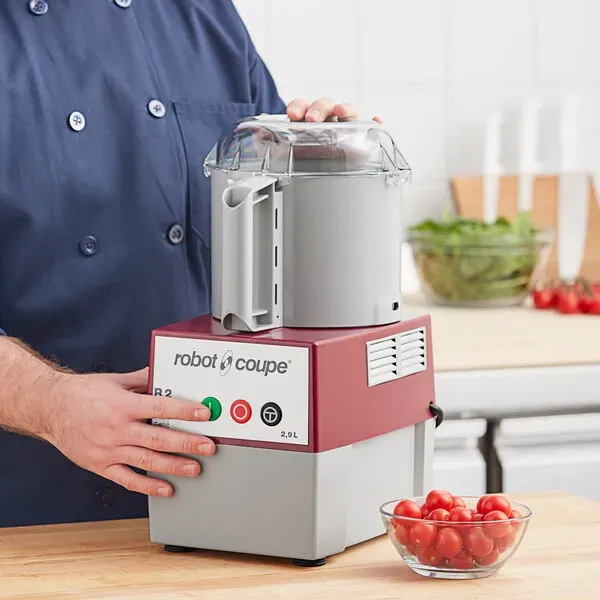
1. Best Overall (The Industry Standard): Robot Coupe R2N
- Best For: 90% of Restaurants (Cafes, Bistros).
- Why It Wins: It is the “Toyota Camry” of kitchens. It works every day, parts are easy to find, and it holds its value.
- Durability: The induction motor has no brushes to wear out.
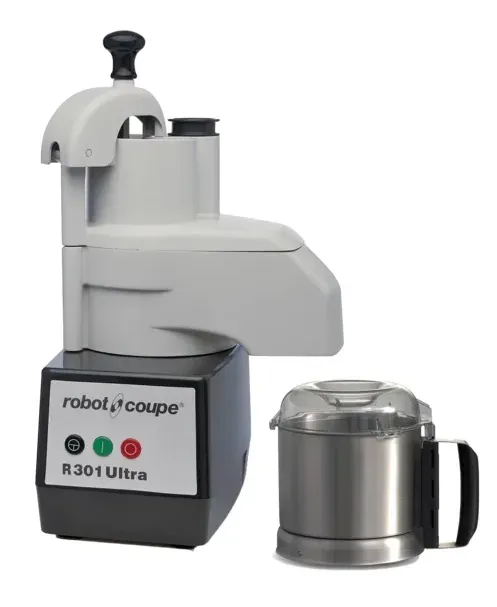
2. Best Heavy Duty (The Upgrade): Robot Coupe R301 Ultra
- Best For: High Volume, Catering, Pizza Prep.
- Why It Wins: The stainless steel bowl is indestructible and better for temperature safety. The larger “kidney” opening allows for bulk processing of larger vegetables.
- Power: 1.5 HP motor handles hard cheeses (parmesan) better than the R2N.
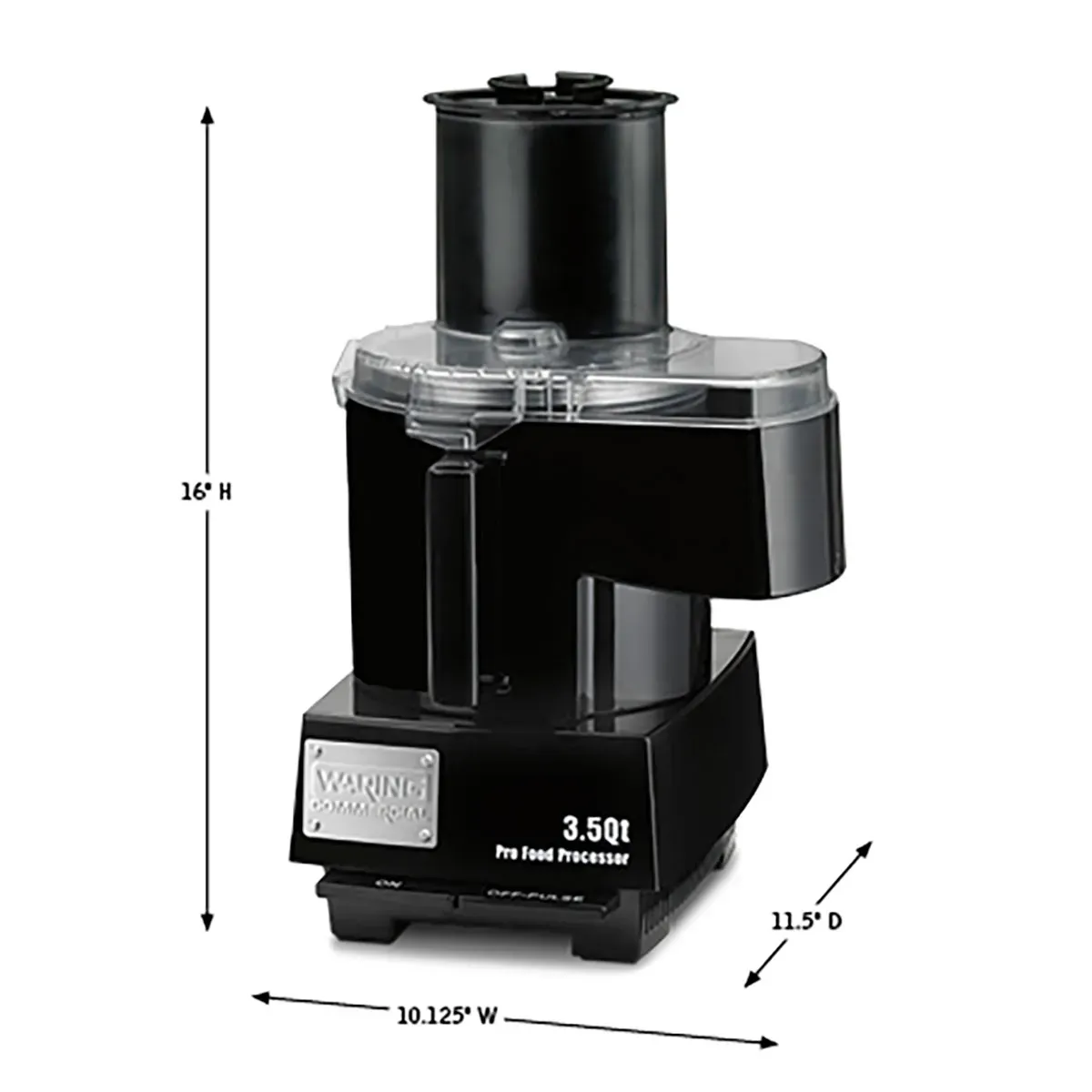
3. Best Value (The Contender): Waring Commercial WFP14SC
- Best For: Tight budgets, Bar prep.
- Why It Wins: Features a “LiquiLock” seal system that allows you to process soups and sauces without leaking (a common Robot Coupe complaint).
- Power: A strong 1 HP motor at a lower price point than the R2N.
Frequently Asked Questions (FAQ)
Q: What is the difference between Robot Coupe R2N and R301? A: The R2N has a 3-quart plastic bowl and 1 HP motor (best for general prep). The R301 Ultra has a 3.7-quart Stainless Steel bowl and 1.5 HP motor (best for heavy cheese grating and high volume).
Q: Can I put the Robot Coupe bowl in the dishwasher? A: Yes, but the clear polycarbonate bowls (R2N) may eventually cloud or crack (micro-fissures) from high heat. The Stainless Steel bowls (R301 Ultra) are indestructible in the dishwasher.
Q: Which discs do I actually need? A: The “Essential 4” are: 4mm Slicing (Cucumbers), 2mm Slicing (Onions/Slaw), 2mm Grating (Carrots/Cheese), and the S-Blade (Purees).
Final Summary
If you want Reliability, buy Robot Coupe. If you blend a lot of Liquids, buy Waring.
Just remember: A food processor is only as good as its blades. Don’t buy a $1,500 machine and use a dull blade. Buy the serrated blade for herbs. Buy the 2mm slicer for onions. Let the machine do the work.