By Chef Marco
A Commercial Refrigerator is not a cold box. It is a heat removal machine. It fights a war 24 hours a day against the 100°F ambient temperature of your kitchen.
If your oven breaks, you can legally cook on a camp stove. If your refrigerator breaks, you are closed. The NSF International standards mandate that perishable food must be kept below 41°F to prevent bacterial growth. I have seen owners throw away $5,000 of inventory in a single afternoon because a $50 compressor relay failed.
In this guide, I will teach you the physics of cold, why you should never buy a residential fridge for a restaurant, and the critical difference between Top Mount and Bottom Mount compressors.
Deep Dive: Top Mount vs. Bottom Mount Compressors
This is the #1 decision you have to make. One is not “better” than the other; they are designed for different environments.
1. Top Mount (The “Baker’s Choice”)
The compressor and condenser fan are located on the Roof of the unit.
- Physics: Heat rises. Sucking air from the ceiling means sucking warmer air, which is less efficient.
- The Advantage: Dust & Flour don’t fly high. Flour settles on the floor. If you run a bakery or a pizzeria (heavy flour dust), a top-mount unit stays cleaner.
- Storage: You get the full bottom shelf for storage.
- Ergonomics: You don’t have to bend down to clean the coils.
2. Bottom Mount (The “Line Cook’s Choice”)
The compressor is on the Floor.
- Physics: The air near the floor is cooler (up to 15°F cooler than the ceiling). The compressor runs more efficiently.
- The Advantage: Grease rises. If you are near a fryer or griddle, grease vapor goes up. A bottom-mount unit avoids the grease cloud.
- Ergonomics: The compressor raises the bottom shelf, so you don’t have to stoop to pick up produce.
- The Maintenance: You literally have to get on your knees to clean the coils.
Chef’s Verdict:
- Bakery / Pizza: Buy Top Mount (Avoids flour clogging).
- Hot Line / Grill: Buy Bottom Mount (Avoids grease clogging).
The “Residential Filter” Warning
I see this all the time. A new owner buys a shiny Samsung fridge from Home Depot for $1,500. It will be dead in 3 months.
Why?
- Recovery Time: A home fridge is designed to be opened 10 times a day. A commercial fridge is opened 100 times an hour. A home fridge compressor simply burns out trying to keep up.
- Health Code: Commercial units are NSF-7 certified to maintain <41°F even in high ambient heat. Residential units are not. An inspector can tag it and make you remove it.
- Warranty: If you call Samsung for warranty service and they see it’s in a restaurant, they void the warranty instantly.
Sizing Guide: How Much Fridge Do I Need?
Don’t guess. Use the “Cubic Foot” math.
The Rule of Thumb: You need 1.5 cubic feet of storage for every meal served during your peak turn.
- Example: You serve 100 dinners on Friday night.
- Math: 100 meals * 1.5 cu/ft = 150 cubic feet of cold storage.
- Translation: A standard “2-Door Reach-In” is roughly 48 cubic feet.
- You need Three 2-Door fridges (or one Walk-In).
Door Types: Solid vs. Glass
- Solid Door: Better insulation. Cheaper. Use for Back-of-Horse (BOH) storage.
- Glass Door: Worse insulation (glass R-value is terrible). Use for Front-of-House (FOH) or rapid-inventory stations so cooks can see inside without opening the door.
The “Chef’s ROI” Calculator: Energy Star
Electricity is the silent killer of restaurant profits. Refrigeration accounts for 40% of your electric bill.
Scenario: Buying a 2-Door Freezer.
| Metric | Budget Brand (No Energy Star) | True (Energy Star Rated) |
|---|---|---|
| Upfront Cost | $2,500 | $4,500 |
| Daily Energy Cost | $4.00 | $1.50 |
| Annual Energy Cost | $1,460 | $547 |
| Your State Rebate | $0 | $400 Check (Avg) |
| 3-Year Total Cost | $6,880 | $6,590 |
Verdict: The “Expensive” fridge is actually cheaper after 3 years. And it will last 15 years, while the budget brand lasts 5.
Top 3 Commercial Reach-In Recommendations
Don’t buy a residential fridge. It won’t last 90 days.
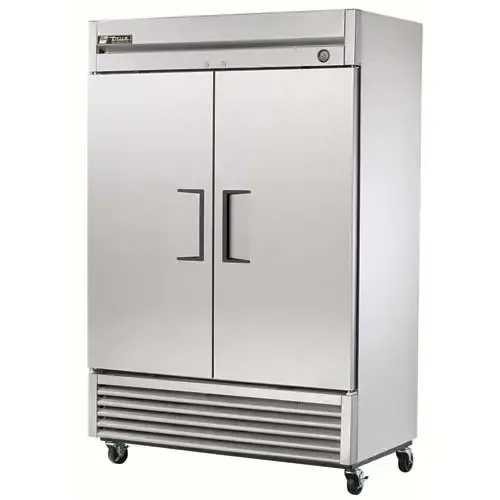
1. Best Overall (The Gold Standard): True Manufacturing T-Series
- Best For: Everyone.
- Why It Wins: The “Honda Civic” of kitchens. Parts are available in every city in America. The temperature recovery is legendary.
- Durability: Made in the USA. Holds resale value better than any other brand.
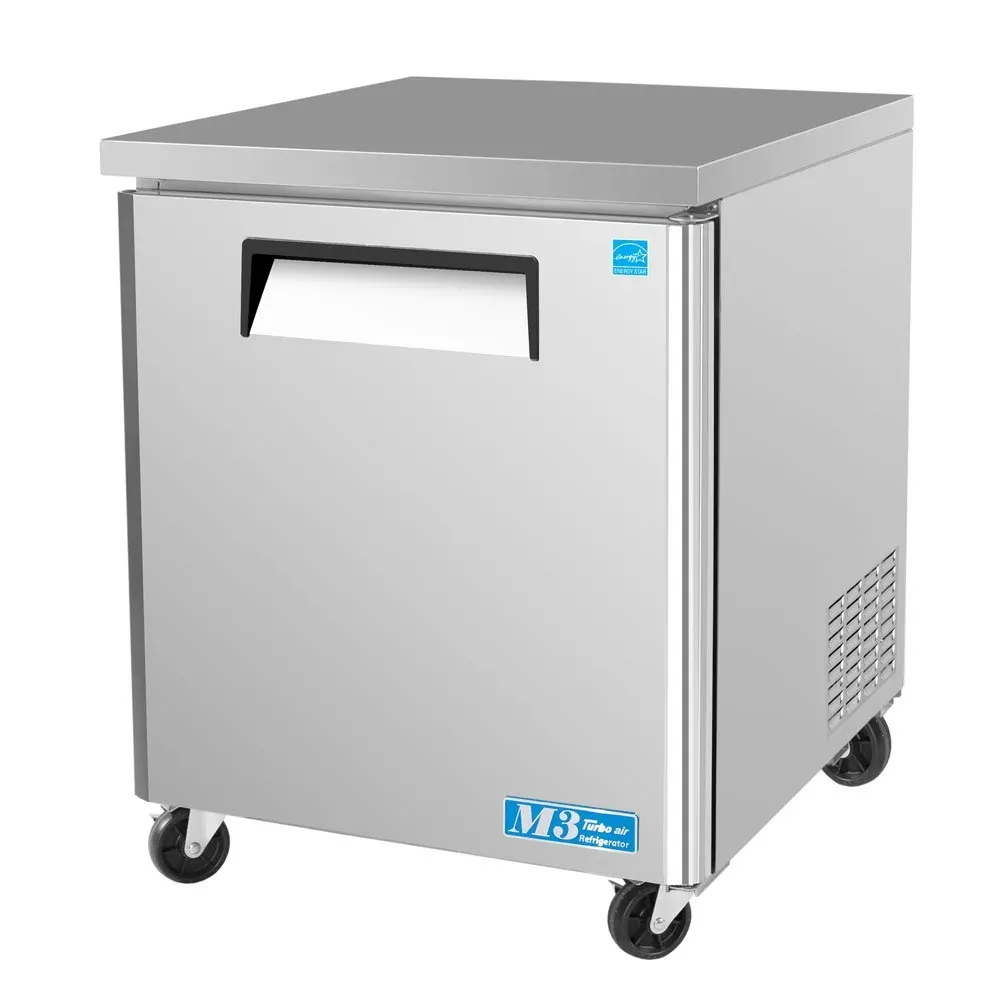
2. Best Innovation (The Self-Cleaning): Turbo Air M3 Series
- Best For: Busy kitchens that forget maintenance.
- Why It Wins: Features a patented Self-Cleaning Condenser. A rotating brush cleans the dust off the coil daily.
- Value: Generally 10-15% cheaper than True, but packed with features.
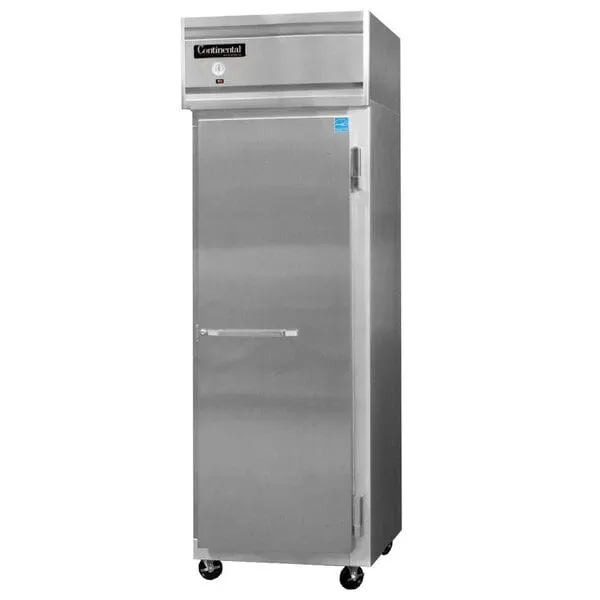
3. Best Heavy Duty (The Tank): Continental Refrigerator
- Best For: Institutional use (Schools, Hospitals).
- Why It Wins: Built to military standards. The airflow distribution is slightly better than True for completely packed fridges.
- Design: Uses a “Plug” refrigeration system that sits on top; technicians can swap the entire engine in 20 minutes.
Final Summary
If you want Peace of Mind, buy True. If you want Self-Cleaning Tech, buy Turbo Air.
Maintenance: The “Condenser Coil” Ritual
The Condenser Coil is the radiator of your fridge. It dumps heat into the room. If it gets covered in dust, the heat can’t escape. The compressor works harder, gets hotter, and seizes.
The Ritual:
- Frequency: Once a month.
- Tool: A stiff bristle brush (or shop vac).
- Action: Brush the dust off the fins “With the Grain” (Up and down). Do not brush sideways or you will bend the delicate aluminum fins.
- Spray: Use “Coil Cleaner” spray to dissolve grease.
Pro Tip: If you have a line cook who stands around leaning, hand him a brush. “If you have time to lean, you have time to clean the coils.”
Used Market Guide: The “Frankenstein” Danger
Buying a used True fridge for $500 sounds great. Be careful.
The Compressor Swap Scam
Unscrupulous sellers will take a 20-year-old fridge with a blown 3/4 HP compressor and swap in a cheap 1/3 HP compressor from a residential unit.
- The Symptom: It gets cold when empty. Once you load it with food, it stays at 50°F and spoils your inventory.
- The Check: Look at the compressor plate. Does the Model Number match the Fridge Spec Sheet? If not, walk away.
The Door Gasket Test
Take a dollar bill. Close the door on it.
- If you can pull the dollar out easily, the gasket is dead. You are leaking $50 a month in cold air.
- Negotiation: Ask for $200 off to replace gaskets.
Frequently Asked Questions (FAQ)
Q: Can I put hot food in my commercial fridge? A: Technically Yes, but practically No. Commercial fridges have the power to cool it down, but the steam from the hot food will ice up the evaporator coil instantly. Use a Blast Chiller first.
Q: Why is my fridge running but the temp is 50°F? A: 9 times out of 10, your Condenser Coil is clogged with dust. Clean the coil. If that doesn’t work, you are low on Freon (leak).
Q: How long should a commercial fridge last? A: 10-15 Years if you clean the coils monthly. 3-5 Years if you never clean them.
Final Word
Refrigeration is “Insurance.” You pay a premium for True or Continental not because they look cool, but because they hold temperature on a 100°F Friday night when the AC is broken and the kitchen is hell.
Don’t scrimp on the lifeblood of your inventory. Buy Energy Star. Clean your coils. And keep the doors shut.