A Blast Chiller (or Shock Freezer) is not just a “Fast Refrigerator.” It is a Quality Preservation Machine. Most chefs think it is only for safety (HACCP). But the real value is Texture.
If you freeze a strawberry in a normal freezer, it turns into mush when thawed. If you freeze it in a Blast Chiller, it stays firm. Why? Ice Crystals. In this guide, I will explain the Physics of Crystallization, the difference between Soft and Hard Chill, and how to reduce food waste by 30%.
1. The Physics: Macro vs. Micro Crystals
This is the most important concept in freezing.
Slow Freezing (Standard Freezer):
- Water molecules have time to bond slowly.
- They form Large (Macro) Ice Crystals.
- The Damage: These sharp, jagged crystals penetrate the cell walls of the food (like knives).
- The Thaw: When you thaw the food, the cell walls are punctured. All the liquid leaks out (Purge). The steak is dry. The strawberry is mush.
Fast Freezing (Blast Chiller):
- Temp: Drops to -40°F in minutes with 60 MPH wind.
- The Result: Water freezes instantly. No time to bond.
- Micro Crystals: The crystals are tiny and round. They do NOT damage the cell walls.
- The Thaw: The food texture is identical to fresh.
2. HACCP: The Danger Zone
Food Safety law says you must cross the Danger Zone (135°F to 41°F) in less than 4 hours.
- The Reality: If you put a 5-gallon pot of boiling soup in a walk-in cooler:
- It will take 24 hYou cannot put a hot pot of soup in the Walk-In. It puts the entire cooler at risk. The hot soup raises the room temperature, spoiling your milk and fish. More importantly, the soup itself stays in the Danger Zone too long.
According to FDA HACCP Guidelines, you must cool food from 135°F to 41°F within 6 hours (and 135°F to 70°F within 2 hours). A Blast Chiller is the only way to do this legally for large batches.
This guide covers why Blast Chillers are mandatory for cook-chill operations. The Blast Chiller Solution (2-Stage Cooling):
- Stage 1: 135°F to 70°F in 2 hours. (Critical for bacteria).
- Stage 2: 70°F to 41°F in 4 hours.
- Automation: The machine prints a receipt (HACCP Log) proving you met these legal targets. No guessing.
| Temp Range | Time Limit | Method |
|---|---|---|
| 135°F -> 70°F | 2 Hours | Blast Chill (Hard) |
| 70°F -> 41°F | 4 Hours | Blast Chill (Soft) |
| Total Time | 6 Hours | Legal Requirement |
3. Modes: Soft Chill vs. Hard Chill
You don’t blast everything on MAX.
Soft Chill (Standard Mode)
- Target: 38°F (Refrigerated).
- Technique: The air temp stays just below freezing (30°F).
- Use For: Delicate items (Vegetables, Seafood, Rice).
- Why: If you freeze the surface of lettuce, you ruin it. This mode is gentle but aggressive.
Hard Chill (Freezing Mode)
- Target: 0°F (Frozen).
- Technique: Air temp drops to -40°F.
- Use For: Meat, Lasagna, Stews. (Dense items).
- Shock Freeze: Freezing raw sushi-grade fish to kill parasites.
4. The Probe: Don’t Guess
Unlike an oven, you cannot set a timer.
- Variable: A shallow pan of chicken cools faster than a deep pot of chili.
- The Core Probe: You MUST stick the probe into the center of the food.
- The Brain: The machine runs until the Probe hits 38°F, whether it takes 20 mins or 90 mins. Then it switches to “Hold Mode.”
5. ROI: Reducing Food Waste
“Chef, a blast chiller costs $15,000. Is it worth it?”
The Math:
- Batch Cooking: Instead of making soup every day (Labor), you make 50 gallons on Monday. Blast chill it. Reheat it perfectly all week.
- Yield Increase (The Hidden Profit):
- Roast Beef (Standard Cool): Loses ~15% weight to evaporation (steam).
- Roast Beef (Blast Chill): Loses ~3% weight.
- Result: On a 10lb roast, you save 1.2lbs of meat. That’s 5 extra portions of profit per roast.
- Leftovers: On Saturday night, you have 20 Prime Ribs left over ($600 value).
- Without Blast Chiller: You throw them away Monday.
- With Blast Chiller: You shock freeze them. You sell them next week as “French Dip Sandwiches.”
- Savings: You save $600 a week. The machine pays for itself in 6 months.
Top 3 Commercial Blast Chiller Recommendations
Do not buy a residential freezer. It will ruin your food.
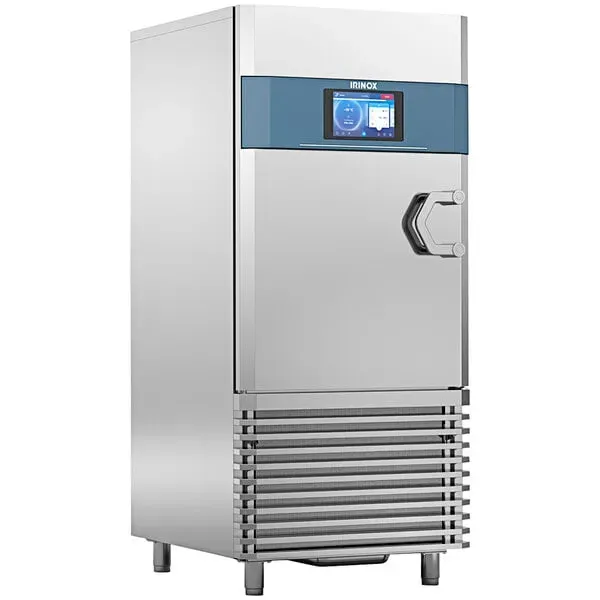
1. Best Overall (The Robot): Irinox MultiFresh Series
- Best For: Fine Dining, Pastry Shops, High-End Catering.
- Why It Wins: It does everything. Shock freezing, thawing, proofing, and even low-temp cooking. It is the iPhone of kitchens.
- Precision: The “multi-sensor” probe detects the exact core temp without guessing.
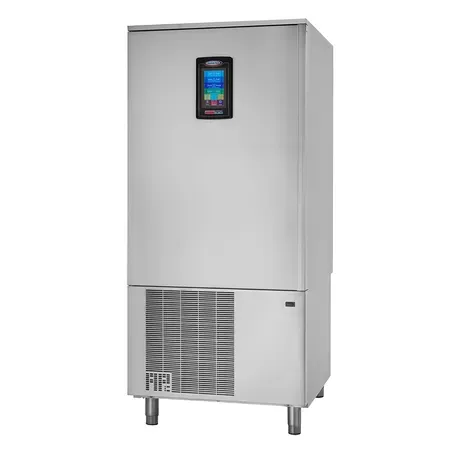
2. Best Durability (The Standard): American Panel HurriChill
- Best For: Hotels, Hospitals, Schools.
- Why It Wins: It is built like a tank. The touchscreen is simple enough for any staff member to use.
- Reliability: US-built and parts are available overnight.
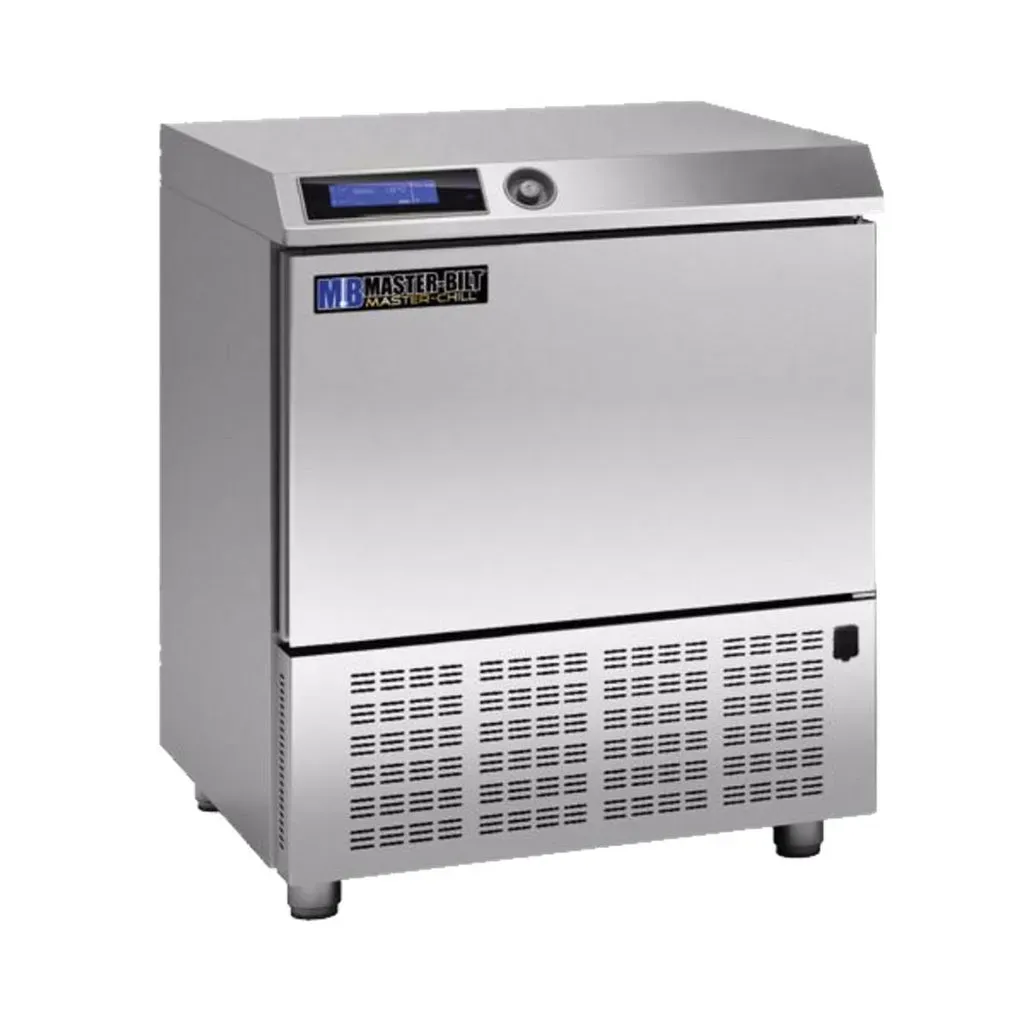
3. Best Value (The Compact): Master-Bilt MBC Series
- Best For: Small Cafes, Ghost Kitchens.
- Why It Wins: A solid under-counter workhorse that fits in tight spaces. It meets all HACCP requirements without the extra “robot” features you might not need.
- Efficiency: Thick insulation keeps the cold in and the electric bill down.
Frequently Asked Questions (FAQ)
Q: What is the difference between Soft Chill and Hard Chill? A: Soft Chill keeps the air temp just below freezing (30°F) to gently cool delicate items like vegetables. Hard Chill drops air temp to -40°F to freeze dense meats and stews rapidly.
Q: Why does blast freezing improve food quality? A: It creates Micro Ice Crystals (tiny and round) instead of large jagged crystals. This prevents cell wall damage, so the food doesn’t turn perfectly mushy when thawed.
Q: What is the HACCP cooling requirement? A: You must cool food from 135°F to 70°F in 2 hours, and from 70°F to 41°F in 4 hours. A blast chiller automates this to ensure legal compliance.
Final Summary
If you want to cook with it (proof/thaw), buy Irinox. If you just need to chill massive amounts of food safely, buy American Panel.
Chef Marco’s Rule: “Never cover the food in the Blast Chiller. I see cooks putting plastic wrap on the pans before putting them in. You are insulating the food! The 60 MPH wind needs to touch the surface. Wrap it after the cycle is done.”