In any professional kitchen, the meat slicer represents a paradox. It is the tool that allows for high-margin profitability (by turning a $40 roast beef into $150 worth of sandwiches), but it is also the source of the most gruesome injuries in the culinary world.
Choosing a slicer in 2026 isn’t just about “will it cut meat?” It’s about:
- Yield: Does it shred the meat (waste) or slice it clean?
- Labor: Manual vs. Automatic.
- Safety: Zero-Exposure Knife technology.
- Sanitization: Can you clean it without cutting yourself?
We are comparing the titans of the industry: Hobart (HS Series), Berkel (B-Series), and Globe (G-Series).
The Engineering of the Blade
The blade is everything. If the blade flexes, drags, or dulls, you lose money on every stroke.
1. Hobart HS Series: The “CleanCut” Cobalt
Hobart uses a patented 13-inch CleanCut™ Knife.
- Material: Stainless steel with a Stellite (Cobalt) Alloy edge.
- The Tech: Cobalt is harder than steel. Hobart claims this edge stays sharp 2-3 times longer than standard carbon steel.
- Benefit: You sharpen less. A sharper blade means less “tailings” (shredded meat crumbs) and higher yield per roast.
- Speed: Spins at 430 RPM. This high speed helps glide through cheese without sticking.
2. Berkel B-Series: The “Hollow Ground” Classic
Berkel literally invented the automated meat slicer in 1898.
- Material: Chromium-Plated Carbon Steel.
- The Tech: “Hollow Ground” shape. The blade is concave, meaning only the very edge touches the meat.
- Benefit: Less friction. This allows for paper-thin shaving of prosciutto and cured meats with incredible precision.
- Speed: Travels slower (~290 RPM). This slower, deliberate speed is often preferred for artisanal charcuterie.
Safety Features: The “Zero-Exposure” Standard
In 2026, if you are buying a premium slicer, you demand Zero Knife Exposure.
What is it? On older slicers, when you removed the blade guard or sharpener, the spinning blade was exposed. One slip meant stitches.
- Hobart’s Safety System: Even when you remove the top cover to clean, or remove the sharpener, there is a permanent ring guard that shields the edge. The blade is never fully exposed during normal cleaning.
- 30-Second Shutoff: If you walk away from a running slicer (Hobart HS), it shuts off automatically after 30 seconds. This prevents the “I left it running and someone leaned on it” nightmare.
- Interlocks: The machine won’t start if the carriage isn’t locked in or the gauge plate isn’t closed.
The 2026 Mandate: OSHA 1910.212
Technically, you can buy an old slicer without these guards. But if a detailed audit happens:
- The Violation: “Failure to guard point of operation” under OSHA 1910.212.
- The Standard: 2026 Best Practices require “Zero Blade Exposure” during cleaning. This means even when you take the sharpener off, the blade edge is NEVER naked. If your slicer exposes the blade during cleaning, it is a liability timebomb.
Manual vs. Automatic: The Labor Calculation
Manual (Gravity Feed)
- Mechanism: The operator uses arm strength to push the carriage back and forth.
- Best For: “To-Order” delis. You slice 3 slices of turkey for a sandwich.
- Cons: Fatigue. Slicing 20lbs of bacon manually will destroy a prep cook’s rotator cuff. Consistency drops as the cook gets tired.
Automatic
- Mechanism: An electric motor saves the day.
- Adjustability: You can adjust the Stroke Length (don’t use a 12-inch stroke for a 2-inch salami) and Speed (strokes per minute).
- The ROI:
- Scenario: You need to slice 50lbs of cheese/meat daily.
- Manual: Cook is trapped at the slicer for 2 hours.
- Automatic: Cook sets the roast, presses start, and spends that 2 hours chopping veggies on the table next to it.
- Verdict: An automatic slicer pays for itself in labor savings in about 6-8 months in a high-volume shop.
Decision Tree: Manual vs. Automatic
Cleaning Protocol: The “Life or Limb” Checklist
Cleaning a slicer is where 80% of accidents happen. Follow the Chef Marco Protocol religiously.
Phase 1: Secure the Machine
- Close the Gauge Plate: Turn the thickness knob to ZERO (or below zero). This covers the blade edge.
- Unplug: Do not rely on the off switch. Unplug the cord from the wall.
- Lock Out: If possible, put a tag on the plug so nobody plugs it in.
Phase 2: Disassembly (No Tools Needed) Top tier slicers (Hobart HS, Globe G) disassemble without screwdrivers.
- Remove the Product Tray/Carriage (usually a knob at the bottom). Take it to the sink.
- Remove the Blade Guard (top cover). Take it to the sink.
- Remove the Slice Deflector (the piece behind the blade). Take it to the sink.
Phase 3: The Blade
- Never Wipe Toward the Edge: Imagine the blade is a clock. Wipe from the center out.
- Use a Cut-Resistant Glove: wear a Kevlar mesh glove while cleaning.
- Sanitize: Spray with food-safe sanitizer. Let it air dry.
- Lubricate: Use food-grade oil on the carriage slide rod. If the carriage drags, your cooks will push harder, increasing accident risk.
Cheese Warning: The Hidden Killer of Slicers
Cheese is not meat. Cheese is fat and drag.
- Slicing cheese creates massive resistance on the blade.
- Light Duty (10 inch) slicers CANNOT slice cheese. You will burn out the motor in a week.
- Requirement: If you slice cheese for more than 1 hour a day, you must buy a Heavy Duty or Premium slicer (1/2 HP motor, gear driven or heavy belt).
- Tip: If the cheese is dragging, wipe the blade with a damp cloth (water reduces friction) or chill the cheese further.
Buying Guide 2026
| Feature | Hobart HS Series | Berkel B-Series | Globe S-Series |
|---|---|---|---|
| Blade | 13” CleanCut (Cobalt) | 12” Hollow Ground (Chrome) | 13” Steel |
| Drive | Belt (Poly V) | Belt | Gear |
| Sharpener | Borazon (Dishwasher Safe) | Dual Stone | Dual Stone |
| Safety | Zero-Exposure | Ring Guard | Interlocks |
| Best For | High Volume / Supermarkets | Artisan Delis / Charcuterie | Pizzerias / Heavy Duty |
| Est Price | $$$$$ | $$$$ | $$$ |
Top Commercial Meat Slicer Recommendations
Don’t buy used. You don’t know who dropped it.
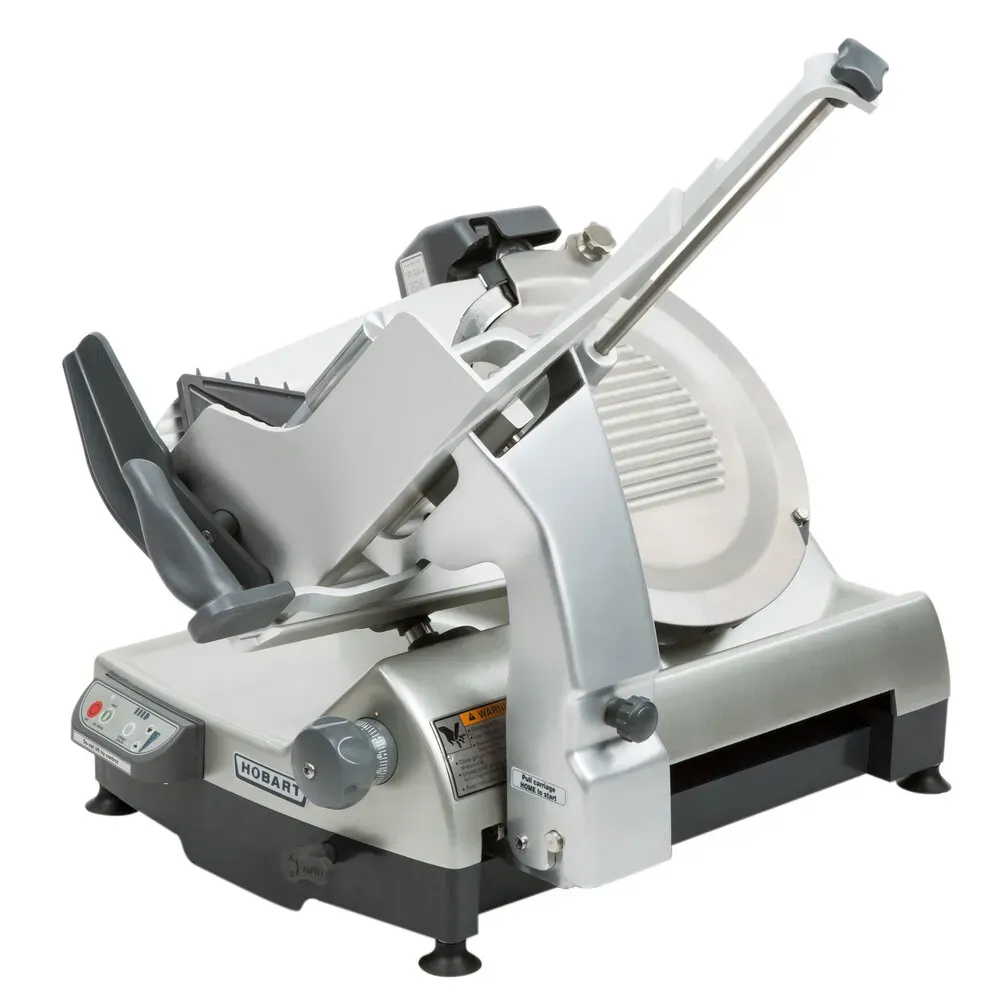
1. Best Overall (The Gold Standard): Hobart HS Series (HS9)
- Best For: High volume delis, 24/7 Supermarkets.
- Why It Wins: The “Zero Exposure” safety features are the best in the industry. The Borazon sharpener lasts a lifetime.
- Safety: If you walk away, it shuts itself off in 30 seconds.
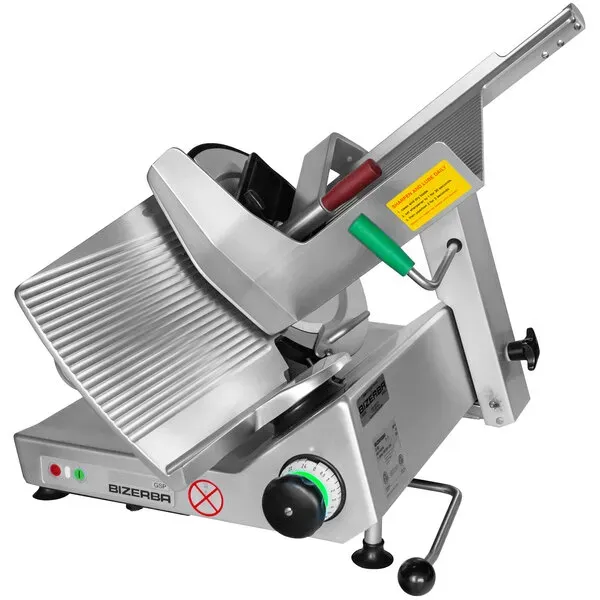
2. Best for Precision (The Charcuterie King): Bizerba GSP Series
- Best For: Italian Restaurants, Artisan Sandwich Shops.
- Why It Wins: The German engineering is unmatched. It can slice prosciutto so thin you can read a newspaper through it.
- Hygiene: The design is incredibly open, making it the easiest slicer to clean and sanitize.
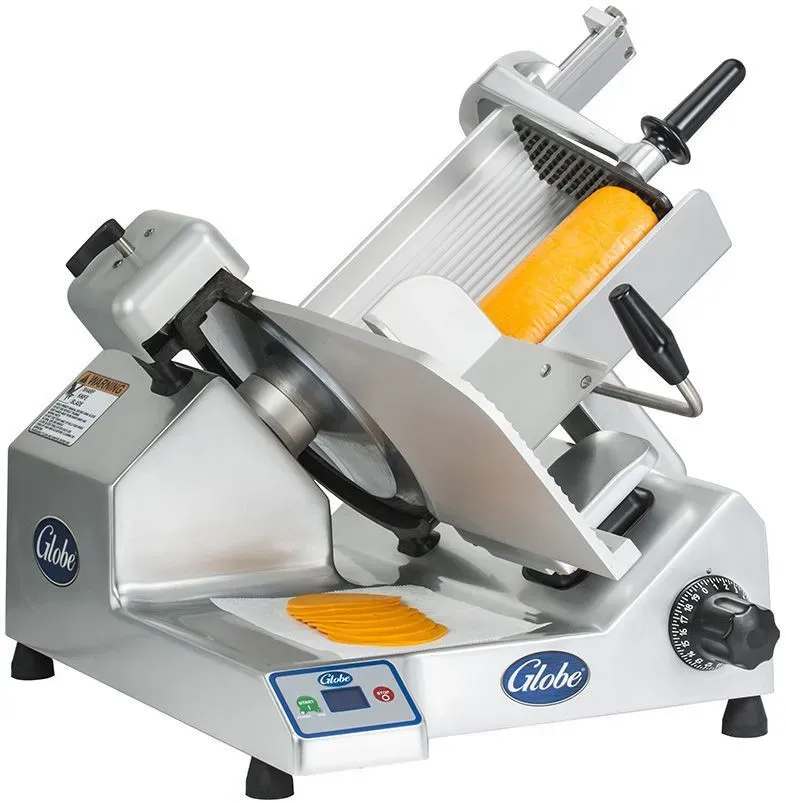
3. Best Value (The Workhorse): Globe SG13 Series
- Best For: Pizzerias, Cheesesteak Shops.
- Why It Wins: Uses a powerful gear-driven motor that shreds through frozen steak and heavy cheese without stalling.
- Durability: It feels heavier than the Hobart, but at a better price point.
Frequently Asked Questions (FAQ)
Q: What does “Zero Knife Exposure” mean? A: It is a safety feature (like on Hobart HS series) where the blade edge remains guarded by a permanent ring even when you remove the sharpener or top cover for cleaning. It prevents severe cuts.
Q: Can I slice cheese with a 10-inch slicer? A: No. Cheese creates massive drag. You need a Heavy Duty slicer (1/2 HP motor) with a 12 or 13-inch blade. A light-duty 10-inch slicer motor will burn out in a week.
Q: How do I clean a meat slicer safely? A: 1. Turn thickness knob to ZERO (closes gauge plate). 2. UNPLUG the machine. 3. Wear a Cut-Resistant (Kevlar) glove. 4. Never wipe toward the blade edge; wipe from center out.
Final Summary
If safety is your #1 concern, buy Hobart. If you are slicing Prosciutto di Parma, buy Bizerba. If you need to slice 50lbs of cheese a day on a budget, buy Globe.