If the range is the muscle of the kitchen, the mixer is the heartbeat of the bakery. In a commercial environment, a mixer isn’t just an appliance; it’s a member of the staff. If it calls in sick (breaks down), production stops. You can’t knead 50lbs of pizza dough by hand.
In 2026, the market is dominated by two primary philosophies: the “Spare No Expense” engineering of Hobart and the “Value-Driven Performance” of Globe.
In this guide, we are going deep. We’re talking torque specifications, dough absorption ratios, variable frequency drives, and the real-world maintenance that keeps these beasts alive for 20 years.
The Contenders: At a Glance
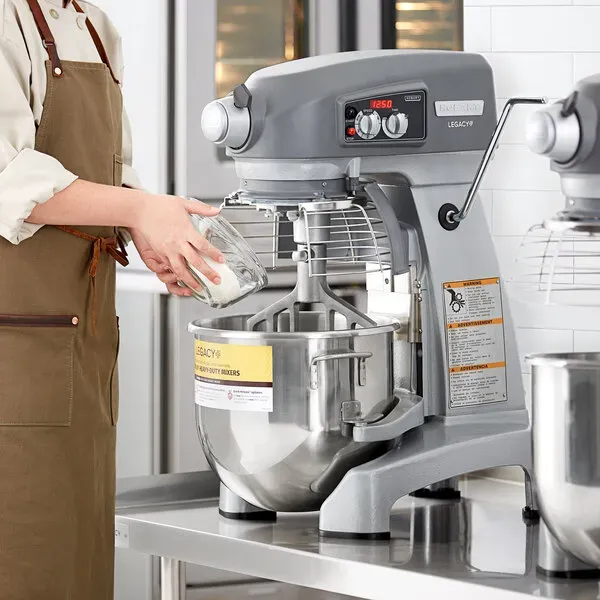
Hobart Legacy+ (The HL Series)
Hobart has been the “Gold Standard” since 1897. If you walk into a bakery that has been open since the Eisenhower administration, you will likely see a Hobart mixer from that era still running.
- Flagship Models: HL200 (20qt), HL600 (60qt).
- The “Plus” Factor: The new Legacy+ series introduced VFD (Variable Frequency Drive) technology. Unlike old setups with massive gearboxes and clutches, VFD uses computer-controlled frequency to adjust motor torque instantly.
- Claim to Fame: The only mixer that lets you change speeds while it’s running (“Shift-on-the-Fly”).
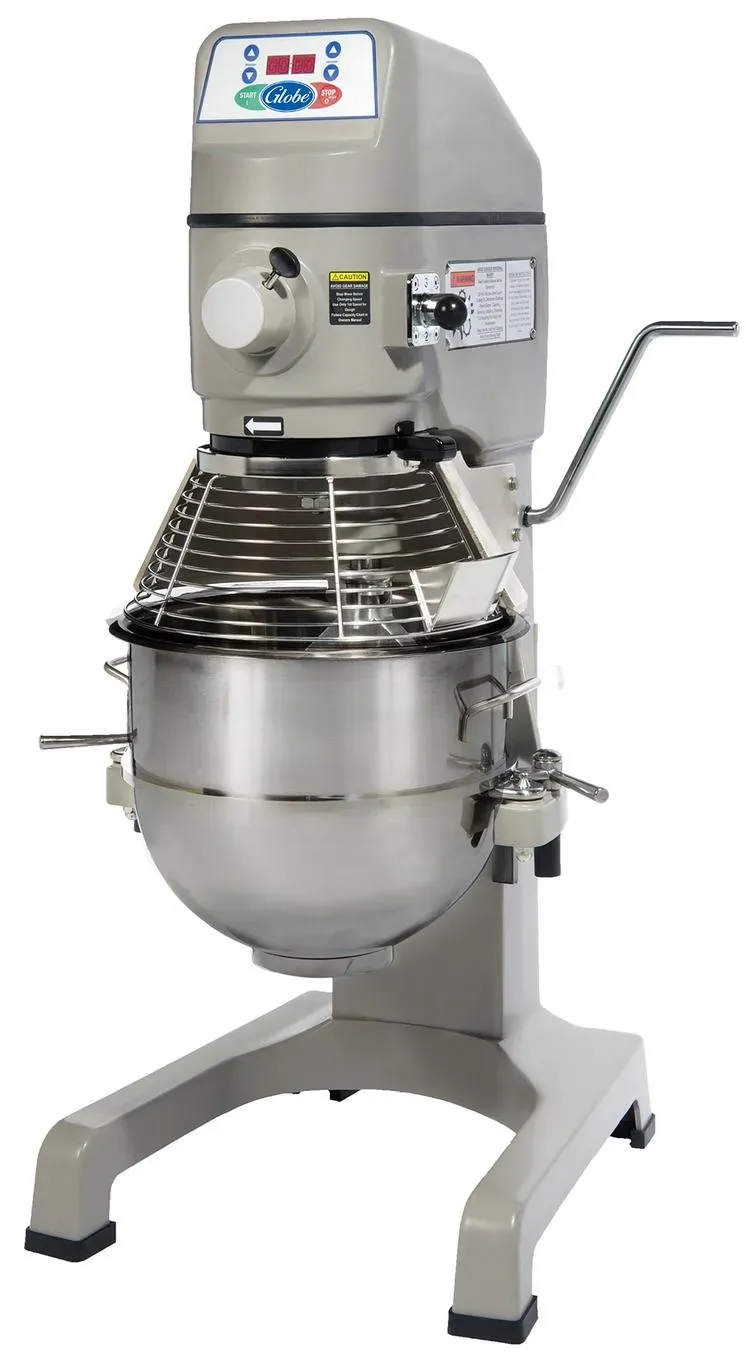
Globe SP Series (The Heavy-Duty Challenger)
Globe Food Equipment (now part of Middleby) has moved aggressively into the mixer space. For years they were known for slicers, but their SP mixers have earned a reputation for being over-built and under-priced.
- Flagship Models: SP20 (20qt), SP60 (60qt).
- Engineering: Traditional reliable gear-driven transmission with heat-treated steel alloy gears.
- Claim to Fame: A standard 2-Year Parts & Labor Warranty (double what Hobart offers standard).
Quick Selection Guide
Deep Dive: 20-Quart Bench Mixers (HL200 vs. SP20)
This is the most common battleground. Every restaurant needs a 20-quart mixer for mashed potatoes, whipping cream, and small dough batches.
1. Motor & Transmission Technology
Hobart HL200:
- Motor: 1/2 HP High Torque.
- Tech: VFDadvantage™.
- RPMs: 3 Fixed Speeds + Stir.
- Stir Speed: Extremely slow start to incorporate flour without the “puff” cloud.
- Shift-on-the-Fly: This is the killer feature. You can start on Stir, hit “1”, then “2” without ever pressing Stop. The VFD ramps the speed smoothly.
- Why it Matters: In a high-volume kitchen, those 10 seconds of stopping to shift gears add up. Crucially, the VFD protects the motor. If the dough is too stiff, the computer senses the amperage spike and adjusts, preventing burnout.
Globe SP20:
- Motor: 1/2 HP Custom Built.
- Tech: All-Gear Drive (Heat-treated steel).
- RPMs: 3 Fixed Speeds (104, 194, 353 RPM).
- Operation: You must stop the mixer to change gears. It’s a physical gear change.
- Why it Matters: It’s simpler. There’s no computer to fry. It’s just steel gears meshing. Some mechanics prefer this because it’s “fixable with a wrench, not a laptop.”
2. Capacity & Absorption Ratios (AR)
Capacity isn’t just “how big is the bowl.” It’s “how much torque can the motor apply before it dies.” This is measured in AR (Absorption Ratio)—the water weight divided by flour weight. Lower AR (stiffer dough) is harder to mix.
Hobart HL200 Capacity:
- Mashed Potatoes: 15 lbs
- Pizza Dough (60% AR): 20 lbs
- Heavy Bread Dough (60% AR): 25 lbs
- Note: The Legacy+ reinforces the planetary shaft, allowing it to handle roughly 30% more load than the old Classic series in the same bowl.
Globe SP20 Capacity:
- Mashed Potatoes: 15 lbs
- Pizza Dough (60% AR): 20 lbs
- Heavy Bread Dough (60% AR): 25 lbs
- Verdict: On paper, they are identical. In practice, the Hobart VFD handles “shock loads” (like adding a block of cold butter) slightly smoother, whereas the Globe might groan but will power through.
3. User Interface & Workflow
Hobart SmartTimer™:
- It remembers your last time. If you mix pizza dough for 8 minutes every day, the timer defaults to 8 minutes.
- Ergonomics: The patent-pending swing-out bowl is legendary. On the HL200, it’s nice. On the HL600 (60qt), it’s a back-saver. You don’t have to lift a heavy paddle over the bowl; you just swing the bowl out.
Globe Controls:
- Front-facing digital panel. Simple, big buttons.
- 60-Minute digital timer is standard (Hobart’s used to be an upgrade, now standard on Legacy+).
- Standard Lift: Classic wheel or lever lift. Reliable, but requires reaching around the machine.
Heavyweight Fight: 60-Quart Floor Mixers (HL600 vs. SP60)
When you step up to 60 quarts, you are mixing 80lbs of dough at a time. The stakes are higher.
Power Specs
- Hobart HL600: 2.7 HP Motor. 866 lbs Net Weight.
- Globe SP60: 3 HP Motor. 660 lbs Net Weight.
- Wait, Globe has more HP? Yes. But Hobart relies on torque efficiency from the VFD. Also notice the weight difference: The Hobart is 200lbs heavier. That is 200lbs more cast iron keeping the machine from walking across the floor when mixing bagel dough.
The Power Bowl Lift
- Hobart: Standard on HL600. Push a button, bowl goes up.
- Globe: Optional or Manual on some models. Cranking up a bowl with 80lbs of dough/water is a workout.
- Stir-on-Lift: Hobart allows the agitator to spin slowly while the bowl lifts. This helps “burrow” the hook into a pile of ingredients. Use this once, and you can never go back.
Maintenance Guide: Keeping Them Alive
Whether you spend $5,000 or $15,000, these machines die without care.
Daily Closing Checklist (The “Chef Marco” Protocol)
- Remove Attachments: Never leave the paddle/hook on the shaft overnight. Flour acts like cement. It will seize onto the shaft.
- Wash the Ways: The “ways” are the vertical rails the bowl slides up and down on. Wipe them clean of flour dust.
- Sanitize the Guard: Both brands have removable wire guards. Run them through the dishwasher.
- Wipe the Cord: Dough hardens on power cords and eventually cracks the insulation.
Monthly Maintenance
- Lubricate the Ways: Apply a thin layer of food-grade mineral oil (Lubriplate 630-AA is the industry standard) to the bowl lift rails.
- Planetary Seal Check: Look under the “nose” of the mixer where the shaft comes out. Is it weeping oil? If oil drips into your meringue, you have a disaster (and a broken seal).
- Ventilation Check: These motors are air-cooled. Check the vents on the back/top. If they are clogged with flour dust, the motor overheats. Vacuum them out.
Troubleshooting Error Codes (Hobart Legacy specific)
- OL1 (Overload): Motor is working too hard. Result of stiff dough or overfilling. Fix: Remove 30% of dough and restart.
- IL1 (Interlock): Bowl guard is not closed or bowl is not fully raised. Fix: Slam the guard shut (gently) and check the bowl height handle.
The Hidden Risk: Baker’s Asthma (Silica)
- The Dust: Flour dust stays airborne for 24 hours. It contains enzymes and sometimes silica.
- The Sickness: “Baker’s Lung” is a real occupational hazard.
- The Fix: 1. Always start on “Stir” speed. 2. Use a Bowl Guard (OSHA Requirement). 3. If you see a cloud of white dust, you are doing it wrong. OSHA requires dust control measures.
ROI Calculation: Is Hobart Worth the Premium?
Let’s do the math for a Pizzeria wishing to buy a 60qt mixer.
Scenario A: The Globe SP60
- Upfront Cost: ~$12,000
- Maintenance (10 Years): ~$2,000 (Belts, minor repairs)
- Resale Value (10 Years): ~$3,000
- Total Cost of Ownership: $11,000 over 10 years.
Scenario B: The Hobart HL600
- Upfront Cost: ~$24,000
- Maintenance (10 Years): ~$1,500 (VFD is reliable)
- Resale Value (10 Years): ~$12,000 (Hobarts hold insane value).
- Total Cost of Ownership: $13,500 over 10 years.
The Verdict: The gap is smaller than you think ($2,500 over 10 years).
- If you sell the business, the Hobart is a liquid asset.
- If you don’t have the $24k upfront (cash flow issue), the Globe is an incredible machine that will do the job perfectly well.
Top Commercial Mixer Recommendations
This is a 20-year commitment. Choose wisely.
1. Best Overall (The Heavyweight Chamption): Hobart Legacy+ (HL Series)
- Best For: High-Volume Bakeries, Pizzerias, Institutional Kitchens.
- Why It Wins: The VFD motor is unstoppable. The “SmartTimer” ensures every batch of dough is identical, even if your staff changes daily.
- Resale: You can sell a 10-year-old Hobart for 60% of its original price. It is liquid gold.
2. Best Value (The Reliable Challenger): Globe SP Series
- Best For: Restaurants, Schools, General Prep.
- Why It Wins: It offers 90% of the performance of a Hobart for 60% of the price. The gear-driven transmission is simple, reliable, and backed by a stellar warranty.
- Warranty: Comes standard with a 2-Year Parts & Labor warranty (industry leading).
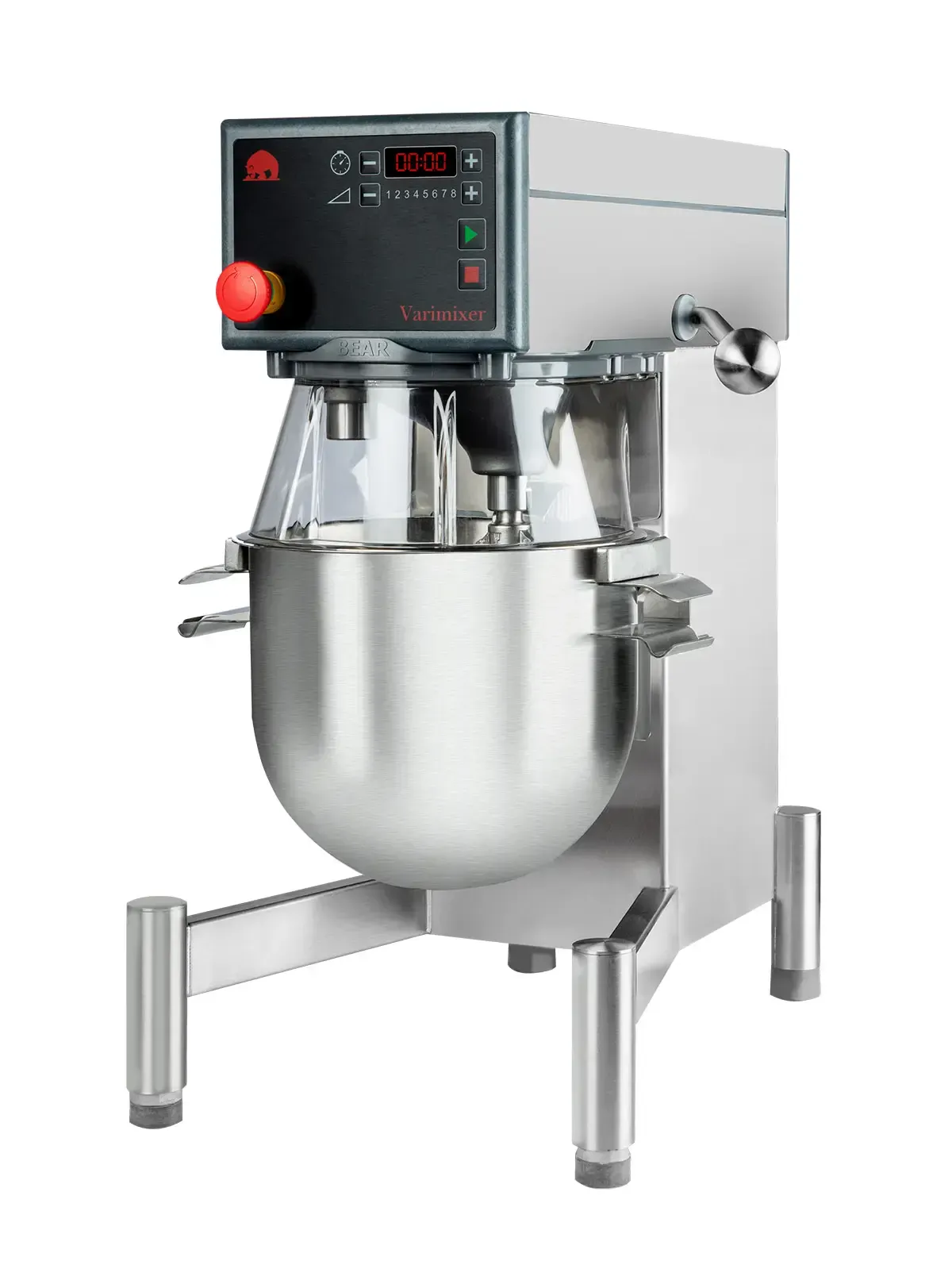
3. Best Ergonomics (The Hygienic Choice): Varimixer Kodiak
- Best For: Pastry Shops, Open Kitchens.
- Why It Wins: It won the Kitchen Innovations Award for hygiene. It has no crevices for flour to hide. The “ergonomic bowl lift” is the easiest on your back.
- Cleanliness: IP53 rating means you can spray it down (carefully) without killing the electronics.
Frequently Asked Questions (FAQ)
Q: What is the difference between Hobart Legacy+ and Globe SP mixers? A: Hobart Legacy+ uses a VFD (Variable Frequency Drive) motor which allows “Shift-on-the-Fly” and speed protection. Globe SP uses a traditional Gear-Driven transmission (steel gears) which is simpler but requires stopping to shift.
Q: What is “AR” (Absorption Ratio)? A: It is the “Water Weight divided by Flour Weight.” It determines how stiff your dough is. A lower AR (like 50% for Bagels) requires a larger mixer to handle the torque without stalling.
Q: Should I buy a belt-driven or gear-driven mixer? A: For heavy dough (Pizza/Bread), Gear-Driven is standard for torque. Belt-Driven is quieter and cheaper to repair but can slip under heavy loads. Hobart’s VFD is a modern hybrid that offers the best of both.
Final Summary
If you are mixing Pizza Dough all day, buy Hobart. If you are on a Budget, buy Globe. If you care about Design & Hygiene, buy Varimixer.
Both machines are engineering marvels. In 2026, you cannot go wrong with either. Just don’t buy a used mixer off Craigslist unless you know how to rebuild a transmission.