A tray drop is the single loudest sound in a restaurant. CRASH. The music stops. The conversation stops. 100 people turn to look. The waiter is standing there, red-faced, with $50 worth of broken glass and spilled Martinis at his feet. And worse—the sticky liquid is running onto a customer’s $200 shoes.
Did the waiter make a mistake? Maybe. But 90% of the time, it was an Equipment Failure. Most restaurant owners buy the cheapest plastic trays they can find to save $50. In doing so, they create an ice rink for glassware.
In this deep dive, I will explain the Physics of Non-Skid Surfaces, why Fiberglass is mandatory for safety, and how to calculate the ROI of avoiding a single “Tray Accident.”
1. Material Wars: Plastic vs. Fiberglass vs. Cork
You can tell a lot about a restaurant by flipping over their tray.
The Fast Food Plastic (Polypropylene)
- Cost: Dirt Cheap ($2.00 - $3.00).
- The Look: Usually red, brown, or black with a basket-weave texture.
- The Physics: Plastic is hydrophobic. When dry, it’s slick. When wet (from a spilled soda), it becomes hydroplaning-level slippery.
- The Risk: If a server tilts the tray 5 degrees, the glass slides off.
- Verdict: Use ONLY for self-service fast food (McDonald’s style) where the customer carries one burger. NEVER use for table service.
The Standard Fiberglass (The Workhorse)
- Cost: Moderate ($8.00 - $10.00).
- The Look: Hard, smooth surface. Often grey or speckled.
- Construction: A steel wire is molded into the rim for strength. You can drop this off a roof and it won’t crack.
- The Grip: Better than plastic, but still slick when wet.
- Verdict: Good for bussing dirty dishes. Not great for serving full cocktails.
The Non-Skid “Camtread” (The Savior)
- Cost: Premium ($12.00 - $15.00).
- The Look: It looks like the standard fiberglass tray, but the surface feels rubbery or cork-like.
- The Tech: A proprietary rubber-like material is chemically bonded to the fiberglass.
- The Friction Test: You can tilt this tray 30 degrees, and a glass full of water will NOT slide. It defies gravity.
- Verdict: Mandatory for any restaurant serving alcohol or hot soup.
2. ROI Analysis: The Cost of a Drop
“Chef, why should I pay $15 for a tray when I can get one for $3?” Let’s do the math on One Dropped Tray.
The Incident: A server drops a tray with 4 cocktails and 2 glasses of wine.
- Inventory Loss:
- Alcohol Cost: $12.00.
- Glassware Cost (6 quality stems): $30.00.
- Disruption:
- Comped Meal for the splashed customer: $80.00.
- Labor (Busboy mopping for 20 mins): $6.00.
- Re-make time for Bar: 10 mins (Service bottleneck).
- Total Cost of ONE Drop: $128.00.
The Math: The price difference between a generic tray and a Non-Skid tray is $12. If the Non-Skid tray prevents even one drop in 5 years, it has paid for itself 10 times over. It is the cheapest insurance policy you can buy.
3. Shapes and Sizes: Which One For What?
Don’t give a cocktail server a banquet tray. It’s like driving a bus to the grocery store.
The Round (14” or 16”) - “The Cocktail Tray”
- Use: Bars, Cocktail Lounges.
- The Physics: A round tray allows the server to rotate their wrist easily to navigate through a crowd.
- Centrifugal Force: If the server spins, the drinks stay centered.
- Recommendation: Cambro Camtread 1400CT (14 inch). It fits perfectly in one hand.
The Oval (27”) - “The Waiter Buster”
- Use: Large Banquets, Steakhouses serving 6+ plates at once.
- The Danger: This tray is HUGE. It gets heavy fast.
- Rule: NEVER let a server carry this one-handed while serving. You MUST use a Tray Stand (Jack).
- Safety: If a server tries to hold a 40lb loaded oval tray with one hand while auctioning off steaks, they will eventually blow a rotator cuff. Worker’s Comp claims for shoulders cost $20,000. Buy the tray stands ($40).
- Tray Jack Weight Limit: Most standard wood/chrome jacks are rated for 200 lbs. Heavy Duty (Steel) are rated for 400 lbs. Do not put a bus tub on a cheap jack.
The Rectangle (14” x 18”) - “The Cafeteria Standard”
- Use: Self-Service, Fast Casual, Bussing.
- Capacity: Designed to hold exactly one standard placemat, one dinner plate, one drink, and silverware.
- Stacking: These are designed to stack using the “locking lugs” on the bottom.
4. Maintenance: The “Wet Dog” Smell
Have you ever picked up a tray at a cafeteria and it smelled like mildew or dirty wet dog? That is User Error.
The Mold Problem: Trays have a raised rim. If you wash them and stack them immediately while wet, the water gets trapped between the trays.
- Dark + Wet + Warm = Mold.
- The fiberglass absorbs the smell, and you can never get it out.
The Solution: Cross-Stacking
- Run trays through the dishwasher.
- Do Not stack them flat.
- Cross-Stack them at 90-degree angles (alternating).
- This creates huge air gaps between trays.
- Let them air dry for 30 minutes before nesting them.
- The Law (FDA Food Code 4-901.11): Equipment MUST be air-dried. Stacking wet trays is a health code violation.
Refinishing: Can you fix a peeled tray? No.
- High Temp Danger: If your dishwasher rinse cycle exceeds 190°F, it can de-laminate the rubber coating on cheaper trays.
- Protocol: If the Non-Skid rubber surface starts peeling off, you must throw it away. Bacteria traps form under the bubble. Health inspectors will flag this instantly.
5. Brand Breakdown: Cambro vs. Carlisle vs. G.E.T.
- Cambro (The King): They invented the fiberglass tray (Camtray) in 1951. Their Camtread (Non-Skid) is the gold standard. They are expensive, but they last 10 years.
- Carlisle (The Challenger): Their “Griptite” line is very similar to Camtread. Often 10-15% cheaper. Solid quality.
- G.E.T. / Thunder Group (Budget): Good for standard plastic trays. Their non-skid options vary in quality. The rubber coating tends to peel faster in high-heat dishwashers.
Final Verdict
Top 3 Commercial Tray Recommendations
A dropped tray costs $128. A good tray costs $15.
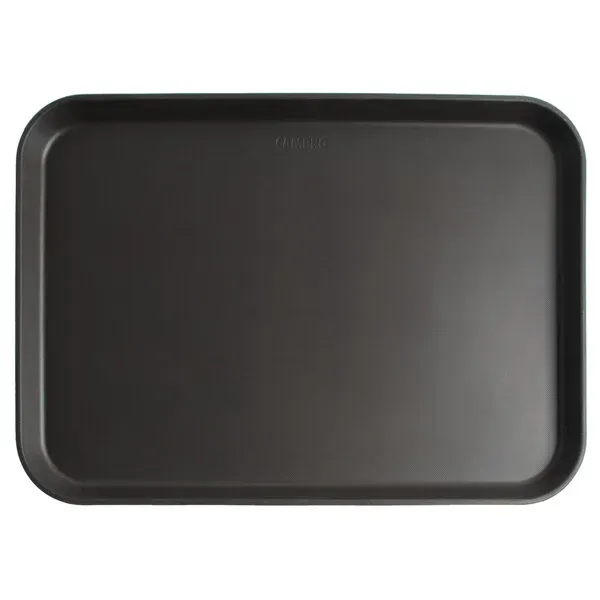
1. Best Overall (The Liability Saver): Cambro Camtread (Non-Skid)
- Best For: Bar Service, Table Service, Hot Soup.
- Why It Wins: The rubber surface is fused to the fiberglass. You can tilt it 30 degrees and the glass won’t move.
- Safety: Prevents “The Wet Slip” when carrying cosmopolitans.
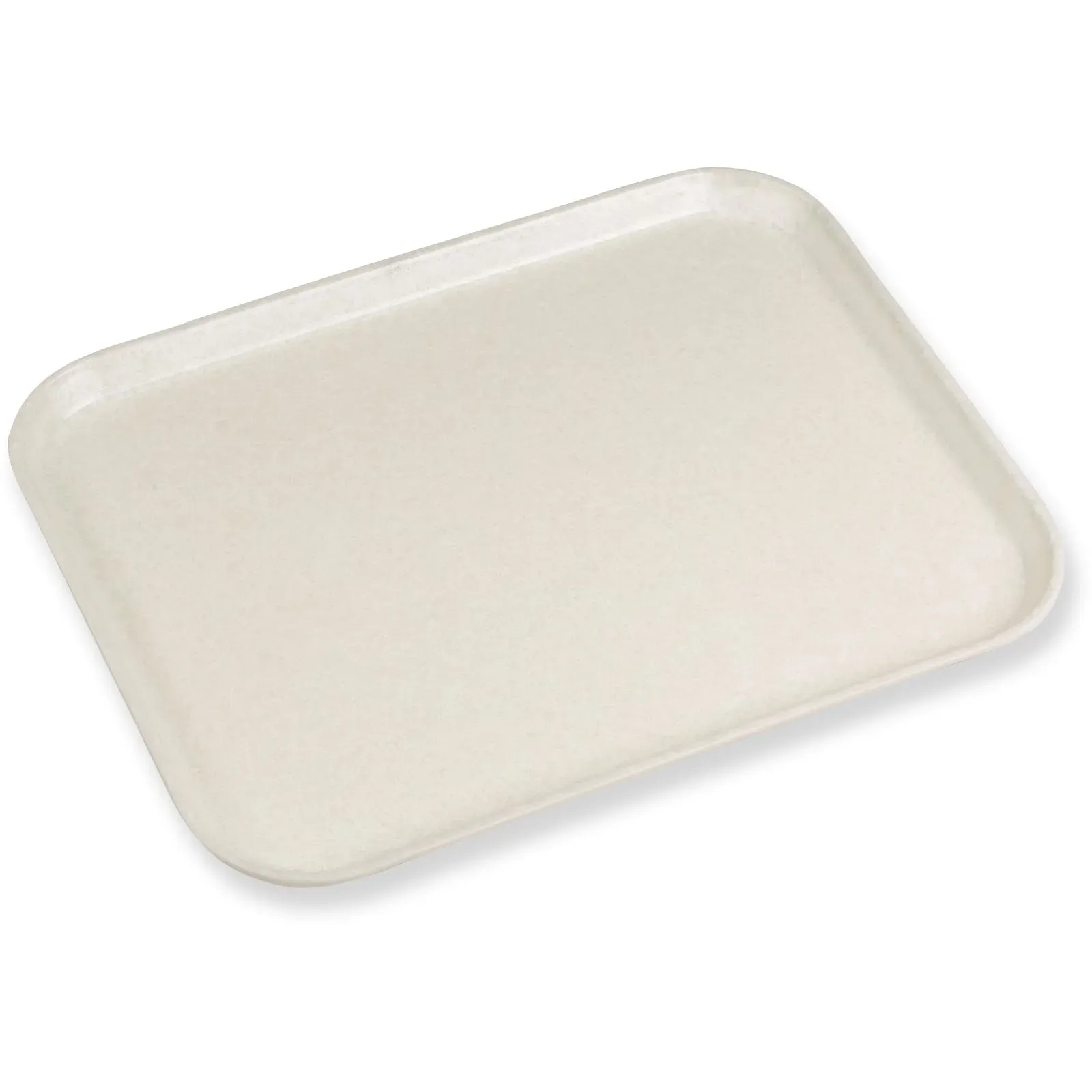
2. Best for High Volume (The Workhorse): Carlisle Glasteel
- Best For: Busy Diners, High-Heat Dishwashers.
- Why It Wins: Steel reinforced rod in the rim means it never warps. slightly cheaper than Cambro.
- Durability: 5-year guarantee against breakage.
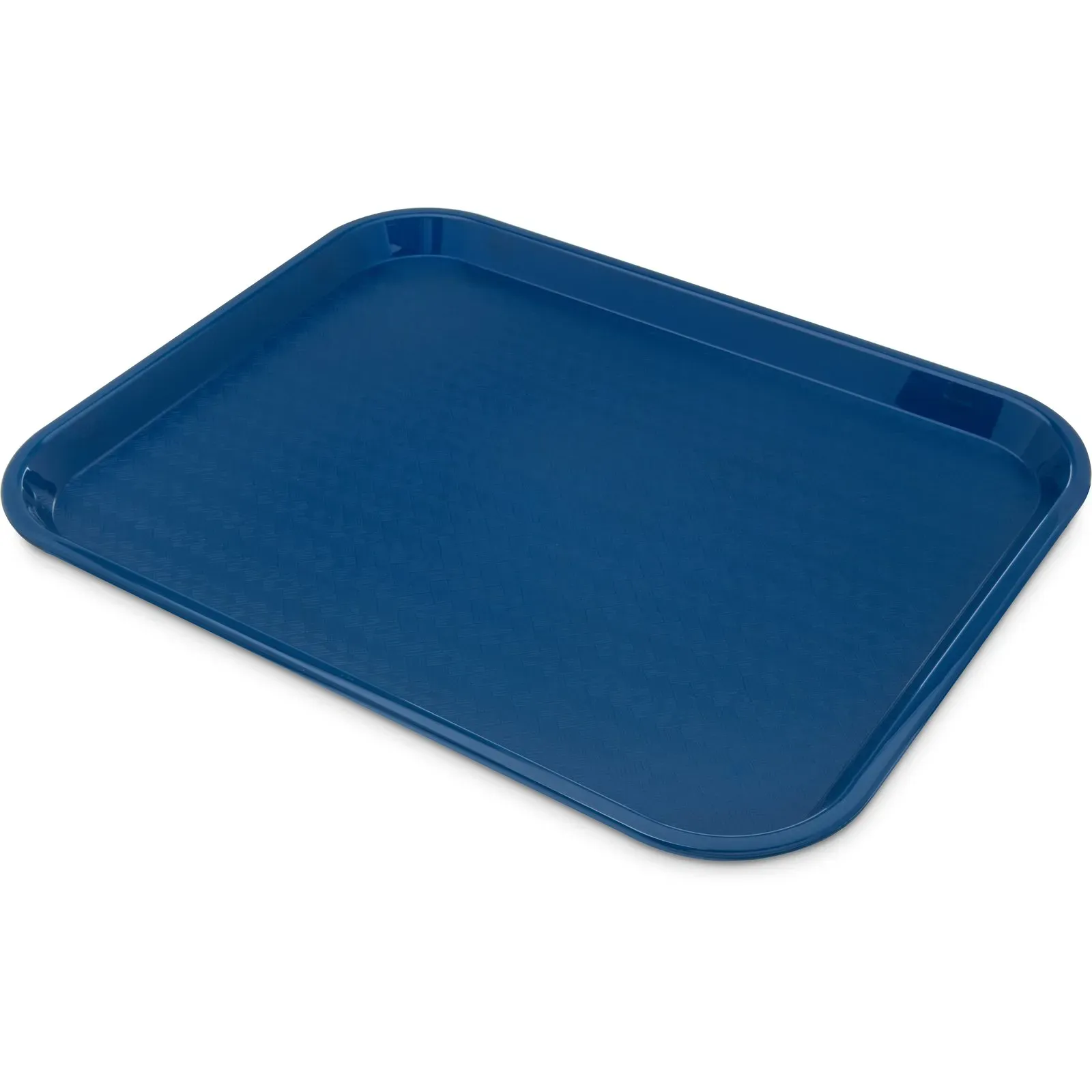
3. Best Budget (The Fast Food Standard): Carlisle Cafe Tray (Plastic)
- Best For: Burger Joints, School Cafeterias.
- Why It Wins: It’s $3. It holds a burger and fries. It is textured to hide scratches.
- Warning: Do NOT use this for carrying open drinks. It is slippery when wet.
Frequently Asked Questions (FAQ)
Q: Why are my drinks sliding off the tray? A: You are likely using cheap plastic trays which are slippery when wet. You need Non-Skid Fiberglass Trays (like Cambro Camtread) which have a rubberized surface to grip the glass.
Q: Can I wash non-skid trays in a high-temp dishwasher? A: Yes, but ensure they are Cross-Stacked vertically to dry. Stacking them wet trapping moisture can cause mold and eventually delaminate the rubber surface.
Q: What size tray is best for cocktails? A: A 14-inch Round tray is best. The round shape allows the server to rotate their wrist through crowds, using centrifugal force to keep drinks stable.
Final Summary
If you serve Alcohol, buy Cambro Camtread. If you serve Burgers, buy Carlisle Cafe.
Chef Marco’s Rule: “I teach every new waiter: The Drop Protocol. If you feel the tray tipping… LET IT GO. Don’t try to catch it with your leg. Don’t try to save the Wine Glass. Jump back. Let it crash. A broken glass costs $5. A stitched knee or a lawsuit from a cut customer costs $5,000. Let it crash.”