A restaurant plate lives a hard life. It is scraped by serrated steak knives. It is slammed into a bus tub by a rushing waiter. It is blasted with 180°F chemical water in the dishwasher. It is stacked 50 high under a heat lamp.
If you buy residential dinnerware (IKEA, Target, or “Pottery Barn Style”) for a commercial kitchen, you will be replacing 100% of your inventory every month. Why? Because residential plates are built for appearance. Commercial plates are built for war.
In this guide, I will explain the Physics of Vitrification, why your plates are exploding, and how to save $5,000 a year by buying the right “Rolled Edge” china.
The Stats: Fully Vitrified vs. The Rest
This is the only spec that matters. Ignore the color. Ignore the shape. Look for the words: “Fully Vitrified.”
1. Residential Stoneware / Earthenware
- Process: Fired at lower temperatures (1800°F - 2100°F).
- Porosity: The clay remains slightly porous (like a sponge). It absorbs 3-5% water.
- The Explosion:
- You wash the plate. It absorbs microscopic water into the clay body.
- You put it in a microwave or under a salamander broiler.
- The water inside the plate turns to steam. Steam expands.
- POP. The plate cracks in half or literally explodes.
- Hygiene: Bacteria can live inside the porous clay.
2. Fully Vitrified China (Commercial Standard)
- Process: Fired at extremely high temperatures (2300°F+). The clay particles melt and fuse together into a glass-like substance.
- Porosity: Near Zero (< 0.5% water absorption).
- The Result: It is waterproof. It is bacteria-proof. It is microwave safe. It is an armored tank.
Material Wars: Porcelain vs. Melamine vs. Bone China
1. Porcelain / China (The Standard)
- Feel: Heavy, cold, smooth.
- Sound: “Clink” (implies quality).
- Best For: Sit-down service, Entrees, Hot Food.
- Durability: High.
- Brands: Tuxton (The reliability king), Acopa (Webstaurant house brand), Homer Laughlin.
2. Melamine (The Imposter)
- Material: Hard plastic/resin.
- Feel: Lighter than china (though modern heavy-weight melamine is close).
- Best For: Outdoor patios, Mexican restaurants (salsa bowls), high-volume diners, Kids’ Meals.
- The Rule: NEVER MICROWAVE MELAMINE. It absorbs heat and eventually blisters, discolors, or dries out. It is not microwave safe.
- The Trap: Modern melamine looks exactly like slate or wood. Tap it with your knuckle. If it sounds like plastic, don’t put it in the oven.
3. Bone China (The Luxury)
- Material: Clay mixed with bone ash (calcium phosphate).
- Look: Translucent. If you hold it to the light, you can see your hand through it.
- Durability: Surprisingly strong, but expensive.
- Best For: Fine Dining ($100+ per head).
The “Rolled Edge” vs. “Coupe”
Look at the rim of the plate. This tells you the intended use.
1. Rolled Edge (The Diner Standard)
The rim is thickened and rounded like a donut.
- Why: When dishwashers stack plates, they slam the edges together. A rolled edge absorbs the impact.
- Benefit: Chip Resistance. These plates can last 5 years without chipping.
- Vibe: Casual, Diner, Bistro.
2. Coupe / Narrow Rim (The Modern Look)
The plate has no rim. It slopes up gently.
- Why: It looks modern and clean (like a canvas for the chef).
- Risk: The edge is thin. It chips easily if banged against a granite counter.
- Food Cost Trick: Coupe plates have more usable surface area. You have to put more food on them to make the plate look full.
- Wide Rim Trick: A wide rim plate has a small “well” in the center. You can serve a 4oz pasta portion, and it looks huge. This lowers your food cost.
ROI Analysis: The Breakage Math
Scenario: 100 Seat Restaurant.
- Residential Plates ($3 each):
- Breakage Rate: 30% per month (Heat shock + Chipping).
- Replacement Cost: $90/month = $1,080/year.
- Tuxton Vitrified Plates ($6 each):
- Breakage Rate: 2% per month (Accidental drops only).
- Replacement Cost: $12/month = $144/year.
The Verdict: The expensive plates are cheaper. Plus, Tuxton and some Acopa lines offer a Lifetime Edge Chip Warranty. If it chips, they send you a new one for free. Keep your invoices!
”Metal Marking”: Why Your Plates Look Gray
“Chef, my white plates have gray scratches all over them!” That is not a scratch. That is Metal Transfer. Your plates are harder than your cheap aluminum silverware. When the customer cuts their steak, the specialized “Aluma-Tux” body of the plate acts like sandpaper and rubs the metal off the knife.
How to Fix It: It washes off. Use a mild abrasive (like Bar Keepers Friend) or a specific “Metal Marking Remover” paste. The plate underneath is fine.
Care & Maintenance: How to Load the Dishwasher
The #1 cause of breakage is not the customer. It is the dishwasher.
The Rules:
- Don’t Overload the Rack: The plates should not touch. If they rattle against each other, the vibration causes micro-fractures.
- Sort at the Decoy System: Don’t let waiters dump silverware on top of china. The metal impact chips the glaze.
- Low Profile: Don’t stack plates too high in the “Clean” area. A stack of 50 plates is heavy and unstable. If it tips, you lose $300 in 2 seconds.
Safety: Lead & Cadmium (Prop 65)
- The Law: California Prop 65 limits Lead leaching to 0.226 ppm.
- The Risk: Brightly colored hand-painted plates (often imported) can leach lead into hot acidic food (like Tomato Soup).
- The Fix: Buy from major commercial brands (Tuxton, Steelite) that guarantee “Lead-Free” glazes. Avoid antique store finds for serving food.
Final Verdict
Top Commercial Dinnerware Recommendations
Buy once, cry once.
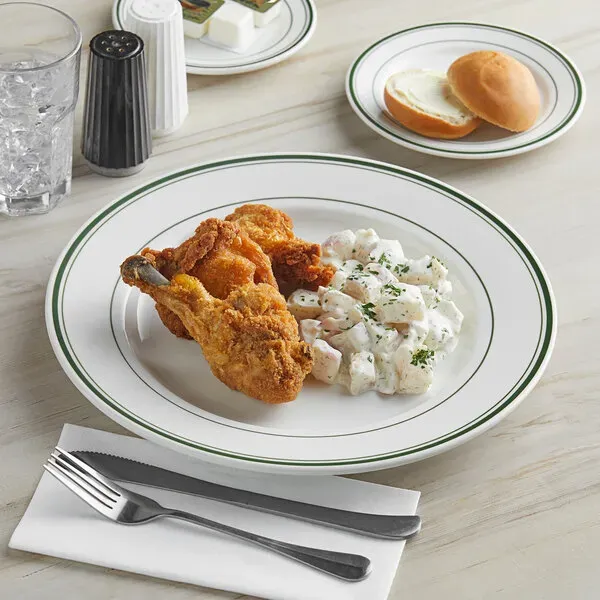
1. Best Overall (The Tank): Tuxton Green Bay (Rolled Edge)
- Best For: Diners, Breakfast Spots, High-Volume Casual.
- Why It Wins: “Rolled Edge” means the rim is thick and reinforced. You can slam it into the dishwasher and it won’t chip.
- Warranty: Lifetime Edge Chip Warranty.
2. Best for Fine Dining (The Elegant): Steelite Alphalain
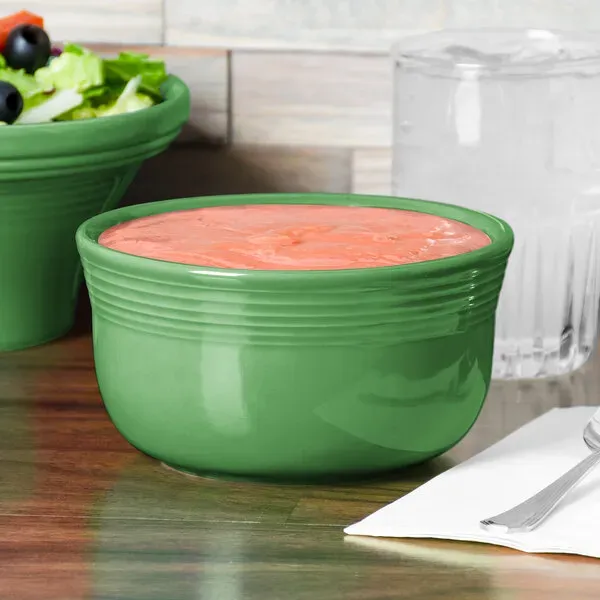
- Best For: Hotels, Upscale Bistros, Steakhouses.
- Why It Wins: High-alumina reinforced body. It looks delicate but is stronger than standard porcelain.
- Aesthetic: Warm white body color makes food look expensive.
3. Best for Outdoor/Patio (The Unbreakable): Libbey Melamine
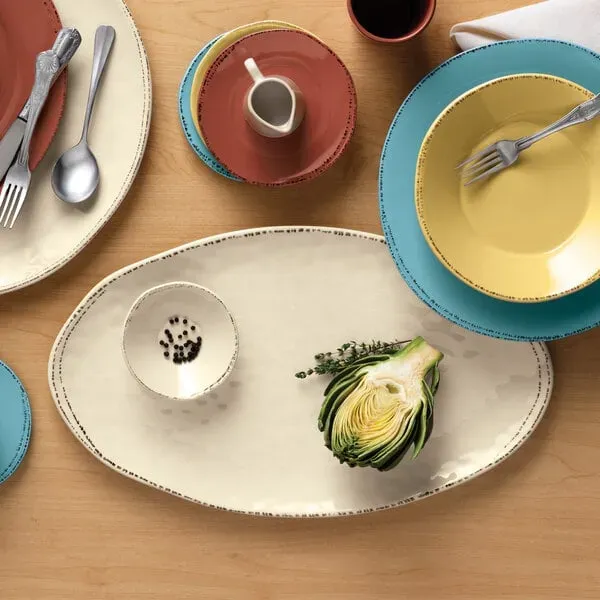
- Best For: Poolside, Patios, Mexican Restaurants (Salsa Bowls).
- Why It Wins: It looks just like ceramic but bounces off concrete.
- Warning: DO NOT put it in the microwave or salamander (it will blister).
Frequently Asked Questions (FAQ)
Q: Why do my plates chip so easily? A: You are likely using “Residential” or “Coupe” plates. Commercial “Rolled Edge” china has a reinforced rim designed to absorb the impact of stacking and dishwashing.
Q: What does “Fully Vitrified” mean? A: It means the clay was fired at super-high temps (~2300°F) to become glass-like and non-porous. Non-vitrified plates absorb water, which turns to steam in the microwave and causes the plate to explode.
Q: How do I remove gray scuff marks from white plates? A: Those are “Metal Marks” from silverware rubbing on the hard porcelain. They are not scratches. Remove them with a mild abrasive paste like Bar Keepers Friend.
Final Summary
If you want Durability, buy Tuxton. If you want Elegance, buy Steelite. If you want Unbreakable, buy Libbey Melamine.
Chef Marco’s Rule: “Buy 1.5x your seat count. If you have 100 seats, buy 150 plates. You need a buffer for the dishwasher rotation and the inevitable drops.”