I once took over a kitchen in Bridgeview where the fryer oil was blacker than my morning espresso. The calamari tasted like burnt rubber. When I audited the books, I found they were throwing away 50 gallons of oil every two days. That is $1,500 a month in wasted oil.
You can buy the best fryer in the world, but if you treat your oil like garbage, your food will taste like garbage. Oil is an ingredient. It is the most expensive consumable in your kitchen. Saving it is not just about money; it is about quality.
The USDA Food Safety and Inspection Service warns that degraded oil can harbor harmful compounds and ruin the flavor profile of your menu.
This guide teaches you the “3 Enemies of Oil” and how to double your oil life. But this profit machine only works if you buy the right one and treat it like a Ferrari.
This guide covers everything: Tube Style vs. Open Pot, Gas vs. Electric, and the dark art of Oil Chemistry.
Deep Dive: Tube Style vs. Open Pot
Before you buy, you must understand your menu. If you buy the wrong type, your equipment will fail in 6 months.
1. Tube Style (The “Workhorse”)
- Design: You look inside comfortably and see 3 or 4 large metal tubes running across the tank. The gas fire shoots through these tubes to heat the oil.
- The “Cold Zone”: Because the tubes are elevated, there is a large space at the bottom filled with cooler oil.
- Best For: High Sediment Foods. (Breaded Chicken, Fish & Chips, Mozzarella Sticks).
- Why: When crumbs fall off the chicken, they sink below the tubes into the Cold Zone. They sit there without burning.
- Pros: Your oil stays cleaner longer if you bread heavily.
- Cons: Harder to clean (you have to scrub around the tubes).
2. Open Pot (The “Ferrari”)
- Design: The tank is an open V-shape. The burners are on the outside of the tank (like heating a pot on a stove).
- Best For: Low Sediment Foods. (Frozen Fries, Frozen Wings, Hash Browns).
- Why: There is almost no Cold Zone. If you throw breaded chicken in here, the crumbs will hit the bottom, burn instantly, and carbonize. Your oil will turn black in 4 hours.
- Pros: Incredible heat transfer. Easiest to clean (just wipe the V).
- Cons: Cannot handle heavy breading.
Verdict:
- Fried Chicken Joint: Buy Tube Style (Vulcan/Pitco).
- Burger/Fry Joint: Buy Open Pot (Frymaster).
Gas vs. Electric: The Recovery Wars
Gas
- The Standard: 90% of kitchens use gas.
- Pros: Instant, violent heat.
- Cons: The heat is transferred through metal walls, which can be inefficient (50% efficiency).
Electric
- The Secret Weapon: The heating elements are submerges directly in the oil.
- Efficiency: 100% heat transfer.
- Recovery: Faster than gas.
- Cons: Electricity is usually more expensive than gas in most cities. And cleaning around the coils is annoying (they hinge up, but it’s still messy).
The “Chef’s ROI” Calculator: Built-in Filtration
Price difference:
- Standard Fryer: $1,200.
- Fryer with Built-in Filter Motor: $4,500.
Is it worth the extra $3,300?
Scenario: A busy bar using 100lbs of oil per week.
| Metric | Hand Filtering (Manual) | Built-In Filtration (Automatic) |
|---|---|---|
| Labor (Daily) | 30 Mins (Dangerous/Messy) | 5 Mins (Push Button) |
| Oil Life | 3-4 Days | 7-10 Days |
| Oil Cost ($50/Jug) | $300 / week | $150 / week |
| Burn Injuries | High Risk | Zero Risk |
| Annual Savings | - | $7,800 (Oil) + $3,000 (Labor) |
Verdict: The filtration motor pays for itself in 4 months. If you have more than 2 fryers battery-banked together, you are insane if you do not buy the filtration system.
Deep Dive: The Chemistry of “Dead Oil”
Why does oil die? It’s not magic. It’s chemistry.
1. Hydrolysis (The Water Killer)
- The Enemy: Frozen Fries.
- The Reaction: When ice crystals hit 350°F oil, they explode into steam. This breaks the triglyceride bonds, creating Free Fatty Acids (FFAs).
- The Symptom: Smoke point drops. The oil smokes at 325°F. It tastes “soapy.”
- The Fix: Shake the ice off the basket away from the fryer before dropping.
2. Oxidation (The Air Killer)
- The Enemy: Oxygen.
- The Reaction: Oxygen attacks the oil molecules, especially when hot.
- The Symptom: Dark, paint-smelling oil.
- The Fix: Cover the fryers with metal night lids. Don’t leave them idling at 350°F during the slow hours (turn down to 200°F).
3. Polymerization (The Gunk)
- The Enemy: Carbon.
- The Reaction: FFAs link together to create plastic-like chains.
- The Symptom: That sticky brown gum on the rim that you can’t scrub off.
The “Boil Out” SOP (Standard Operating Procedure)
You can’t just drain oil and add new oil. You have to reset the metal.
- Drain: Remove old oil.
- Fill: Water to the fill line.
- Dose: Add Boil-Out Puck (Alkaline Cleaner).
- Simmer: 195°F for 20 mins. DO NOT BOIL OVER.
- Scrub: Use a toilet-brush style scrubber on the tubes.
- Rinse: Hot water.
- Neutralize: Vinegar Rinse (1 Cup Vinegar + Water). This kills the soap residue.
- Dry: Bone dry.
- Refill.
Chef’s Warning: If you skip the “Neutralize” step (Vinegar), the leftover soap will react with your new oil. Your fryer will foam over like a bubble bath the moment you turn it on.
Troubleshooting Matrix: When It Dies on Friday Night
| Symptom | Probable Cause | The Fix |
|---|---|---|
| Pilot Won’t Stay Lit | Thermopile is dirty (Unit thinks no fire). | Polish the sensor with a dollar bill (abrasive). |
| Burners Won’t Fire | High Limit Switch Tripped (>450°F). | Find the Red Button inside the cabinet. Press it. |
| Oil Not recovering | Sediment insulating the tubes. | Boil out the fryer. Scrub the tubes. |
| Blue/Yellow Flame | Air shutter misalignment. | Call HVAC tech to adjust Oxygen mix. |
Top 3 Commercial Fryer Recommendations
Match the machine to the menu.
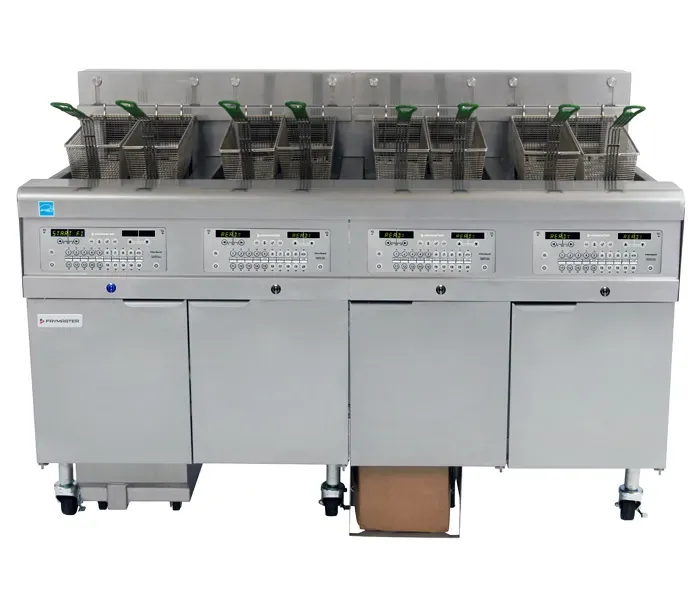
1. Best for Frozen Foods (Open Pot): Frymaster FilterQuick
- Best For: Burger Chains, French Fry production.
- Why It Wins: The open-pot design has zero “hiding spots” for crumbs. It transfers heat incredibly fast.
- Technology: The built-in filtration is the industry standard.
2. Best for Fresh Breading (Tube Style): Pitco Solstice Series
- Best For: Fried Chicken, Fish & Chips.
- Why It Wins: The large Cold Zone traps heavy sediment so it doesn’t carbonize. Your oil lasts 2 days longer.
- Durability: The tubes act as heat exchangers and are virtually indestructible.

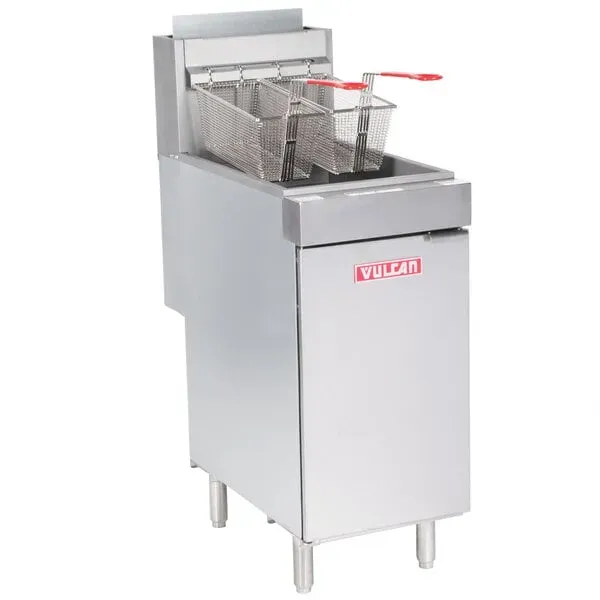
3. Best Value (General Purpose): Vulcan LG Series
- Best For: Mom & Pop diners, low-to-medium volume.
- Why It Wins: It’s a simple, reliable tube fryer that costs half as much as the others. Parts are available at any supply house.
Frequently Asked Questions (FAQ)
Q: Is a built-in filtration system worth the cost? A: If you have 2+ fryers, Yes. It extends oil life by 50-100% and reduces labor/injury risk. It pays for itself in about 4 months.
Q: Can I use salt over the fryer? A: Never. Salt is the #1 killer of fryer oil. It breaks down the chemical bonds. Season your fries after dragging them away from the fryer.
Q: What happens if I boil over during cleaning? A: The alkaline cleaner will spill onto the floor, creating a massive slip hazard and potentially corroding the fryer legs. Watch the boil-out carefully!
Final Summary
If you sell Fries, buy Frymaster. If you sell Chicken, buy Pitco.
Related Articles
Final Word: Safety
A fryer contains 50lbs of 350°F liquid napalm.
- Slip Resistant Shoes: Non-negotiable.
- Class K Extinguisher: Must be within 10 feet as per NFPA 10.
- The “Ice” Rule: If I see a cook throwing ice into a fryer “for fun” (to see it bubble), they are fired on the spot. It is an explosion hazard.
Treat the fryer with respect, keep the oil clean, and it will pay your rent.