A chef is only as good as his pan. If you sear a scallop in a thin aluminum pan, it sticks. If you boil pasta in a copper pot, you waste $500. And if you cook marinara sauce in raw aluminum, you poison the flavor.
Understanding Metallurgy is not academic; it is operational. You need to know Thermal Conductivity (How fast it heats) and Reactivity (Chemical interaction). In this guide, I will break down the Big 4 Metals and why “Tri-Ply” is the industry standard for sautéing.
1. Aluminum (The Workhorse)
3003 Aluminum / 3004 Aluminum
- Conductivity: Excellent. Heats up fast. Cools down fast.
- Cost: Dirt cheap.
- Durability: Soft metal. It dents if dropped. “3004” is harder than “3003.”
- The Flaw: Reactivity.
- Aluminum is reactive to Acid.
- The Disaster: If you simmer a Tomato Sauce, White Wine sauce, or Lemon Curd in a raw aluminum pot for 2 hours, the sauce will turn gray and taste like a battery. The acid eats the metal.
- Use For: Boiling water (Pasta), Stocks, Frying.
- NEVER Use For: Acidic reductions.
Anodized Aluminum (The Shield)
- Process: Electro-chemically treated to create a hard, non-reactive gray oxide shell.
- Result: It is harder than steel. It is non-reactive (Safe for tomatoes).
- Cleaning: You CANNOT put it in the dishwasher. Commercial detergent eats the coating. Hand wash only.
2. Stainless Steel (The Tank)
- Conductivity: Terrible. It is a heat insulator.
- If you put a solid stainless pan on a burner, you get a “Red Hot Ring” where the flame is, and cold spots everywhere else.
- Reactivity: Non-Reactive. You can store acid in it for weeks.
- Durability: Indestructible.
- The Fix: Stainless steel is never used alone. It is used as a Cladding or Sandwich Bottom.
3. Cladding: The Sandwich (Tri-Ply)
The perfect pan has the durability of Stainless Steel and the conductivity of Aluminum. Enter the “Clad” Pan.
- Construction:
- Layer 1 (Inside): Stainless Steel (Non-reactive food surface).
- Layer 2 (Core): Aluminum (Transfers the heat).
- Layer 3 (Outside): Stainless Steel (Induction capable magnetic shell).
- Bottom Disk vs. Full Clad:
- Disk Bottom: Only the bottom plate is sandwiched. Good for stock pots.
- Full Clad (5-Ply): The aluminum core goes up the walls of the pan. Essential for Sauté pans where you want heat surrounding the food.
4. Carbon Steel (The French Skillet)
- The Material: Iron + Carbon (similar to Cast Iron but thinner/smoother).
- The “Seasoning”: Like a wok, it builds a natural non-stick patina of polymerized oil over time.
- Performance: Heats insanely fast. Sears meat better than anything else.
- Maintenance:
- NO SOAP.
- NO WATER. (Wipe it out).
- If you leave it wet for 10 minutes, it RUSTS orange.
- Blue Steel vs. Black Steel:
- Blue Steel: Heat-treated (annealed) to prevent rust during shipping. The blue fades.
- Black Steel: Often pre-seasoned or thicker.
- Verdict: Same performance. Just season them well.
- Use For: Searing Steaks, Omelettes (once seasoned), Crepes.
5. Non-Stick: PTFE vs. Ceramic
PTFE (Teflon / Silverstone)
- Pros: Eggs slide right off.
- Cons:
- Fragile: Metal tongs scratch it instantly. Once scratched, it flakes.
- Heat Sensitivity: If heated above 500°F, it releases toxic fumes (Polymer Fume Fever).
- Lifespan: 3-6 months in a commercial kitchen.
- Regulatory Warning (US): California (AB 1200) now requires labeling of chemicals in non-stick pans. Maine and Minnesota have aggressive PFAS phase-outs starting 2025/2030.
- Verdict: Switch to Ceramic or Seasoned Carbon Steel to future-proof your kitchen against incoming US state bans.
Ceramic
- Pros: Harder than PTFE. Heat resistant.
- Cons: The non-stick property wears off faster (months). Food starts sticking aggressively.
6. Induction Compatibility: The Magnet Test
If you have Induction Burners:
- The Rule: The pan MUST be magnetic.
- Aluminum: No.
- Copper: No.
- 304 Stainless: No.
- 430 Stainless: Yes. (Magnetic).
- Carbon Steel: Yes.
The Test:
- The Symbol: Look for the “Coil” icon stamped on the bottom.
- The Magnet: Stick a magnet to the bottom. If it falls off, it’s useless for induction.
Top 3 Commercial Cookware Recommendations
If you want pans that last 10 years instead of 10 months, buy these specific models.
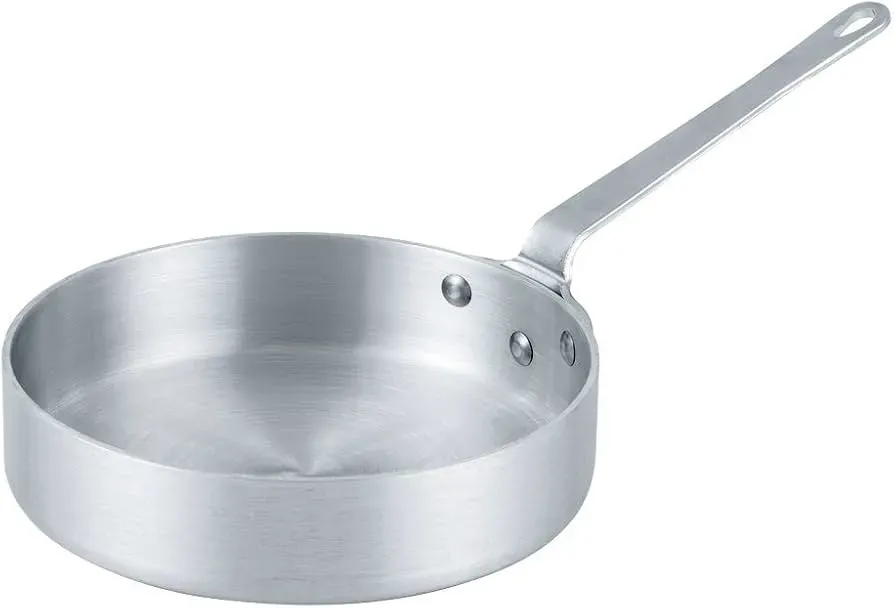
1. Best Workhorse (Aluminum): Vollrath Wear-Ever 3004
- Best For: Boiling water, stocks, frying (High volume).
- Why It Wins: Made from ‘3004’ aluminum which is dent-resistant (unlike the cheaper 3003). The “Cool Handle” silicone grip is oven safe to 450°F but keeps your hands from burning on the stove.
- Value: Unbeatable durability for the price.
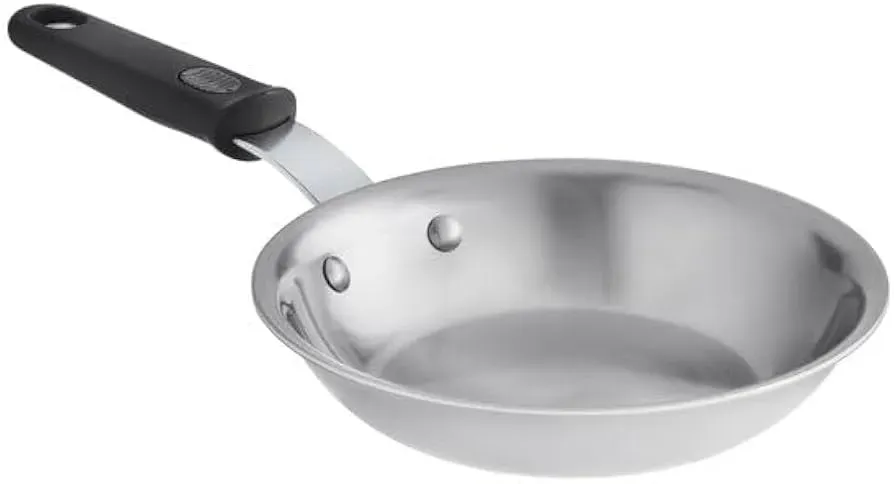
2. Best for Sauté (Tri-Ply): Vollrath Tribute / All-Clad d3
- Best For: Risotto, Pan Sauces, Acidic Foods.
- Why It Wins: It has a Stainless Steel interior (non-reactive) with an Aluminum core that goes all the way up the sides (Full Clad). No hot spots. You get the sear of aluminum with the safety of stainless.
- Warning: Do not use metal scouring pads on the interior or you’ll scratch the steel.
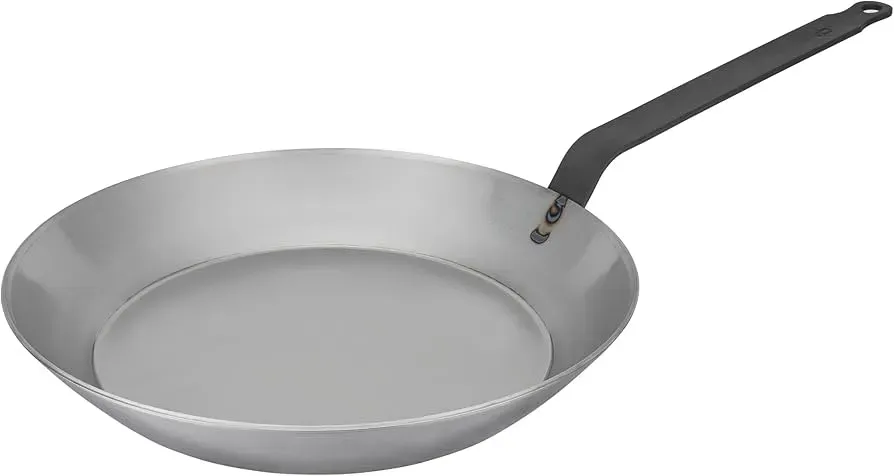
3. Best for Searing (Carbon Steel): Matfer Bourgeat Black Steel
- Best For: Steaks, Fish Skin, Omelettes (once seasoned).
- Why It Wins: It is a single piece of steel (no rivets to collect grease). Once seasoned, it is naturally non-stick and performs like Cast Iron but weighs half as much.
- Rule: NEVER put this in the dishwasher. Wipe clean with oil only.
Frequently Asked Questions (FAQ)
Q: Can I cook tomato sauce in an aluminum pot? A: No. The acid in tomatoes reacts with raw aluminum, turning the sauce metallic gray and ruining the flavor. Use Stainless Steel or Anodized Aluminum for acidic foods.
Q: What is “Tri-Ply” cookware? A: It is a “sandwich” construction: A heat-conductive Aluminum core wrapped in non-reactive Stainless Steel. It gives you the best of both worlds: even heating and safe food contact.
Q: How do I know if my pan works on Induction? A: Use the Magnet Test. If a magnet sticks to the bottom of the pan, it will work on an induction burner. (Aluminum and Copper will not work).
Final Summary
Don’t be cheap on your Sauté pans. You can buy cheap stock pots, but your daily driver sauté pan needs to be Tri-Ply. It affects the food quality directly.