Every restaurant manager tries to save $2 on a mop head. “Give me the #24 Cotton Cut-End mop for $5,” they say.
Two weeks later, the mop smells like a dead animal. The floor is streaky. The strings are clogging the washing machine drain. You get what you pay for. A quality mop is not just a cleaning tool; it is a hygiene device.
In this guide, I will explain the microscopic difference between cotton and microfiber, why “Cut End” mops are a scam, and the color-coding system that prevents your busboy from mopping the dining room tables with the bathroom mop.
The Material War: Cotton vs. Rayon vs. Blend
1. Cotton (The Cheap Sponge)
- The Science: Cotton fibers are organic tubes. They absorb water well, but they also absorb bacteria.
- Pros: Cheap ($4-$6). High liquid retention (good for floods).
- Cons: It Rots. Because it is organic, bacteria breed inside the fiber tubes. This creates that “Sour Mop Smell” (Mildew).
- Break-In Period: New cotton mops have natural oils (cottonseed oil). You must soak them in hot soapy water for 24 hours before first use, or they won’t absorb anything.
- Best For: Cleaning up massive spills (like a broken pipe). Disposable use.
2. Rayon (The Finisher)
- The Science: Rayon is a semi-synthetic fiber made from cellulose. It has no “pockets” to hold dirt.
- Pros: Dries instantly. Does not mildew. Releases liquid very evenly.
- Cons: Terrible at cleaning dirt. It just pushes it around.
- Best For: Applying Floor Wax/Finish. Because it releases liquid so smoothy, you get a glass-like finish without streaks. NEVER use this for general cleaning.
3. Synthetic Blend / Microfiber (The Pro Choice)
- The Science: Microfiber strands have a “Star Shape” cross-section. They act like millions of tiny hooks that grab dirt, dust, and bacteria from the pores of the floor.
- Pros: Removes 95% of microbes with just water. Incredible scrubbing power. Lasts 200-500 washes.
- Cons: Expensive ($12-$18).
- Verdict: This is what you should use for daily mopping. It actually cleans key areas.
The Construction: Cut End vs. Loop End
This is even more important than the material.
1. Cut End (The “Disposable” Scam)
The strings are just cut at the bottom.
- The Failure: As you mop, the strands untwist. They fray. They leave lint everywhere.
- Laundering: YOU CANNOT WASH THESE. If you put a cut-end mop in a washing machine, it explodes into a ball of lint. You will destroy your washing machine pump.
- Lifespan: 2 weeks. Then you trash it.
2. Loop End (Launderable)
The strings are looped back up into the band. There is usually a “Tailband” holding them flat.
- Benefit: Launderable. You can wash these daily.
- Coverage: The tailband keeps the mop flat aka “Fan Shape”. You cover twice the floor area in one swipe compared to a “Spaghetti” mop.
- Lifespan: 6-12 months.
ROI Math:
- Cut End: Buy 2 per month ($10) = $120/year.
- Loop End: Buy 2 per year ($24) = $24/year.
- Savings: $96 per mop stick.
Prevent Cross-Contamination: Color Coding
You never want the mop that cleaned the urinal to touch the kitchen floor. The industry standard HACCP color code is:
- Red: Restrooms ONLY. (High Risk).
- Blue: General Areas (Dining Room, Hallways, Offices).
- Green: Kitchen / Food Prep (Grease).
- Yellow: Specialty (Biohazard or Back Dock).
Implementation: Buy handles that match the mop heads. “Take the Blue Mop” is easier to understand than “Take the mop that we use for the dining room.”
Handles: Wood vs. Fiberglass vs. Aluminum
- Wood: Cheap. Porous. Absorbs bacteria. Splinters. Illegal in some health jurisdictions.
- Fiberglass: The standard. Lightweight. Durable. Easy to sanitize.
- Aluminum: Very light, but can bend if a fryer falls on it.
Connection Types:
- Quick Change (Plastic): A side gate opens, mop slides off. Fast. Sanitary (Plastic doesn’t rust). Recommended.
- Jaw / Clamp: “Bites” the mop head. Good for wide bands.
- Wing Nut (Metal): The old school metal clamp.
- Warning: The metal rusts. If the mop head wears down, the metal scratches your expensive expensive wood floor. Avoid.
Essentials of Mopping: The Two-Bucket System
If you use one bucket, you are dipping the dirty mop back into the “clean” water. By the time you finish the floor, you are mopping with mud.
The Protocol:
- Bucket 1 (Blue): Clean Water + Chemical.
- Bucket 2 (Red): Empty (under the wringer).
- The Flow: Dip in Blue -> Mop Floor -> Wring into Red -> Dip in Blue.
- Result: Your cleaning water stays blue until the very end. The dirt stays in the wringer bucket.
Laundry Protocol
How to wash a mop head without ruining it:
- Bag It: Put mop heads in a Mesh Laundry Bag. This prevents tangling.
- Hot Water: 160°F to kill bacteria.
- Low Bleach: Do not use heavy bleach on synthetic mops; it degrades the fibers. Use enzyme detergent.
- Dry: Tumble dry low or hang dry. High heat melts the synthetic fibers (they turn into plastic rocks).
The 2026 Future: Robots & Safety
- The Robot Revolution: For venues >5,000 sq ft, autonomous scrubbers (like SoftBank Whiz or Tennant) are now cheaper than labor. They memorize the route and scrub while you sleep.
- Slip & Fall Lawsuits: Your floor cleaner matters.
- The Cert: Look for the NFSI (National Floor Safety Institute) “High Traction” logo on your chemicals. If a customer slips and you used a non-certified soapy degreaser, you lose the lawsuit.
Top Commercial Floor Care Recommendations
Don’t buy the $5 cotton mop. It smells like death.
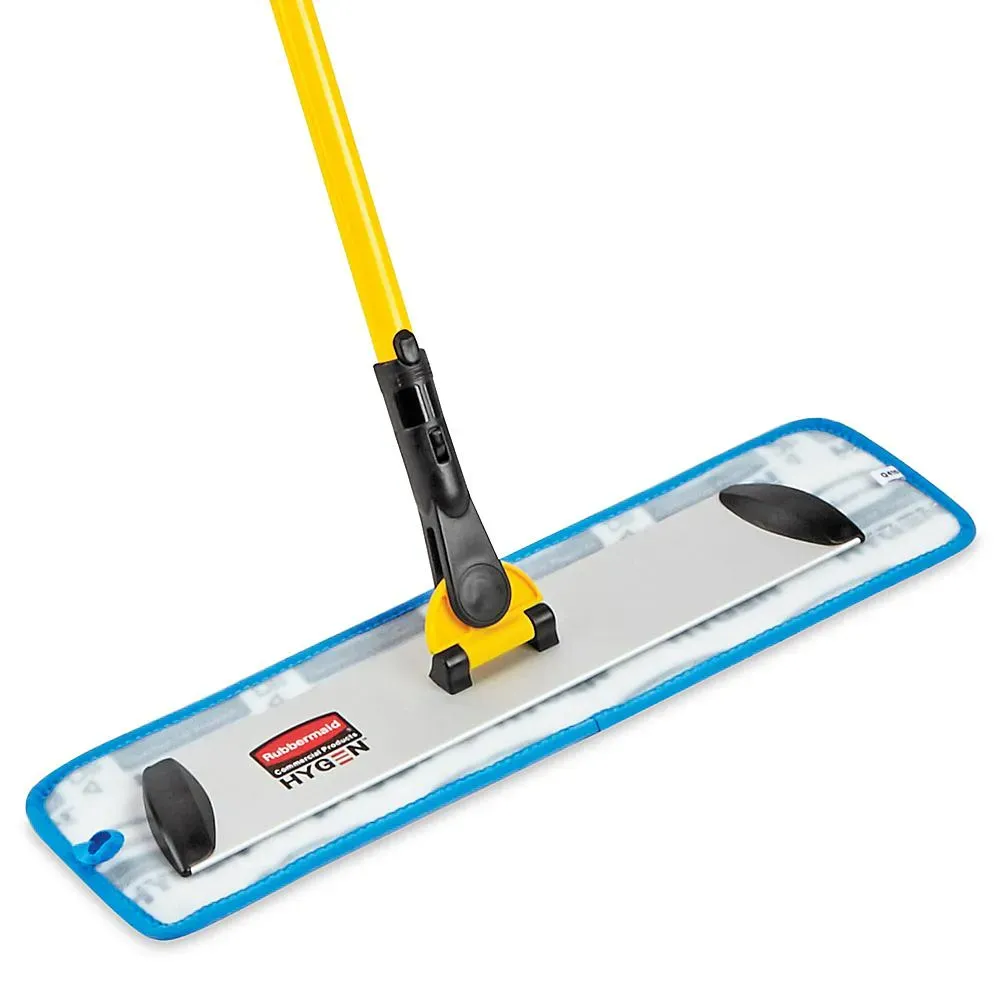
1. Best Overall (The Hygienic Choice): Rubbermaid HYGEN Series
- Best For: Dining Rooms, Front of House.
- Why It Wins: The microfiber pads remove 99.7% of microbes with just water. They are laundry-safe for 500 washes.
- Ergonomics: The “Pulse” mop system has the chemical onboard, so you don’t need a bucket.
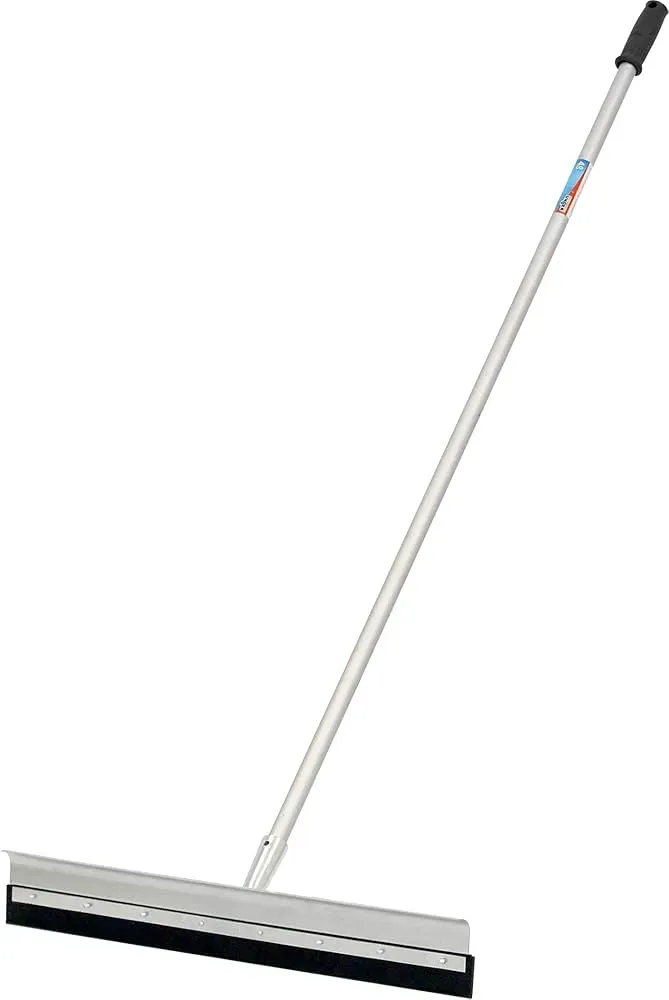
2. Best Squeegee (The Liquid Mover): Unger AquaDozer
- Best For: Kitchens, Decks, Tile.
- Why It Wins: The curved blade moves 2x more water than a straight squeegee. It is built like a tank.
- Design: Heavy-duty steel frame doesn’t bend.
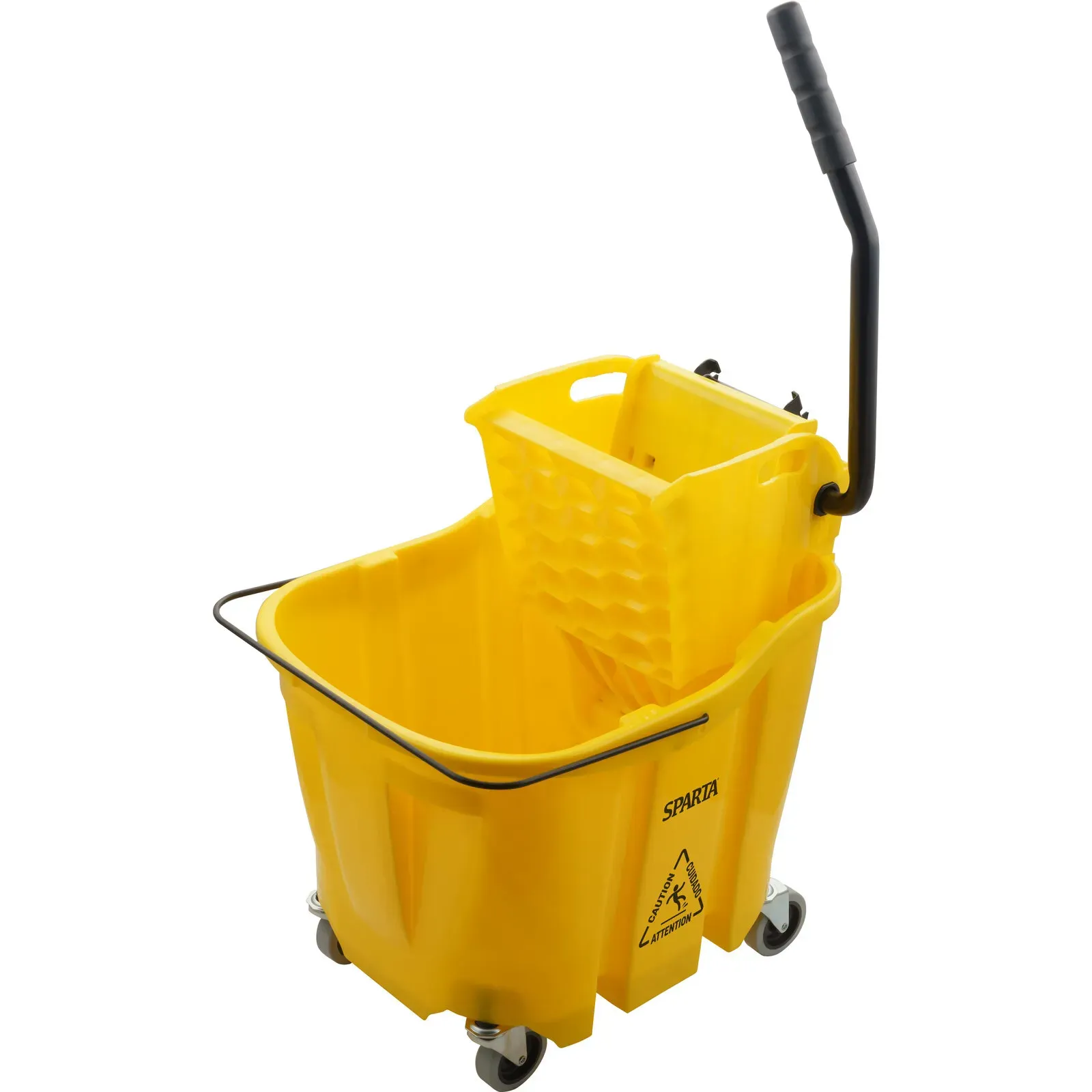
3. Best Mop Bucket (The Classic): Carlisle Side Press
- Best For: The Dish Pit, Heavy Grease.
- Why It Wins: Polyethylene body won’t crack. The “Side Press” wringer lasts longer than the “Down Press” mechanism in cheap units.
- Value: It’s a quarter of the price of the fancy Rubbermaid WaveBrake.
Frequently Asked Questions (FAQ)
Q: Why does my mop smell sour? A: Cotton mops rot because bacteria breeds inside the organic fibers. Switch to Microfiber or synthetic mops which do not support bacterial growth and dry faster.
Q: What is the difference between Cut-End and Loop-End mops? A: Cut-End mops are cheap and fall apart in the wash (disposable). Loop-End mops are durable, cover more surface area, and can be laundered hundreds of times.
Q: What do the mop colors mean? A: Standard color code: Red for Restrooms (High Risk), Blue for Dining/General Areas, and Green for Kitchen/Food Prep to prevent cross-contamination.
Final Summary
If you are mopping the Dining Room, buy Rubbermaid Microfiber. If you are cleaning the Kitchen, buy an Unger Squeegee and a Carlisle Bucket.