You think the dishwasher (the machine) does all the work. Wrong. The Dishwasher (the Human) does 80% of the work at the Pre-Rinse Station. If they don’t blast the baked-on lasagna off the plate before it goes into the machine, the machine will fail. You will re-wash 20% of your dishes.
The Pre-Rinse Unit is the most used tool in the dampest, most abusive corner of your kitchen. In this guide, I will explain why Flow Rate (GPM) is basically printing money, why T&S Brass is the king, and how to change that little rubber O-ring that always leaks.
1. The Physics: GPM (Gallons Per Minute)
In 2005, a pre-rinse faucet sprayed 4.0 GPM. It was like a fire hose. Today, the Department of Energy mandates efficiency. But there is a balance between “Saving Water” and “Actually Cleaning the Plate.”
The Low-Flow (0.65 GPM) - “The Mist”
- Pros: Ultra-low water bill.
- Cons: It feels like a weak shower. It takes 20 seconds to spray off a plate of mashed potatoes.
- Verdict: Avoid for high-volume soiled dishes. Good for rinsing salad bowls only.
The Ultra-Spray (1.15 GPM) - “The Knife”
- The Tech: Brands like T&S Brass (B-0113) use a specially engineered nozzle that fans the water into a “Knife Edge.”
- Physics: Higher Velocity = Higher Cleaning Power, even with less water.
- Verdict: The Sweet Spot. It cuts grease instantly but saves thousands of gallons a year.
The 2026 DOE Update: The “Rollback”
The Department of Energy has noted that ultra-low flow (0.65 GPM) valves were causing chefs to utilize “two passes,” actually wasting more water.
- The Trend: Expect a shift back to 1.15 GPM - 1.28 GPM as the functional standard.
- Chef’s Advice: Don’t suffer with 0.65 GPM unless your local code explicitly mandates it (e.g., California/CEC).
The Standard (1.42 GPM)
- Verdict: The legal maximum in many states. Good for heavy scrubbing.
2. ROI Analysis: The Water Bill
Scenario: A busy restaurant runs the faucet 4 hours a day (accumulated).
- Old Faucet (4.0 GPM):
- Consumption: 960 Gallons/Day.
- Annual Cost (Water + Heating): ~$4,000.
- New Faucet (1.15 GPM):
- Consumption: 276 Gallons/Day.
- Annual Cost: ~$1,100.
Savings: $2,900 per year. A new T&S Brass faucet costs $250. Payback Period: 1 Month. If you have a dripping faucet, you are literally flushing profit.
3. Installation: Deck Mount vs. Wall Mount vs. 4-Inch?
Don’t call the plumber until you verify your Centers.
Wall Mount (The Standard)
- Connection: Pipes come out of the backsplash of the sink.
- Centers: Almost always 8 Inches (Adjustable eccentrics allow for 7.75” to 8.25”).
- Installation: Easiest to keep clean. No gunk build-up behind the faucet base.
Deck Mount (The Counter)
- Connection: Pipes come up from the counter/sink rim.
- Centers: Usually 4 Inches or 8 Inches. Measure carefully.
- Pro Tip: Use plenty of silicone sealant around the base or water will leak into the cabinet below.
The “Add-On” Faucet
- What is it? A 12-inch swing nozzle attached to the riser.
- Why: The sprayer is for dishes. The Add-On Faucet is for filling the sink compartments (Wash/Rinse/Sanitize).
- Rule: NEVER try to fill a 20-gallon sink with the spray hose. It takes forever and you will burn out your hand holding the handle.
4. Maintenance: The Leak Fix
“Chef, the sprayer is leaking down my arm!” A leaking sprayer handle causes “Dishwasher Rot” (skin infection). Fix it immediately.
The Parts Breakdown:
- The Bumper: The rubber ring around the head. Protects dishes from chipping.
- The Faceplace: The holes where water comes out. Scale builds up here. Soak in vinegar.
- The O-Rings: Inside the handle.
- Repair: Buy a “Repair Kit” ($15). Unscrew the handle. Swap the O-rings. Apply food-grade grease. Done in 5 minutes.
5. Brand Breakdown: T&S vs. Fisher vs. Import
T&S Brass (The Gold Standard)
- Origin: USA.
- Features: Heavy brass. Ceramic cartridges (never drip).
- Warranty: 5 Years.
- Repairability: You can buy every single screw and washer individually.
- Verdict: Buy once, cry once.
Fisher (The Heavy Duty)
- Origin: USA.
- Features: Brutalist industrial design. Known for their 1/2” valves (Massive flow).
- Verdict: Great for heavy pot washing scenarios.
Top 3 Commercial Pre-Rinse Faucet Recommendations
A dripping faucet costs you $500/year. Buy one that seals.
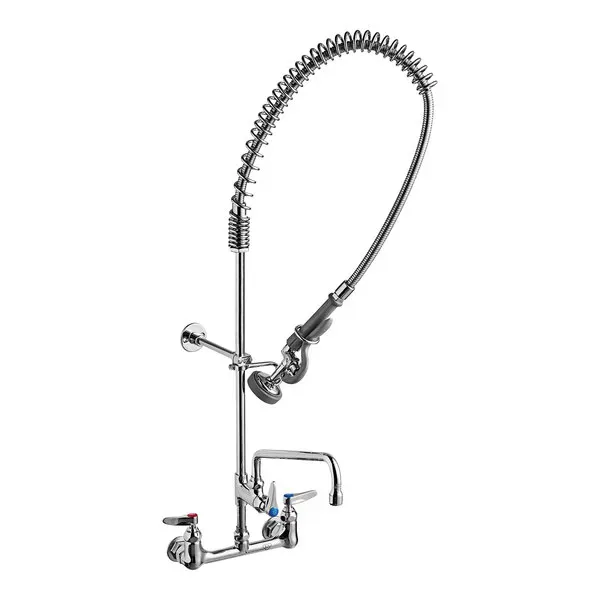
1. Best Overall (The Gold Standard): T&S Brass B-0133
- Best For: Any Busy Kitchen.
- Why It Wins: It is the industry icon. The brass is heavier, the chrome plating is thicker, and the “Eterna” cartridges don’t leak.
- Support: You can buy a single screw for this unit 20 years later.
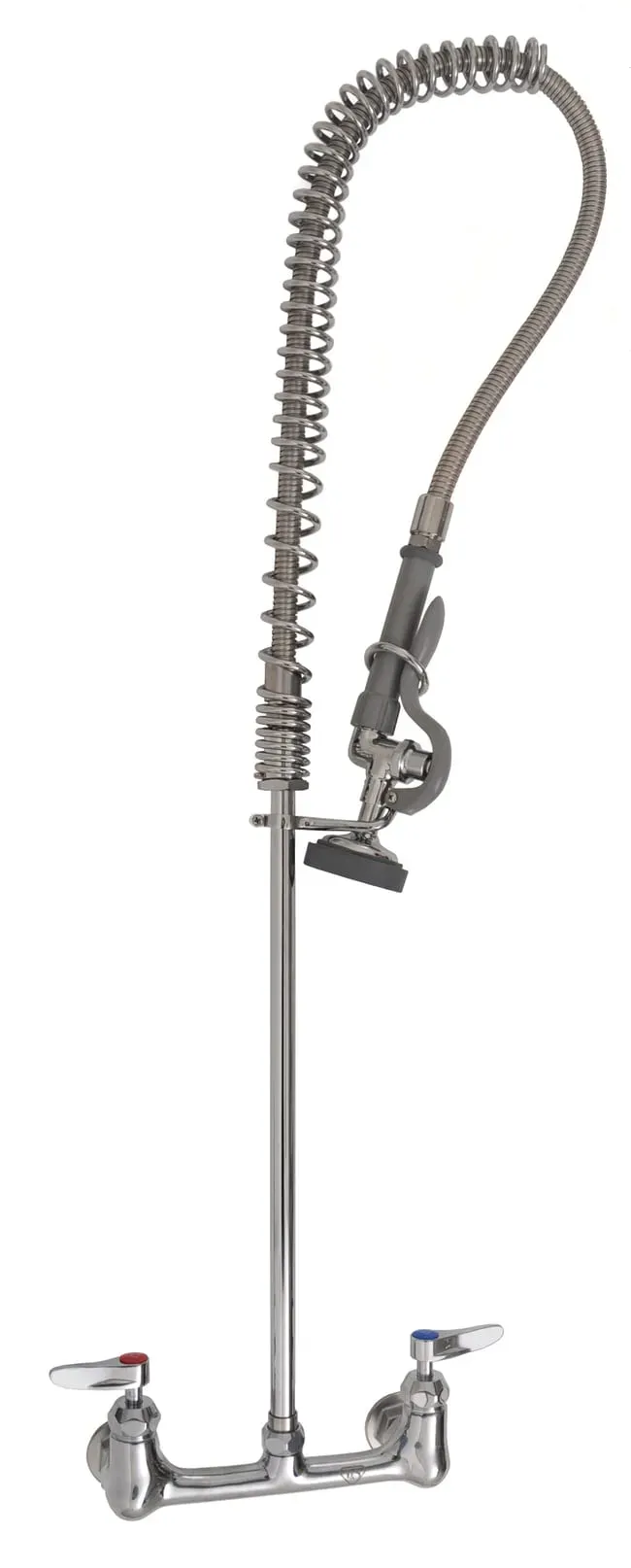
2. Best Heavy Duty (The Pot Washer): Fisher 2981
- Best For: Institutional Kitchens, Schools.
- Why It Wins: Fisher uses massive 1/2” valves for easier flow. The “Ultra-Spray” valve is legendary for blasting baked-on cheese.
- Durability: The manufacturing tolerances are aircraft-grade.
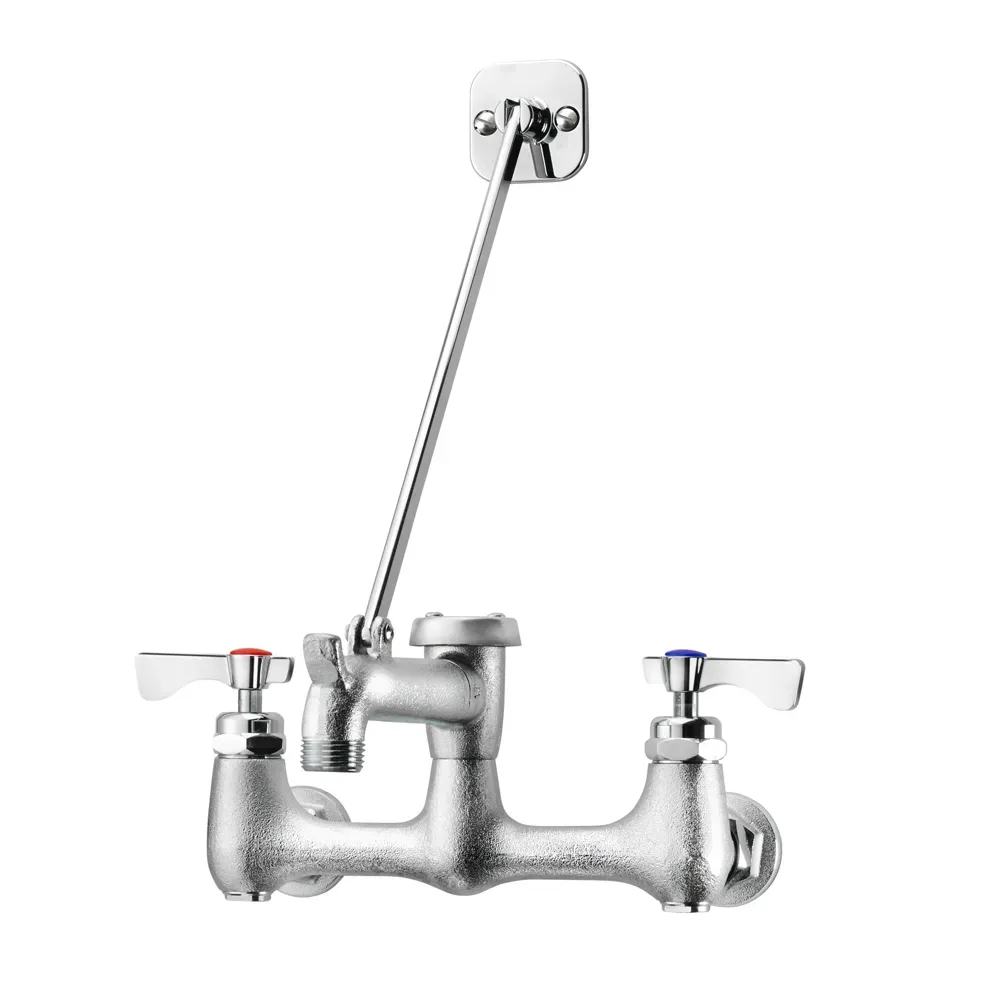
3. Best Value (The Competitor): Krowne Royal Series
- Best For: Bars, Cafes.
- Why It Wins: It offers 90% of the quality of T&S for 70% of the price. The parts are often interchangeable.
- Service: Comes with a great 3-year warranty.
Frequently Asked Questions (FAQ)
Q: How much money does a low-flow pre-rinse valve save? A: Switching from an old 4.0 GPM unit to a 1.15 GPM unit can save a busy restaurant over $2,500 per year in water and heating costs.
Q: What is the best flow rate for a pre-rinse faucet? A: 1.15 GPM to 1.28 GPM is the “Sweet Spot”—strong enough to blast food but efficient enough to save money. Avoid 0.65 GPM units for heavy soil.
Q: Why is my pre-rinse sprayer leaking? A: It is usually a worn O-ring in the handle or scale buildup on the faceplate. A $15 repair kit fixes it in 5 minutes.
Final Summary
If you want longevity, buy T&S Brass. If you want power, buy Fisher. If you are on a budget, buy Krowne.
6. Accessories: The Wall Bracket
The most critical accessory is the 12” Wall Bracket. If you do not bolt the riser pipe to the wall:
- The dishwasher yanks the hose.
- The leverage snaps the pipe at the base.
- Flood. Always install the wall bracket. Cut it to size with a hacksaw.
Chef Marco’s Rule: “Watch your dishwasher. If they are using the sprayer to ‘sweep’ food into the drain for 5 minutes straight, yell at them. That is lazyness. Use a scraper. The water is for rinsing, not for Brooming.”