A fork is not just a fork. It is a tool that goes into a customer’s mouth. If it tastes like a penny (metallic), bends when they cut a steak, or has rust spots, the customer assumes your kitchen is gross. You need Chemical Resistance and Structural Integrity.
But the biggest problem with flatware is not rust. It is The Trash Can. Restaurants lose 20% of their spoons every year because bussers throw them away. In this guide, I will explain the Metallurgy of Nickel, how to stop “Pitting,” and the magic of the Magnet.
1. Metallurgy: The Numbers Game (18/10 vs 18/0)
Stainless Steel is an alloy. The numbers tell you the recipe.
18/10 Stainless (The Gold Standard)
- Recipe: 18% Chrome, 10% Nickel.
- The Nickel: Nickel gives it a silver, mirror-like shine and makes it Rust Proof.
- The Feel: Heavy. Luxurious.
- Magnetism: Non-Magnetic (mostly).
- Verdict: Mandatory for Fine Dining.
18/0 Stainless (The Budget Workhorse)
- Recipe: 18% Chrome, 0% Nickel.
- The Look: Slightly gray/blue tint. Less shiny.
- The Rust: It can rust if soaked in bleach or acid (tomato).
- The Magic: IT IS MAGNETIC.
- why this matters: You can use a Magnetic Trash Chute to save it.
- Verdict: Best for Diners, Cafeterias, and casual spots.
18/8 Stainless
- Verdict: Slightly cheaper version of 18/10. Indistinguishable to most people.
2. Loss Prevention: The Magnet
Problem: A busy busser clears a plate. A spoon is hidden under a napkin. They dump the whole plate into the trash. Spoon gone. Cost: You lose $500/year in spoons.
Solution: The Magnetic Trash Chute (for 18/0 only)
- Device: A strong Neodymium magnet collar that fits over the trash can opening.
- Function: As the food falls through, the cutlery sticks to the magnet. The napkin and food fall into the bin.
- Requirement: You MUST use 18/0 flatware. 18/10 is not magnetic enough to stick.
- ROI: The magnet costs $200. It pays for itself in 3 months.
3. Weight Classes: Don’t Bend the Fork
- Medium Weight: Thin. Bends easily. Used in schools/prisons. Avoid.
- Heavy Weight: Standard restaurant quality. Rigid.
- Extra Heavy Weight: The neck of the spoon is thick. feels Premium.
- Forged: The handle is solid steel, not stamped. Extremely heavy. Used in Steakhouses.
The Bend Test: Pick up a fork. Try to bend the neck with your thumb. If it bends, do not buy it. A customer cutting a steak will bend it, get annoyed, and bend it back. Metal fatigue sets in. It snaps.
4. Rust & Maintenance: The “Soak” Trap
“Chef, my stainless steel is rusting!” No. Stainless steel does not rust. The Chromium Oxide layer protects it. BUT… you can destroy that layer.
The Causes of “Pitting”:
- Bleach: Soaking flatware in bleach water destroys the passivated layer.
- Scrubbing: Steel wool scratches the surface, creating pockets for water.
- Presoak: Leaving silverware in the “Presoak Solution” (blue water) for 3 days.
- Rule: Presoak for 20 minutes max. Then wash.
- Galvanic Corrosion: Washing Aluminum (sheet pans) and Stainless Steel (forks) together causes a chemical reaction. The aluminum corrodes and deposits black spots on your forks. Wash them separately.
The Fix:
- Electrolysis: Or simply use a “Silverware Burnishing” machine (Tumbling with ceramic beads) to polish out the pits.
5. Design: Baguette vs. Windsor vs. Dominion
- Baguette: Round handle ridge. French style. Hides fingerprints.
- Windsor: Fan shape handle. Classic American.
- Dominion: Simple lines. Cheap.
- Rolled Edge: Look at the edge of the spoon. Is it sharp (stamped) or rounded (rolled)? Sharp edges cut mouths.
Final Verdict
Top Commercial Flatware Recommendations
Don’t let your fork taste like a penny.
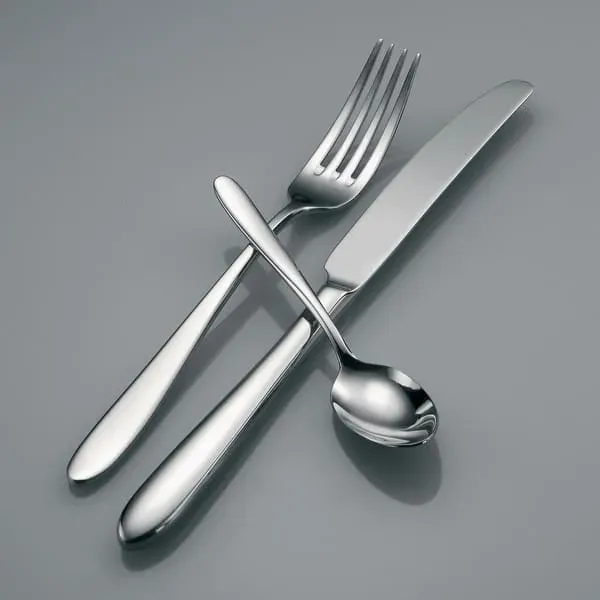
1. Best Overall (The Fine Dining Standard): Oneida Sant’ Andrea (18/10)
- Best For: White Tablecloth, Steakhouses, Upscale Bistros.
- Why It Wins: 10% Nickel content gives it a silver-like luster. It feels heavy and balanced.
- Corrosion: Virtually rust-proof (unless you abuse it with bleach).
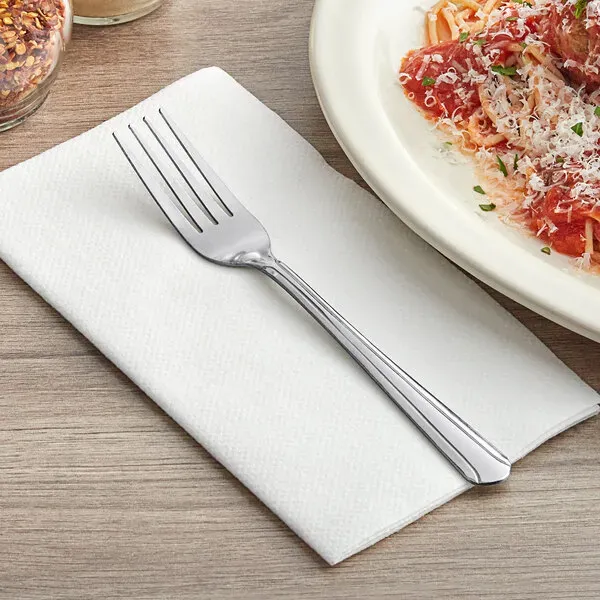
2. Best for Volume (The Magnetic Hero): Choice Dominion Heavy Weight (18/0)
- Best For: Diners, Cafeterias, High-Volume Casual.
- Why It Wins: It is Magnetic. You can use a magnetic trash chute to catch it before it hits the dumpster.
- Cost: Cheap enough to replace, strong enough not to bend.
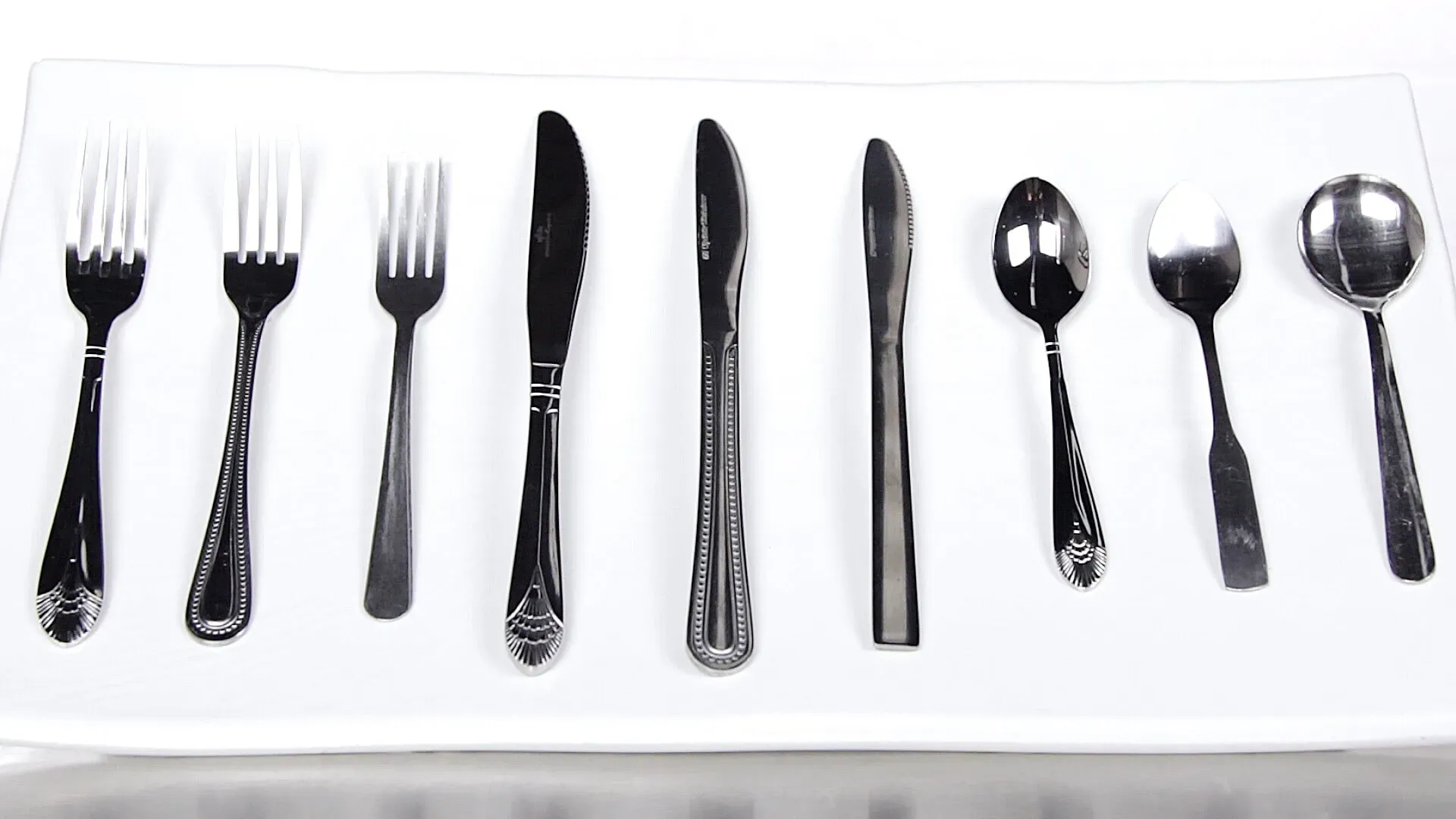
3. Best for Hotels (The Antimicrobial): Walco Bellwether (18/10)
- Best For: Hotels, Banquets, Healthcare.
- Why It Wins: Some lines feature antimicrobial technology. The 18/10 construction handles the rigors of hotel dishwashers.
- Design: Modern, sleek, and stays shiny.
Frequently Asked Questions (FAQ)
Q: What is the difference between 18/10 and 18/0 flatware? A: 18/10 has 10% Nickel, making it shinier and rust-proof. 18/0 has 0% Nickel, making it magnetic.
Q: Why should I buy 18/0 Magnetic flatware? A: So you can use a Magnetic Trash Chute. The magnet catches the silverware before it falls into the trash, saving you hundreds of dollars in lost forks per year.
Q: Why is my stainless steel rusting? A: Likely due to “Presoak Abuse.” Leaving silverware in high-acid or high-chlorine presoak solutions for too long (overnight) strips the protective chromium oxide layer.
Final Summary
If you want Luxury, buy Oneida (18/10). If you want Loss Prevention, buy Choice (18/0). ALWAYS use a Magnetic Chute.
Chef Marco’s Rule: “Do a ‘Dumpster Audit’. Once a month, put on gloves and dig through one bag of trash from the dish pit. If you find 5 forks in one bag, multiply that by 365 days. You are losing 1,800 forks a year. Training issue? Or Equipment issue? Use the Magnet.”