In most businesses, aA trash can is not just a bucket. It is a workflow tool. If your trash can is too small, your cooks waste time compressing it. If it doesn’t have a dolly, they drag it and ruin your floors.
Effective waste management is also a sustainability issue. The EPA Sustainable Materials Management framework suggests proper sorting stations to reduce landfill waste. This guide helps you choose the right container for the right zone. In a restaurant, it is the most abused piece of equipment in the building. It holds 50 lbs of rotting food, broken glass, and grease. It is dragged across concrete. It is kicked down stairs. It is power-washed with boiling water.
If you buy a cheap “Office Depot” quality trash can for a kitchen, it will crack in 2 weeks. But worse, it will injure your staff.
In this guide, I will explain the Physics of Venting Channels, why the rubber formulation matters, and why the Rubbermaid Brute is the only can that belongs in a commercial kitchen.
The Vacuum Problem: A Lesson in Physics
It operates the same way every night. The dishwasher tries to pull the full bag out of the can. It gets stuck. He puts his foot on the rim, grunts, and pulls with all his might. The bag rips. 5 gallons of “Garbage Juice” spills onto his shoes.
Why does this happen? When you fill a trash bag, it expands to touch the walls of the can. As you try to pull it up, you create a Vacuum Seal at the bottom. You are not just lifting the weight of the trash (50 lbs). You are fighting atmospheric pressure (14.7 psi) pushing down against that vacuum. Total Lift Force Required: ~100 lbs.
The Solution: Venting Channels
The Rubbermaid Brute has 4 vertical ridges inside the can. These are Air Intake Channels.
- How it works: As you lift the bag, air flows down the channels to the bottom of the can.
- The Result: It breaks the vacuum instantly.
- The Math: Rubbermaid claims it reduces lift force by 50%. In reality, it feels like 80%.
- The Benefit: No back injuries. No ripped bags. No double-bagging (money saver).
Material Science: LLDPE vs. The Rest
Cheap trash cans are made of rigid plastic. Rubbermaid Brute is made of LLDPE (Linear Low-Density Polyethylene) with a proprietary UV inhibitor.
- Flexibility: You can squeeze a Brute can until the walls touch, and it will bounce back. If you do that to a generic can, it cracks.
- Why it matters: When a 200lb delivery guy squeezes past the can, it absorbs the impact.
- Cold Resistance: LLDPE remains flexible down to freezing temperatures. If you drag a cheap can out to the dumpster in January, the bottom will shatter. The Brute survives.
- The “Drag” Test:
- In a real kitchen, nobody carries a full can. They drag it.
- Generic Cans: The bottom acts like sandpaper. It wears through in 3 months.
- Rubbermaid Brute: The base is reinforced with a double-thick drag ring. It is designed to be dragged for miles.
The “Cinch” Hooks: Stop Tying Knots
Rookies tie the trash bag in a knot around the rim to keep it from falling in.
- The Problem: The knot is hard to untie. If you pull it tight, you tear the bag.
- The Solution: Brute cans have 4 integrated Cinch Hooks.
- How to use: Pull the bag through the cinch. It locks instantly. It never falls in. It releases in 1 second.
Accessories You Actually Need
A trash can is a system. You need the upgrades.
1. The Dolly (The Back Saver)
Don’t make your staff carry 100lbs.
- Twist-Lock Feature: The Brute twists onto the dolly. It becomes one unit. If you tip the can, the dolly stays attached.
- The Wheels: Cheap dollies have plastic wheels that slide on grease. Good dollies have Quiet Casters with sealed bearings.
2. The Lid Strategy
- Kitchen Prep: No Lid. Speed is key. You don’t want a cook touching a dirty lid every time they toss an onion peel.
- Bakery (Flour Storage): Snap-On Flat Lid. It seals air-tight. It makes the Brute NSF-approved for food storage.
- Customer Area: Dome Lid. Hides the trash.
3. The Caddy Bag (Yellow Bag)
This is the skirt that wraps around the can. It holds spray bottles, rags, and extra liners.
- Efficiency: The janitor has everything they need in one rolling unit.
Color Coding: HACCP Compliance
Just like cutting boards, trash cans communicate safety.
- Gray: General Trash.
- Blue: Recycling (Cans/Bottles).
- Yellow: Biohazard / Caution. (Use for broken glass disposal).
- White: Food Storage. (Ingredients like sugar/flour). Never put trash in a white can.
- Red: In some kitchens, Red is for Meat Trimmings.
- Conflict Prevention: In 2026, many cities mandate Green for Compost. If your HACCP plan used Green for “Produce Prep,” you have a conflict.
- The Fix: Use labels. “COMPOST ONLY” vs “PREP ONLY”. Do not rely on color alone if local laws confuse the issue. Define your standard and stick to it.
Cleaning Protocol: The Power Wash
A dirty trash can attracts roaches. You must clean them weekly.
- Transport: Roll them to the back dock.
- Degreaser: Spray the inside with Noble Strike. Let it sit for 10 minutes.
- Power Wash: Blast the nastiness out.
- Invert: Turn them upside down on a milk crate to air dry.
- Sunlight: UV light kills odors. Leave them in the sun for an hour.
Final Verdict
Top Commercial Trash Can Recommendations
Don’t buy the $20 can. It will crack in week two.
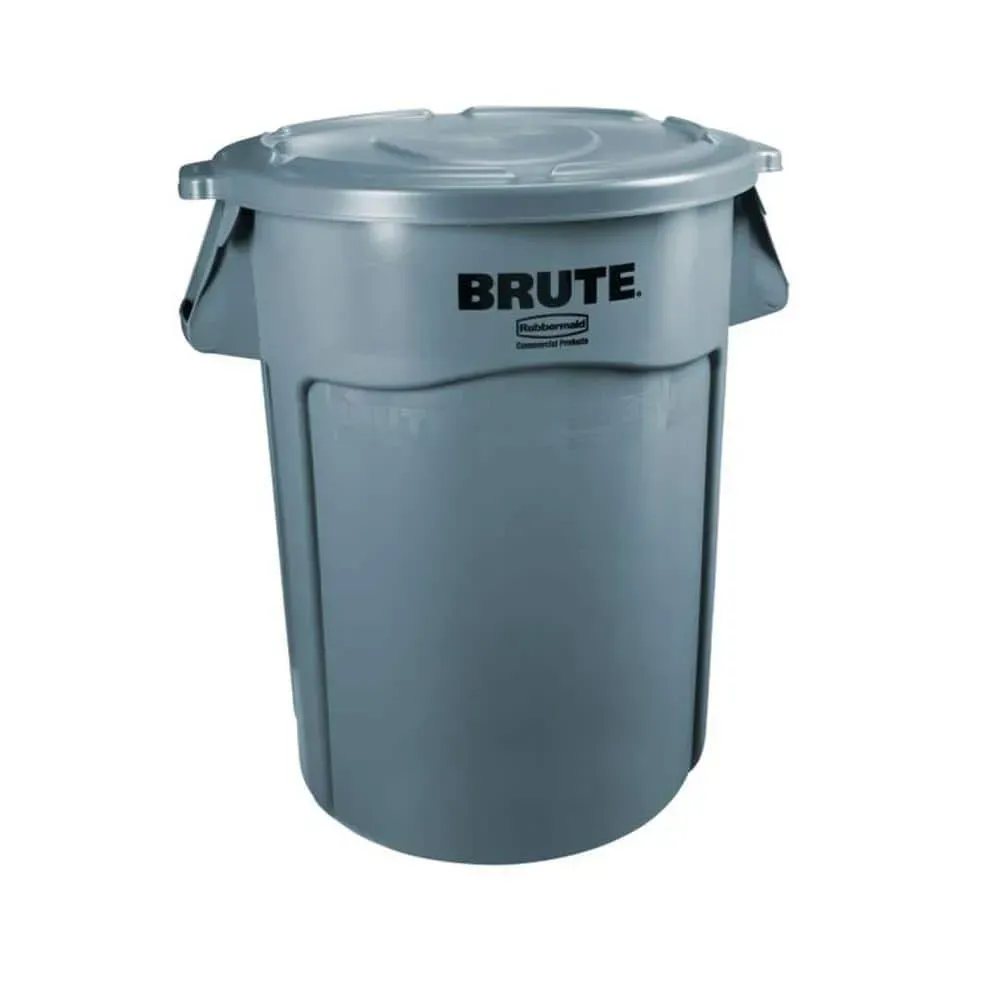
1. Best Overall (The Indestructible): Rubbermaid Brute
- Best For: The Main Kitchen, The Dish Pit.
- Why It Wins: Venting channels break the vacuum seal (saving your back). UV inhibitors prevent cracking in the sun.
- Durability: You can drag it for miles. It will not break.
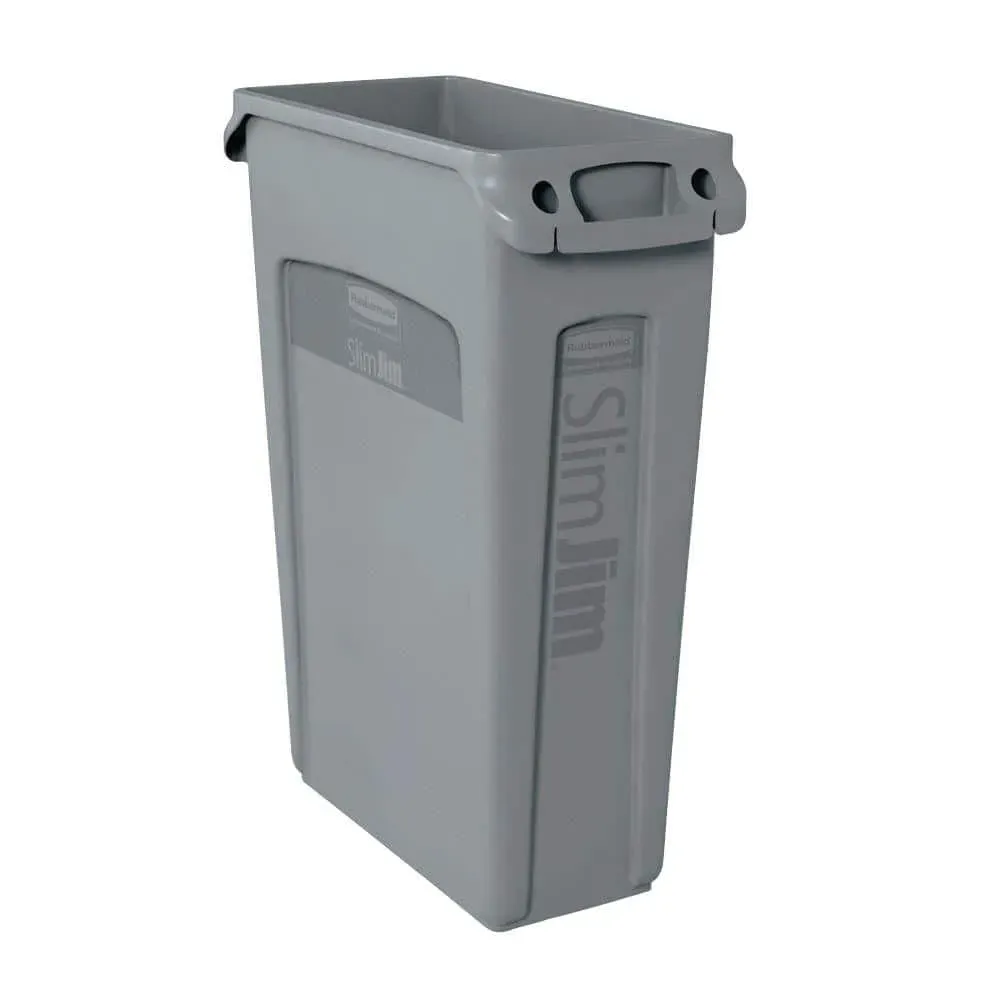
2. Best Space Saver (The Skinny): Rubbermaid Slim Jim
- Best For: Between Prep Tables, Bar Areas.
- Why It Wins: Fits in tight spaces where a round can won’t go.
- Venting: Newer models also include venting channels.
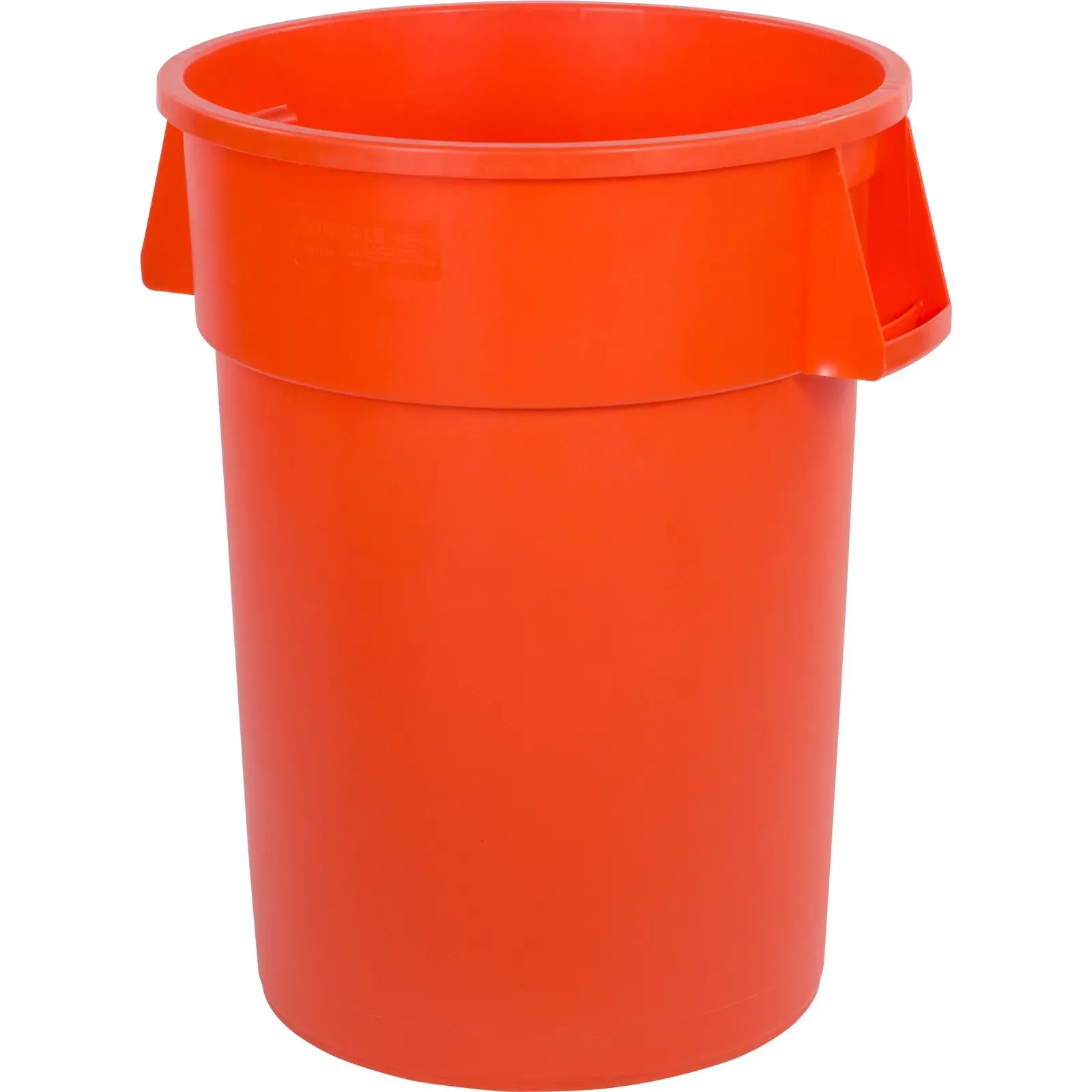
3. Best Value (The Competitor): Carlisle Bronco
- Best For: Dry Storage, Ingredient Bins.
- Why It Wins: Double reinforced drag skids on the bottom. NSF certified for food storage.
- Price: Usually 20% cheaper than the Brute.
Frequently Asked Questions (FAQ)
Q: Why is it so hard to pull a full bag out of the trash can? A: A Vacuum Seal forms at the bottom. Quality cans (like Rubbermaid Brute) have Venting Channels that allow air to flow to the bottom, breaking the seal and making lifting 50% easier.
Q: What trash can material is best for kitchens? A: LLDPE (Linear Low-Density Polyethylene). It is flexible and bounces back upon impact. Cheap rigid plastics will crack when dragged or kicked.
Q: What do the trash can colors mean? A: Generally: Gray for Garbage, Blue for Recycling, Yellow for Biohazard, and White for Food Storage (Ingredients).
Final Summary
If you need Durability, buy Rubbermaid Brute. If you are Tight on Space, buy Slim Jim. If you want to Save Money, buy Carlisle Bronco.
Chef Marco’s Rule: “If you can destroy a Brute can, you are trying too hard.” It is the only piece of equipment in my kitchen that I trust to never break.