The Delivery Driver does not care about your food. They will toss the bag in the passenger seat, brake hard at a red light, and watch your Pho soup fly into the dashboard. If the lid pops off, it is Your Fault. Not the driver’s.
Packaging is no longer just a box. It is Insurance. In this guide, I will explain the material science of Microwavability, why Black Plastic is controversial, and how to choose a container that survives the “Drop Test.”
1. Material Wars: PP vs. PET vs. PS (Styrofoam)
Polypropylene (PP / #5) - “The Microwavable King”
- Heat Tolerance: High (250°F+). Can be filled with boiling soup. Can be microwaved by the customer.
- Flexibility: Soft plastic. Interlocking lids snap tight.
- The Look: Usually Translucent or Black base with Clear lid.
- Verdict: Mandatory for Hot Food.
- Warning: Avoid Black Plastic (Carbon Black). Infrared recycling sensors cannot see it, so it ends up in the landfill. Switch to White or Translucent in 2026.
PET (Polyethylene Terephthalate / #1) - “The Cold Only”
- Heat Tolerance: Low (140°F).
- Usage: Salads, Cold cuts, Bakery.
- The Trap: If you put hot Lasagna in a PET container, the bottom melts instantly. The customer gets plastic cheese.
- Verdict: Excellent clarity for Salads. Dangerous for hot lines.
Polystyrene (Styrofoam) - “The Outlaw”
- Cost: Dirt cheap.
- Insulation: Excellent (Keeps food hot).
- The Problem: Banned in NYC, LA, SF, and many states. It never biodegrades.
- Verdict: Do not buy it. You look outdated and cheap.
2. Lid Technology: The “Audit Click”
You need an audible confirmation that the lid is closed. The “Snap” Test: If you press the lid down and don’t hear a CLICK, it is not sealed.
The Leak-Proof Design:
- Internal Fit: The lid actually fits inside the rim.
- Peripheral Seal: The lid grips the outside of the rim.
- Venting: Hot food creates steam. Steam builds pressure. If there is no vent hole, the lid WILL pop off.
- soup containers: Must have a pinhole vent.
3. Shapes: Round vs. Rectangular
Round (Deli Cups)
- Pros: Best seal (Physics of circles). Great for soup.
- Cons: Wastes space in the delivery bag.
- Visual: Looks like cheap “Deli Food.”
Rectangular (Microprep)
- Pros: Looks like a “Meal Prep” container. High perceived value. Stacks perfectly.
- Cons: Corners are weak points for leaking (Capillary action).
4. The Branding Opportunity: The Bag Experience
The container is naked without the bag.
- Stapling: You MUST staple the bag shut.
- Why: Tamper Evidence. Customers are paranoid that the driver ate a fry. A stapled bag proves integrity.
- Stickers: Use a “Tamper Evident” sticker over the lid of the container itself.
- ROI: Stickering costs $0.02. It builds massive trust.
5. Eco-Friendly Alternatives: Bagasse (Fiber)
“Chef, I want compostable containers.” Ok, let’s talk about Bagasse (Sugarcane Fiber).
- Pros: Compostable. Looks Earthy.
- The Flaw: Soggy Bottoms.
- If you put Curry in a fiber bowl, the moisture wicks through the bottom in 20 minutes. The bag gets wet.
- The Fix: You must buy PLA-Lined Fiber. (Plastic coating). But now it’s often not compostable.
- The Law (2026 PFAS Bans): Many states (CA, NY, WA, ME) have banned “Intentionally Added PFAS” (Grease-proofing) in fiber bowls. Ensure your supplier certifies “No Added PFAS,” or you could be fined.
- Verdict: Stick to Polypropylene (Recyclable) for wet food. Use Fiber for dry food (Sandwiches, Fries).
Top Commercial Takeout Container Recommendations
You are not selling food. You are selling the arrival of food.
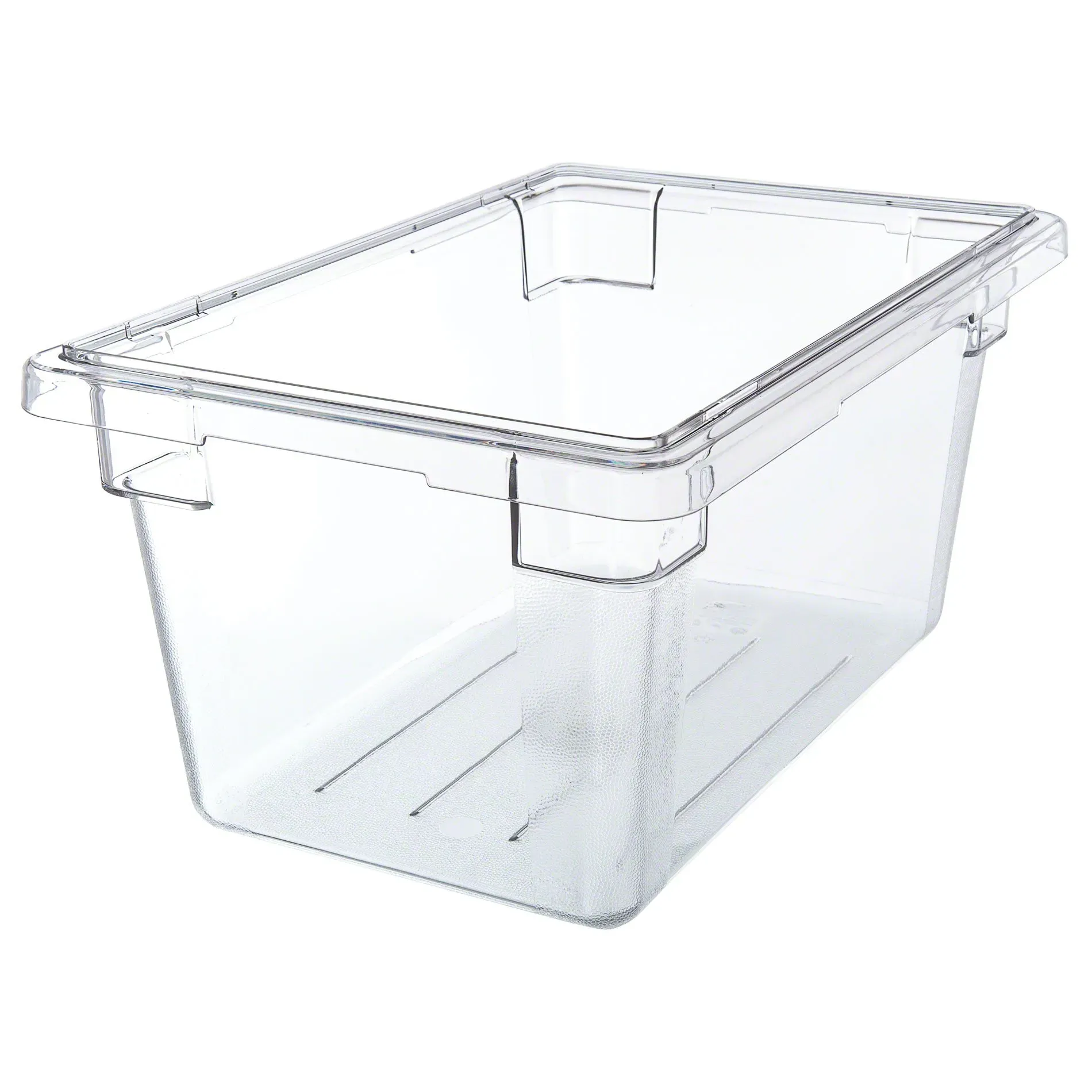
1. Best Overall (The Heavyweight): Cambro Camwear Polycarbonate
- Best For: Internal Prep, Storage, Transport.
- Why It Wins: It is shatter-resistant and virtually clear glass. It withstands acids and oils that cloud other plastics.
- Durability: The tank of the kitchen.
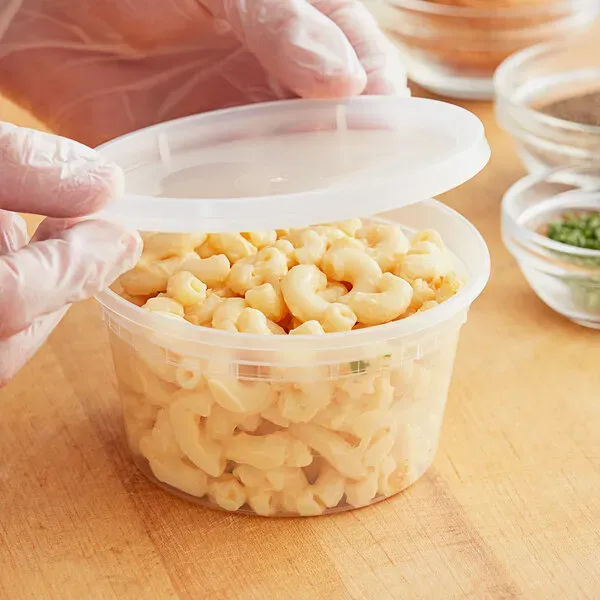
2. Best Value (The Takeout King): Choice Heavy Weight Deli Containers
- Best For: Soup Delivery, Sauces, Sides.
- Why It Wins: Use the “Heavy Weight” version (PP5). The lid seal is legendary. It survives the “Drop Test.”
- Versatility: One lid fits all sizes (8oz, 16oz, 32oz).
3. Best Presentation (The Meal Prepper): Choice Microwavable Rectangular
- Best For: Full Entrees (Chicken + Rice).
- Why It Wins: Black base makes food colors pop. Clear lid shows off the plating. Stackable in the bag.
- Feature: Vented lids prevent “soggy fry syndrome.”
Frequently Asked Questions (FAQ)
Q: Can I microwave takeout containers? A: It depends on the plastic. Polypropylene (PP / #5) is microwavable and safe for hot food. PET (#1) and Styrofoam will melt and are not safe for heating.
Q: Why does my curry leak in the delivery bag? A: Liquid heavy foods like Curry or Pho require a round “Deli” container with an internal seal. Rectangular “Microprep” containers often leak at the corners due to capillary action.
Q: What is the 2026 PFAS Ban? A: Many states have banned “Intentionally Added PFAS” (grease-proofing chemicals) in fiber/compostable bowls. You must ensure your supplier certifies your packaging as “No Added PFAS.”
Final Summary
If you need Durability (Kitchen Use), buy Cambro. If you need Leak Proof (Delivery), buy Choice Deli (Heavy). Your container must survive the Tokyo Drift.”