It is the most hated object in the restaurant. It smells like death. It is slimy. It is heavy.
If you pour bacon grease down the drain, it cools, hardens, and blocks the city sewer. The city does not like this. They will fine you $10,000.
This is why every commercial kitchen is legally required by the EPA (Environmental Protection Agency) and local codes to have a Grease Trap (or Grease Interceptor). It is the only thing standing between you and a massive lawsuit from the City Water Department.
Restaurants produce FOG (Fats, Oils, and Grease). If FOG enters the city sewer, it hardens into “Fatbergs” that block mains. Cities have zero tolerance. If they trace a blockage back to you, they will shut your water off.
In this guide, I will explain the Physics of Separation, why Automatic Skimmers are worth the investment, and how to verify your GPM so you don’t buy the wrong box.
1. The Physics: How it Works
Grease floats. Water sinks. Solids settle. A grease trap is just a “Stilling Chamber.”
- Inflow: Dirty water enters from the sink.
- Baffle: The water hits a wall (Baffle) to slow it down. It must be calm.
- Separation:
- Solids: Fall to the bottom (Sludge).
- Grease: Floats to the top (Scum).
- Water: Flows out from the middle layer.
The Failure Mode: If the flow is too fast (High GPM), the water is turbulent. It mixes the grease back in. The trap fails. This is why sizing is critical.
2. Sizing Guide: GPM (Gallons Per Minute)
You do not guess the size. You calculate it. Formula:
- Calculate the Volume of the sink (L x W x D in inches) / 231 = Gallons.
- Assume a 1-minute drain time (Worst case scenario).
- Apply a 75% fill factor.
Example (3-Compartment Sink):
- Each bowl is 18” x 18” x 12”.
- Total Capacity = ~50 Gallons.
- Drain Rate: If you pull the plug, it drains fast.
- Requirement: You typically need a 50-75 lb (25-35 GPM) trap.
Design Tip: Always oversize. A bigger trap means slower water, which means better separation and fewer pump-outs.
3. Manual vs. Automatic (Big Dipper)
Hydro-Mechanical (The Passive Box)
- Cost: Cheap ($400).
- Maintenance: THE NIGHTMARE.
- Someone (the dishwasher) has to open the lid daily.
- They have to scoop the floating grease into a bucket.
- The smell will clear the dining room in 30 seconds.
- Reality: Nobody does it. The trap fills up. It stops working. You get fined.
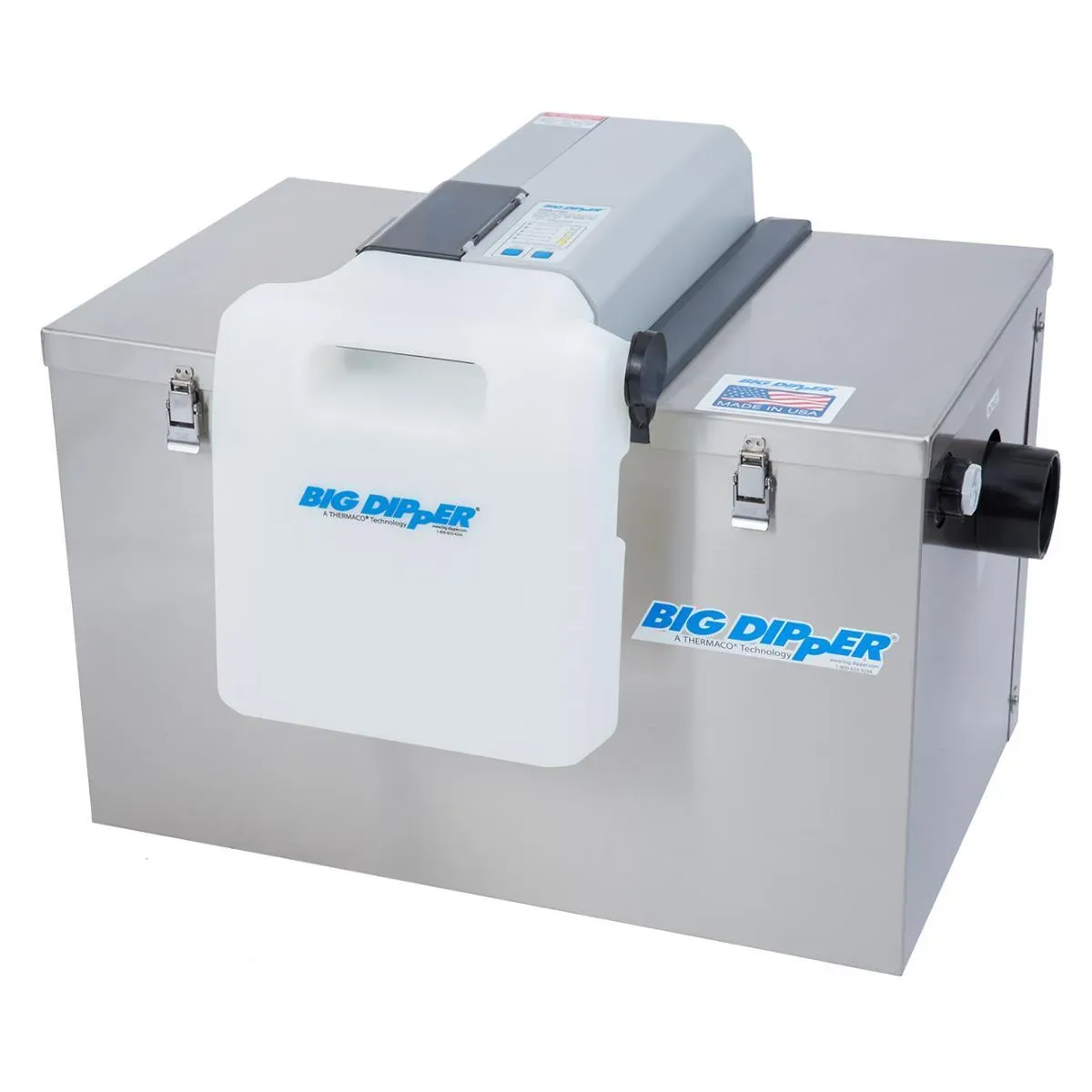
Automatic Grease Removal Unit (AGRU) - “The Big Dipper”
- Cost: Expensive ($3,000+).
- Mechanism: It has a heating element and a motorized skimming wheel.
- Operation:
- At 3 AM, it heats the grease to melt it.
- The wheel spins and scoops the oil into a plastic container.
- Maintenance: The staff just Empties the container into the oil bin in the morning. No smell. No scooping.
- ROI: It eliminates the pump-truck fee. It pays for itself in 18 months.
4. Maintenance: The “Pumping” Schedule
If you have a large in-ground interceptor (1,000 Gallons) in the parking lot:
- You must hire a Pumping Truck (Honey Wagon) every 3 months (90 Days).
- The Rule: If the FOG layer is 25% of the depth, you must pump. (The “25% Rule”).
- Logs: You must keep the pumping receipts for 3 years. The Health Inspector WILL ask to see them.
Bio-Additives (Enzymes):
- Some chefs pour “Grease Eating Bacteria” down the drain.
- Warning: Some cities BAN this. Why? Because the bacteria might just emulsify the grease (pushing it downstream) rather than eating it. Check your local code.
2026 Tech: Smart FOG Sensors (IoT)
The days of “guessing” when to pump are over.
- The Tech: New probes (like SmartSense) measure the Electrical Conductivity and Sonic Density inside the trap.
- The Alert: When the FOG layer hits 25%, it sends a text to your phone: “Grease Trap Full. Call Pumper.”
- The Benefit: Zero risk of “forgotten pump” overflows and instant proof of compliance for the inspector.
5. Odor Control: The Gasket
“Chef, the kitchen smells like rotten eggs.”
- Cause: The rubber gasket on the grease trap lid is cracked or missing.
- Gas: That smell is Hydrogen Sulfide (Sewer Gas). It is dangerous.
- Fix:
- Clean the rim of the trap perfectly.
- Buy a new Neoprene Gasket tape.
- Bolt the lid down TIGHT.
- Silicone the edges if necessary.
Top 3 Commercial Grease Trap Recommendations
Don’t buy the cheapest box. Buy the one that keeps the city off your back.
1. Best Overall (The Automator): Thermaco Big Dipper
- Best For: Busy Kitchens, Limited Staff.
- Why It Wins: It automatically skims the grease into a small container daily. No smelly scooping required.
- ROI: Eliminates expensive monthly pump-truck fees. It pays for itself in 18 months.
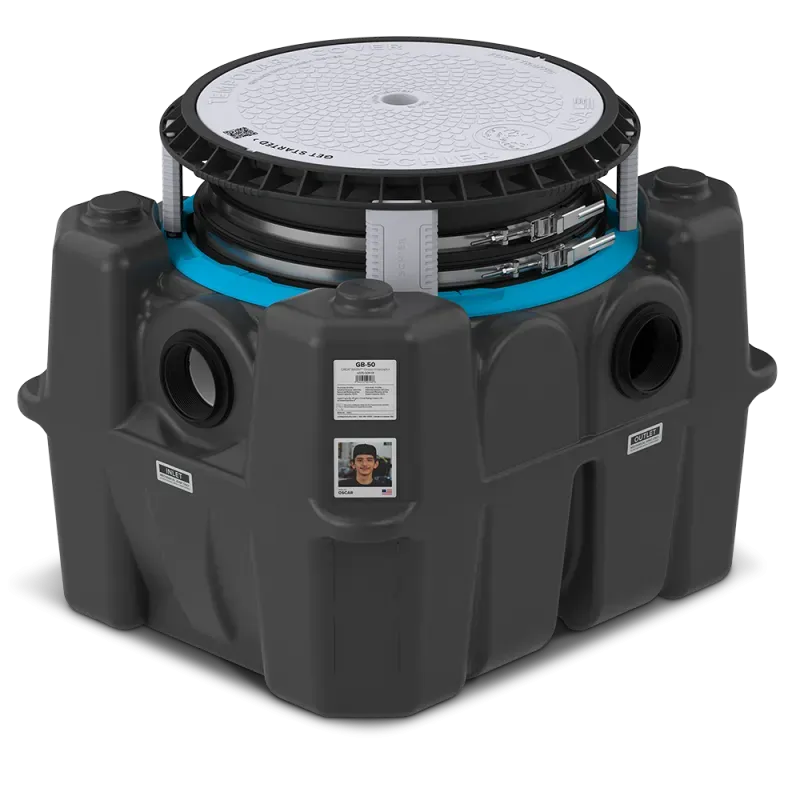
2. Best Passive System (The Tank): Schier Great Basin (GB Series)
- Best For: High Volume, New Construction.
- Why It Wins: Made of indestructible polyethylene (plastic) that will never rust (unlike steel traps). Lifetime warranty.
- Design: Huge capacity in a compact footprint.
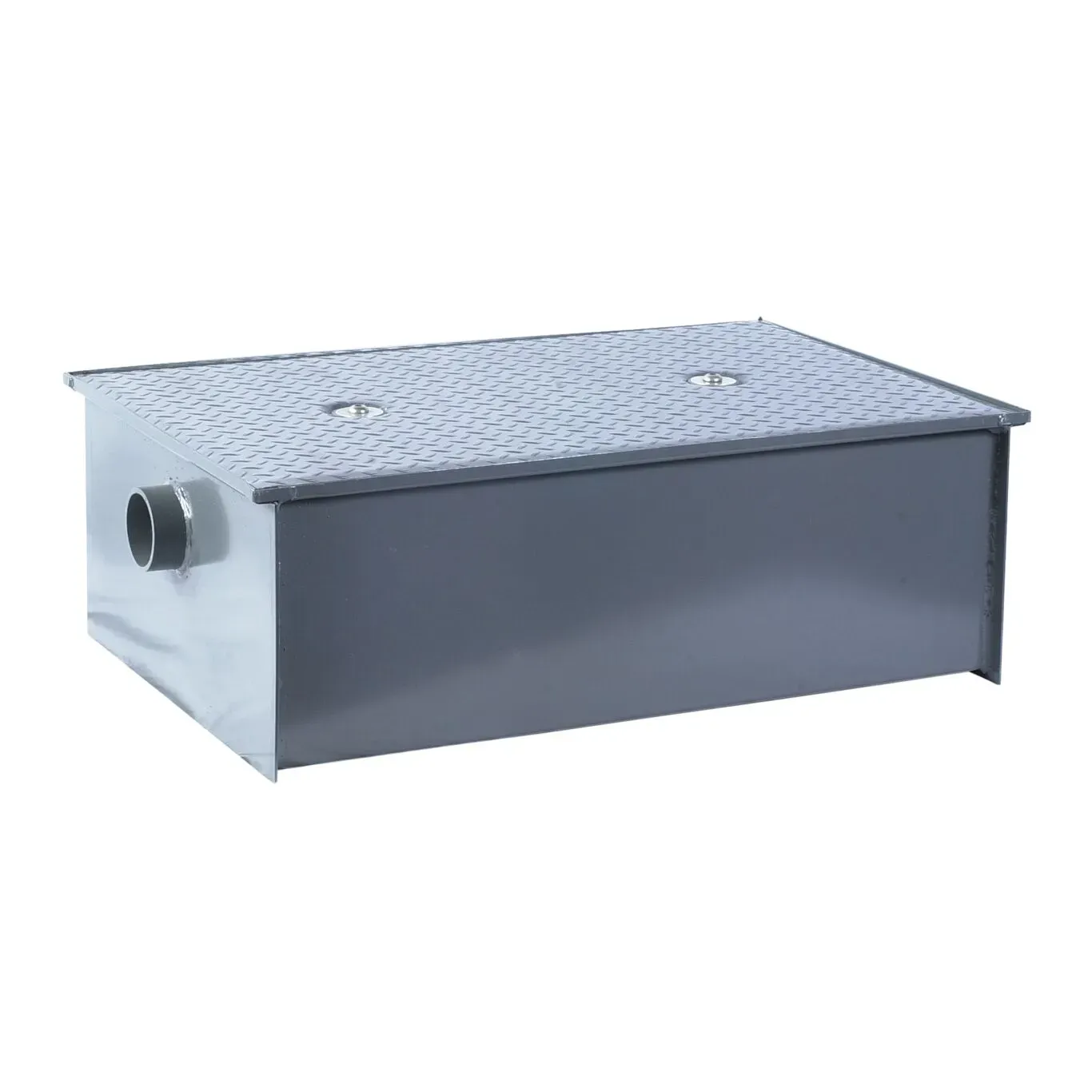
3. Best Budget (The Standard): Watts W-100 Series
- Best For: Small Cafes, Low Grease Output.
- Why It Wins: An acid-resistant coated steel box. Simple, effective, and code-compliant for 90% of jurisdictions.
- Maintenance: Requires manual scooping, but it’s cheap to buy.
Frequently Asked Questions (FAQ)
Q: How often should I pump my grease trap? A: Follow the “25% Rule”: Pump when the trap is 25% full of FOG (Fats, Oils, Grease). For large outdoor traps, this is typically every 90 days.
Q: Can I use enzymes instead of pumping? A: No. Enzymes often just emulsify the grease (pushing it downstream), which is illegal in many cities. You must physically remove the grease.
Q: Why does my kitchen smell like sewer gas? A: The rubber gasket on your grease trap lid is likely cracked or missing, allowing Hydrogen Sulfide gas to escape. Replace the gasket immediately.
Final Summary
If you want to save Labor, buy Thermaco. If you want Longevity, buy Schier. If you are broke, buy Watts.
Chef Marco’s Rule: “Do not put the fryer oil down the sink. The grease trap is for residual grease (from rinsing plates). It is NOT a dump station for the deep fryer. If you pour 5 gallons of oil down the drain, you will clog the building main in 24 hours. Put spent oil in the rendering bin.”