The average restaurant throws away 4-10% of its food before it even reaches the plate. Spoilage. Freezer Burn. Oxidation. If you buy a Side of Salmon for $150 and throw away $15 of it, you are burning cash.
A Vacuum Sealer is not just for Sous Vide. It is an Inventory Management Tool. It extends the shelf life of fresh protein from 3 days to 10 days. But if you buy the wrong type (External Suction), you will accidentally suck tomato sauce into the motor and kill the machine.
In this guide, I will explain the Physics of Chamber Sealers, why Oil Pumps are mandatory for high volume, and how to preserve wet foods.
1. Type Wars: Chamber vs. External Suction
This is the failure point for most new owners.
External Suction (The “FoodSaver” Style)
- Mechanism: The bag sits outside the machine. A nozzle sucks air OUT of the bag.
- The Flaw: If the bag contains Liquid (Soup, Marinade, Bloody Steak), the suction pulls the liquid into the pump.
- The Result: The machine dies.
- Bags: Exterior sealers require special “Textured” bags (Mesh) to allow airflow. These bags are Expensive ($0.30 each).
- Verdict: Good for dry goods only (Cheese, Nuts). Garbage for a real kitchen.
Chamber Vacuum (The Professional Standard)
- Mechanism: You put the ENTIRE bag inside the machine and close the lid.
- The Physics: The pump removes air from the entire chamber, not just the bag. Pressure equalizes.
- Physics Magic: Because pressure is equal inside and outside the bag, Liquids do not move. You can seal a bag of water, and it won’t spill.
- Bags: Uses smooth, cheap standard pouches ($0.08 each).
- Verdict: Mandatory for any restaurant. The savings on Bags alone pays for the machine in 1 year.
The “Double Seal” Advantage
In 2026, premium sealers (like VacMaster) use a Double Seal Wire.
- Why: If a drop of soup gets on the first wire, the seal fails. The second wire acts as a failsafe.
- Result: 200% stronger seal reliability for Sous Vide. Never buy a machine with a single wire for liquids.
2. Pump Technology: Oil vs. Dry
Dry Piston Pump (Maintenance Free)
- Cost: Cheaper machines ($800 - $1,000).
- Pros: No oil to change.
- Cons: Overheats if you run it 50 times in a row. Slower cycle time. Louder.
- Best For: Small cafes sealing 10 bags a day.
Oil Lubricated Rotary Pump (The Heavy Duty)
- Cost: Expensive machines ($2,000+).
- Pros: Can run 24/7 without overheating. Very quiet. Pulls a tighter vacuum (99.9%).
- Maintenance: You MUST change the oil.
- The Sight Glass: Check the oil window weekly. If it looks milky (water contamination) or dark (dirty), change it.
- Cost: $20 for vacuum oil.
- Best For: Production kitchens, Butcher shops.
3. Gas Flush: The “Puffy Bag” Trick
Have you ever wondered why a bag of potato chips is puffy? That is Nitrogen Gas Flush. Some advanced sealers (like VacMaster VP330) have a Gas Flush nozzle.
- The Process: The machine sucks the air out, then injects an inert gas (Nitrogen/CO2), then seals.
- Why: It creates a cushion.
- Use Case: Sealing delicate items like Lettuce, Potato Chips, or Pasta. If you vacuumed them normally, they would be crushed into a brick.
4. Sous Vide Safety: The Botulism Risk
Putting food in a bag is safe. Heating it in low temperatures is safe. But doing it wrong is deadly. Clostridium Botulinum loves an anaerobic (no oxygen) environment. If you vacuum seal a piece of garlic or oil and leave it at room temperature, you are growing poison.
The Golden Rules:
- Cold Sealing: Only seal food that is cold (41°F).
- Cook Chill: After cooking Sous Vide, if you aren’t serving it immediately, you must shock it in an Ice Bath to drop it to 41°F in under 2 hours.
- HACCP (The Law): You legally need a HACCP plan to do Reduced Oxygen Packaging (ROP).
- The Risk: Botulism spores thrive without oxygen.
- The 2026 Rule: Health Inspectors now check for “ROP Logs.” If you are vacuum sealing fish, you MUST have a dedicated ROP plan on file, or they will throw away all your food.
5. Maintenance: The Seal Bar
“Chef, the bag is leaking.” It’s usually the Seal Bar.
- Teflon Tape: The metal heating wire is covered by a strip of Teflon tape. Over time, it burns or tears.
- The Fix: Peel off old tape. Stick on new tape ($5).
- The Wire: Eventually the Nichrome wire breaks. It takes 5 minutes to unscrew and replace.
Top Commercial Vacuum Sealer Recommendations
Stop throwing away money.
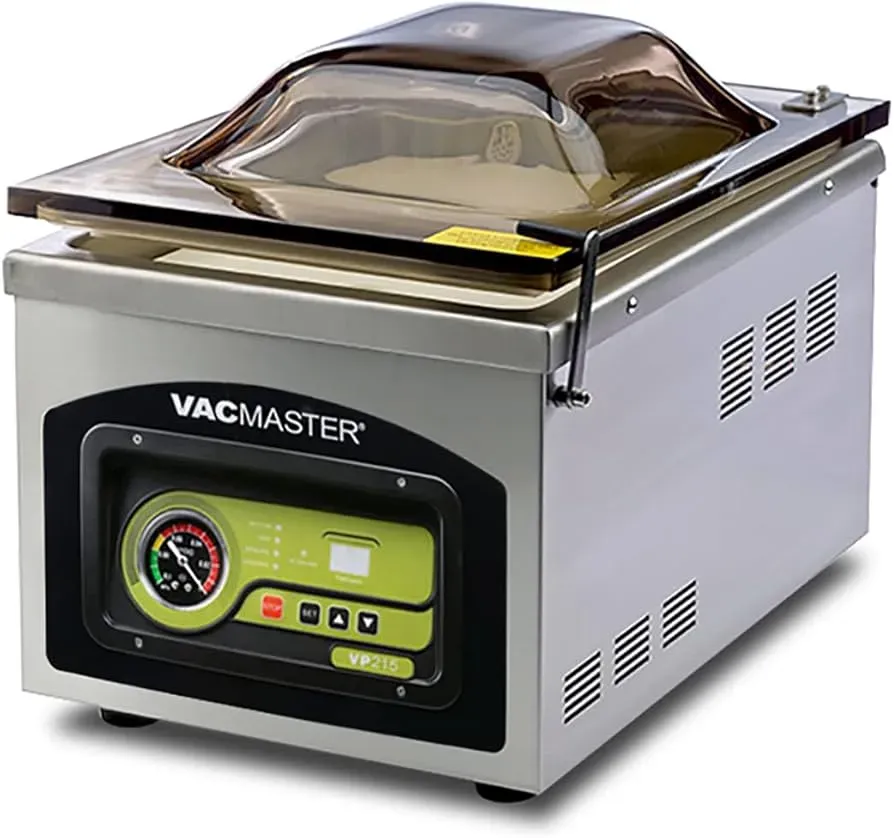
1. Best Overall (The Workhorse): VacMaster VP215
- Best For: All Restaurants, Sous Vide Prep.
- Why It Wins: It uses a powerful oil-pump that can run all day. It is heavy, durable, and parts are cheap.
- Maintenance: You have to change the oil, but that means the pump lasts 20 years instead of 3.
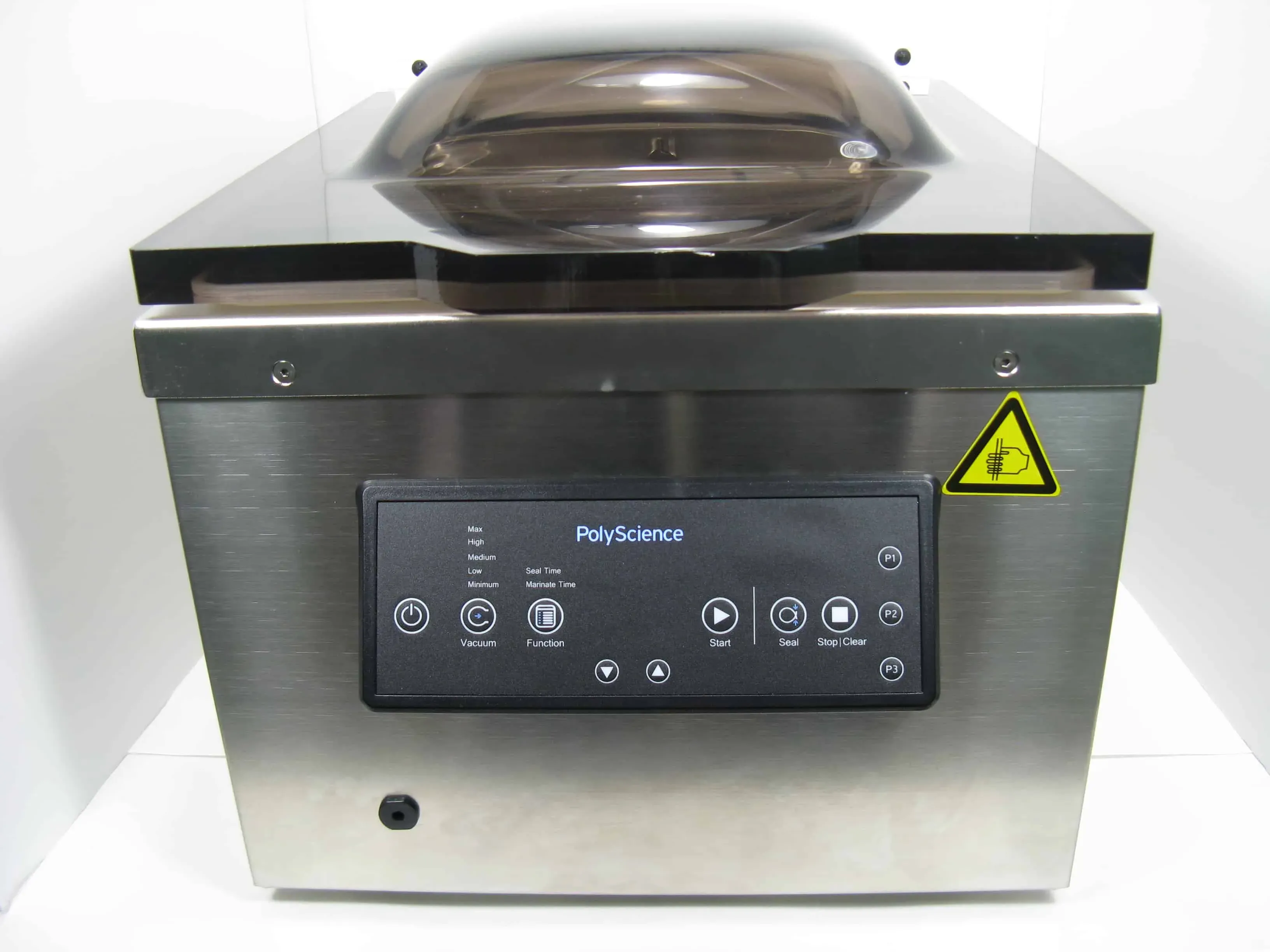
2. Best Maintenance Free (The Plug & Play): PolyScience 300 Series
- Best For: Smaller kitchens, Chefs who hate maintenance.
- Why It Wins: Uses a dry piston pump. No oil to change. No mess.
- Design: PolyScience is the leader in culinary tech. The interface is intuitive and sleek.
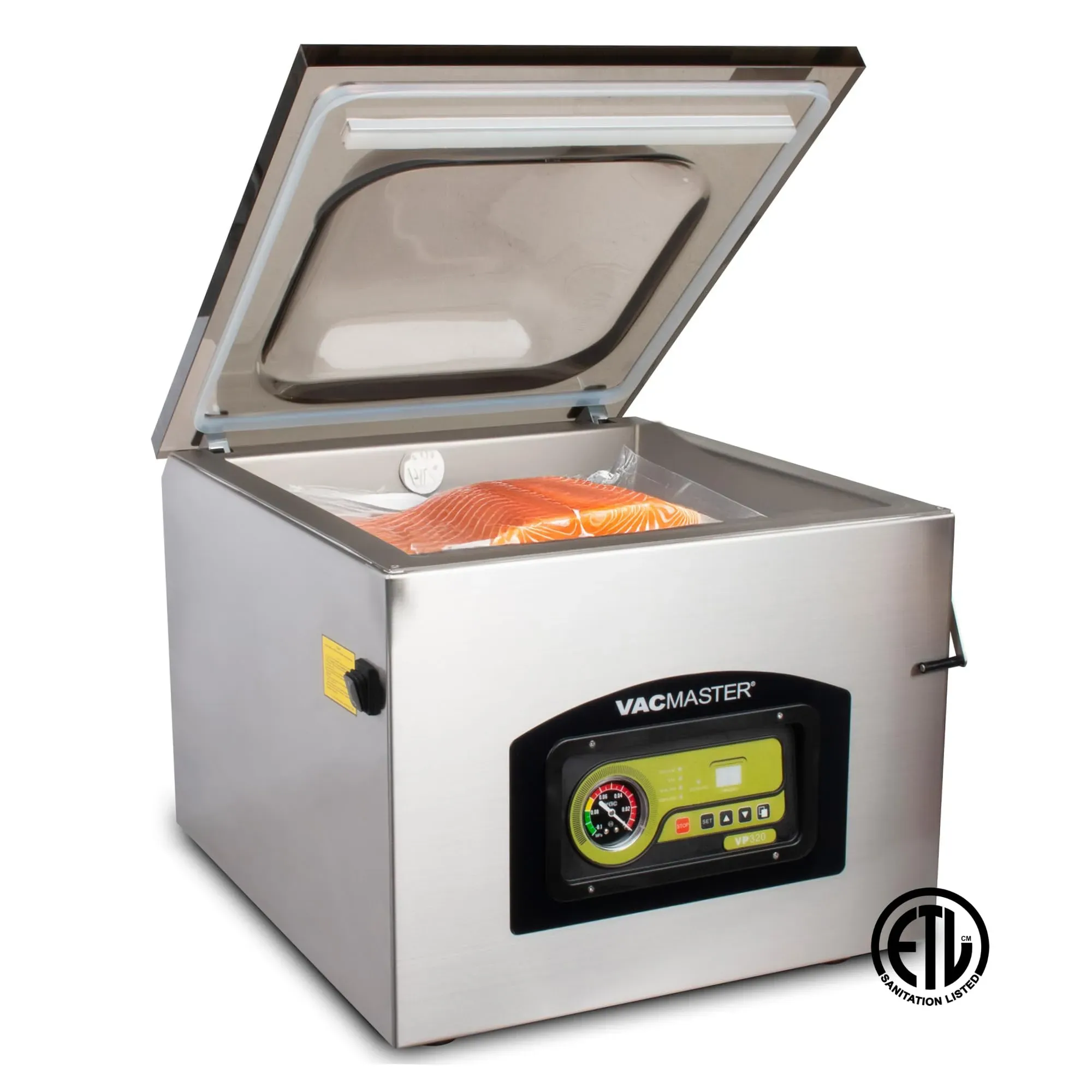
3. Best High Volume (The Beast): VacMaster VP320
- Best For: Butcher Shops, Bulk Prep.
- Why It Wins: The 16-inch seal bar allows you to seal two bags side-by-side or large whole primals (like a Ribeye).
- Speed: It cycles faster than the VP215, saving labor minutes.
Frequently Asked Questions (FAQ)
Q: Why can’t I seal soup with my FoodSaver? A: External suction sealers (FoodSaver) suck air out of the bag, pulling liquid into the pump. You need a Chamber Vacuum Sealer, which removes air from the entire box, keeping liquids safely inside the bag.
Q: Is vacuum sealed food safe at room temperature? A: NO. That is a Botulism risk. Vacuum sealing removes oxygen, creating the perfect environment for Clostridium Botulinum. You must refrigerate or freeze vacuum sealed food immediately (below 41°F).
Q: How often do I change the oil in my vacuum sealer? A: Check the sight glass weekly. If the oil looks milky (water contamination) or dark, change it. Usually every 3-6 months depending on volume.
Final Summary
If you want Durability, buy VacMaster (Oil Pump). If you want Zero Maintenance, buy PolyScience.
Chef Marco’s Rule: “Do the ‘Water Test’. Seal a bag of water. Hold it upside down and squeeze it. If water drips out, your seal wire is broken or your settings are wrong. Fix it. A leaking bag ruins the Sous Vide bath.”