Pizza is a religion. And the Oven is the Altar. You cannot cook a Neapolitan pizza in a Conveyor oven. It is a crime. But you cannot cook 500 Dominos pizzas an hour in a Wood Fired oven. You will go bankrupt.
Industry leaders like Wood Stone Corporation define the standard for stone hearth ovens, while brands like Lincoln dominate the fast-food conveyor market.
In this guide, I match the Pizza Style to the Oven Type.
The Friday Night Rush is the test. If your oven loses heat after the 10th pie, the 11th pie comes out pale and soggy. The customer complains. You lose. In this guide, I will explain the Thermal Mass of stones, the magic of Air Impingement, and the nightmare of Wood Fire.
1. The Deck Oven (The Artisan)
Mechanism: Conduction
- The Stone: A massive slab of ceramic/fibrament.
- The Heat: Burners under the stone heat it to 550°F+.
- The Cooking: You place the raw dough directly on the hot stone.
- The Physics: Direct heat transfer creates the Charred Bottom and “Oven Spring” (Puffy crust).
The Challenge: Skill & Recovery
- Skill: You need a skilled pizzaiolo to work the “Peel” (Paddle). They must rotate the pies so they don’t burn near the back.
- Recovery: When you put cold dough (40°F) on a hot stone (550°F), the stone cools down.
- The Trap: If you load 6 pies at once, the stone temp crashes to 450°F. The next batch takes 15 minutes instead of 8.
Verdict
- Best For: NY Style Slices, Neapolitan, Artisan shops.
- Pros: Authentic crust.
- Cons: High labor cost (Skilled chef). Slow recovery.
2. The Conveyor Oven (The Factory)
Mechanism: Impingement
- The Belt: A stainless steel mesh belt carries the pizza through a tunnel.
- The Jets: High-velocity fingers shoot hot air (Impingement) directly at the pizza from top and bottom.
- The Physics: The air blasts away the “Cold Halo” surrounding the food. It cooks 2x faster than a still oven.
The Win: Consistency
- No Skill: You hire a 16-year-old. You tell them: “Put pizza on belt.”
- No Errors: The speed and temp are locked. Every pizza comes out exactly the same. 7 minutes. Golden brown.
- Throughput: You can stack them 3-high. You can churn out 200 pies an hour.
Verdict
- Best For: Domino’s, High Volume Delivery, Pubs.
- Pros: Massive volume. Zero skill required.
- Cons: No “Char.” The crust is uniform (some say boring). Loud fan noise.
3. The Brick Oven (Wood Fired)
The Romance vs. Reality
- Marketing: “Wood Fired” adds $5 to the menu price. Customers love the fire.
- Reality: It is a headache.
- The Logistics: You have to buy/store cords of hardwood.
- The Ash: You have to sweep ash daily.
- The Heat: Maintaining a steady 800°F with logs is an art form. If the fire dies, the kitchen stops.
Gas-Assist Hybrid
- The Cheat: Most “Wood Fired” ovens today are actually Gas Ovens with a small pile of wood on the side for flavor.
- Why: Gas provides the consistent baseline heat. Wood provides the show.
4. Countertop Electric Ovens
- Use Case: Bars, Bowling Alleys, Cafes.
- Voltage: 240V (Single Phase or 3-Phase).
- Limit: Recovery time.
- Waring WPO Series: excellent for cooking 1 pie at a time. If you try to cook 10 in a row, it will overheat and shut down (or cool down too much).
5. Ventilation: The Hood Mandate
Type 1 vs Type 2 Hoods:
- Electric Oven: In some jurisdictions, if you only cook cheese pizza (no heavy grease), you might get away with a Type 2 Hood (Heat/Steam removal only). This is cheaper (no fire suppression).
- Gas Oven: ALWAYS requires a Type 1 Hood (Grease + Fire Suppression) compliant with NFPA 96.
- Wood Fired: Requires a specialized hood with Spark Arrestors and often a separate flue. You cannot vent wood smoke into a normal grease duct (Creosote fire risk).
Top 3 Commercial Pizza Oven Recommendations
The oven dictates your pizza style, not the dough. Choose wisely.
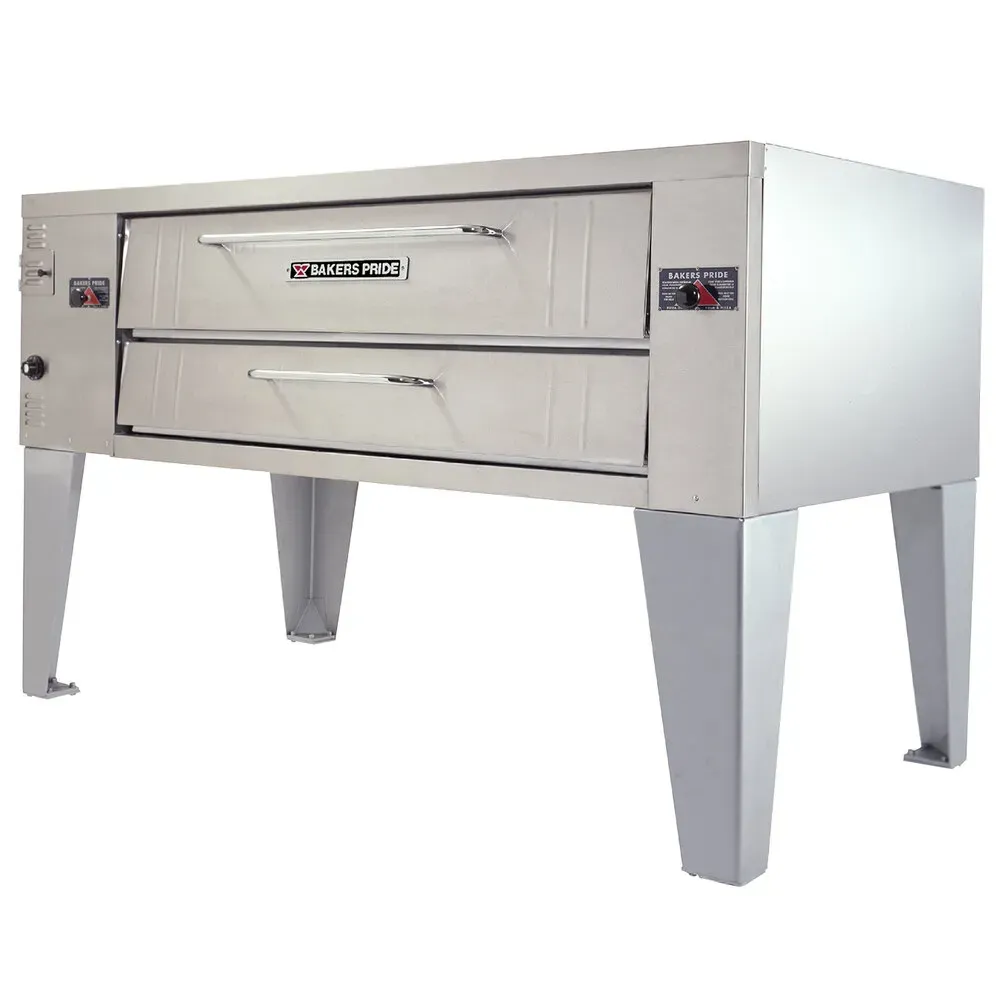
1. Best Deck Oven (The Legend): Bakers Pride Y-600
- Best For: NY Slice Shops, Artisan Pizzerias.
- Why It Wins: Massive thermal mass. The 2-inch thick hearth decks recover heat surprisingly well. It is the oven that built New York City.
- Durability: There are units from 1980 still running today.
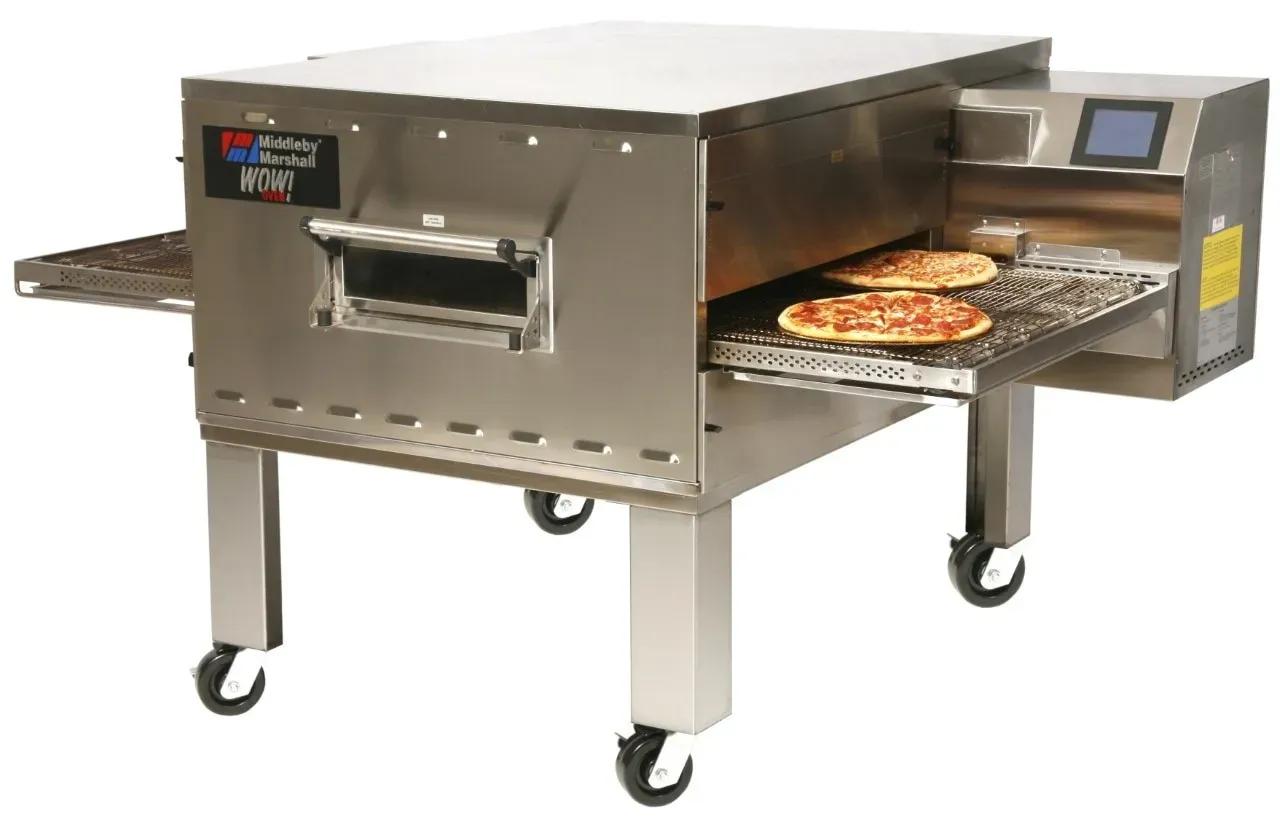
2. Best Conveyor (The Money Maker): Middleby Marshall PS Series
- Best For: Delivery Chains, Late Night Spots.
- Why It Wins: “Impingement” technology blasts away the cold air halo, cooking pizzas 30% faster than deck ovens. Zero skill required to operate.
- Consistency: The 100th pizza looks exactly like the 1st.
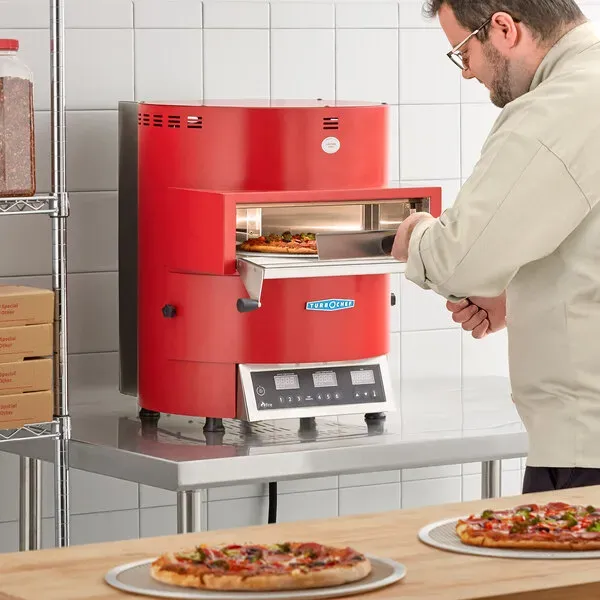
3. Best Ventless (The Bar Solution): TurboChef Fire
- Best For: Bars, Breweries, Kiosks without hoods.
- Why It Wins: It cooks an artisan-style pizza in 90 seconds using electric impingement. No gas line, no expensive hood system.
- Quality: Surprisingly good char for an electric unit.
Frequently Asked Questions (FAQ)
Q: What is the difference between Deck and Conveyor ovens? A: Deck Ovens require skill to rotate pies and recover heat slowly (Airy crust). Conveyors use air impingement for fast, consistent, consistent cooking with zero skill needed.
Q: Do I need a hood for a pizza oven? A: Yes. Gas ovens always require a Type 1 hood. Some electric ovens might pass with a Type 2 (Heat/Steam) hood depending on local codes.
Q: Why is my stone oven losing heat during rush? A: Thermal Mass. If you load too many cold pizzas at once, the stone cools down. You must stagger your loading or buy an oven with thicker decks.
Final Summary
If you are a real Pizzeria, buy Bakers Pride. If you are a Volume Factory, buy Middleby. If you are a Bar, buy TurboChef.