The fryer is the most profitable square footage in the restaurant. Potatoes cost $0.50/lb. Fries sell for $6.00. That is a 1200% markup.
But it is also the biggest energy hog. According to ENERGY STAR®, a standard fryer uses more gas than your entire home furnace.
This guide explains crucial recovery times, filtration ROI, and why “cheap” fryers cost more. I have spent my career burning my forearms on fryer baskets. I’ve worked with $5,000 digital Frymasters and $500 countertop units. Today, we are looking at the three most popular 40-50lb floor fryers available online to see which one deserves the spot under your hood.
The Big Decision: Tube vs. Open Pot
Before we look at the brands, you must choose the right burner type. If you buy the wrong one, your food will taste like burnt carbon within 2 hours.
Tube Type (The All-Rounder)
Tube fryers have 3-4 metal tubes running through the oil tank. The flames shoot through these tubes to heat the oil.
- Best For: Breaded products (Chicken fingers, onion rings, fish & chips).
- Why: They have a huge “Cold Zone” at the bottom. Crumbs fall below the tubes where the oil is cooler, so they don’t burn and ruin your oil flavor.
- The Review Units: All three units below are Tube Fryers.
Open Pot (The Specialist)
The burners are outside the tank. The tank is just an open V-shape.
- Best For: French fries, frozen pre-cooked items.
- Why: Easy to clean (no tubes to scrub behind). But nearly zero cold zone—if you fry fresh breaded chicken, the sediment will burn immediately.
1. Pitco 35C+ (The Gold Standard)
- Price: $$$
- Best For: High-volume kitchens that abuse equipment.
- The Verdict: The tank you can trust for 15 years.
Pitco is to fryers what Hobart is to mixers. The 35C+ is found in almost every chain restaurant for a reason.
The Good
- Recovery Time: This is the metric that matters. When you drop a basket of cold fries, the oil temp drops. The Pitco 35C+ (90,000 BTU) shoots back to 350°F faster than almost anything else in this class.
- The Cold Zone: Pitco has a deep, sharply angled cold zone. I’ve noticed I can go an extra day between oil changes with a Pitco compared to generic brands because the crumbs stay trapped effectively at the bottom.
- Solstice Technology: Their burner design runs cleaner and doesn’t get clogged with lint/dust as easily as older models.
The Bad
- Price: You pay a premium for the name. It’s significantly more expensive than the Avantco or Vulcan.
- No Frills: At this price point, you are paying for the tank durability, not fancy features. It’s millivolt (no plug needed), which is good, but basic.
2. Vulcan LG300 (The Workhorse)
- Price: $$
- Best For: General restaurant use, burger joints.
- The Verdict: The best balance of price and performance.
Vulcan is a massive name in the industry. The LG300 is their entry-level floor fryer, but it punches above its weight.
The Good
- V-Shape Cold Zone: Vulcan uses a specific V-shape design that is very efficient at trapping sediment.
- The Door: It sounds silly, but the door on the Vulcan feels solid. It has a reinforced liner. On cheap fryers, the door gets flimsy and falls off after a year of kicking it closed.
- Warranty: Vulcan typically offers a 5-year tank warranty. If the tank leaks (the death of a fryer), they cover it.
The Bad
- Height: Some cooks find the working height slightly different than the Pitco. Check your hood clearance and table heights.
3. Avantco FF300 (The Budget Beast)
- Price: $
- Best For: Startups, food trucks, backup fryers.
- The Verdict: Unbeatable ROI, but treat it gently.
Let’s be honest. Avantco is a well-known budget house brand. It is made to hit a price point. But the FF300 is a shocker—it is actually very good.
The Good
- Stainless Steel Tank: Many budget fryers use mild steel tanks that rust. The FF300 uses a stainless steel tank, front, and door. That is rare at this price.
- Same Power: It still pumps 90,000 BTUs. In head-to-head fry tests, it kept up with the Vulcan for the first hour of a rush.
- The Price: You can almost buy two of these for the price of one Pitco. For a startup tight on cash, that is huge.
The Bad
- Build Quality: The side panels are galvanized and feel thinner. The knobs feel a bit plastic-y.
- Longevity: Will it last 15 years like a Pitco? Probably not. But it will pay for itself in one month of service.
Chef Marco’s “Oil Math” Deep Dive
Why do I care so much about the Cold Zone? Because Oil is Liquid Gold.
Let’s do the math.
- A 40lb fryer takes about 5 gallons of oil.
- Good fryer oil costs $40 - $60 per jug (35lbs).
- If you burn your oil because of a bad cold zone, you change it twice a week.
- Cost: $100/week = $5,200/year in oil alone.
If you buy a better fryer (Pitco/Vulcan) that keeps sediment cool, maybe you extend that oil life by 2 days. You change it every 5 days instead of 3.
- Savings: You might save $1,500/year just in oil.
The Lesson: Don’t just look at the sticker price of the fryer. Look at the design of the tank. A cheap fryer that ruins oil is expensive.
Maintenance Tip: The “Boil-Out”
Never scrub a fryer with steel wool. You will scratch the stainless steel, and fried food will stick to the scratches forever.
- Drain the oil.
- Fill with water and a “Boil-Out” puck or liquid.
- Turn the thermostat to 200°F (DO NOT BOIL OVER).
- Let it simmer for 20 mins. The carbon will fall right off.
- Drain, rinse with vinegar/water mix (to neutralize), and dry.
Top 3 Commercial Deep Fryer Recommendations
Your fryer is your ATM. Don’t buy a toy.
1. Best Overall (The Tank): Pitco Solstice Series (35C+)
- Best For: High volume bar food (Wings, Fries).
- Why It Wins: The “Solstice” burner technology moves heat without blowers (less parts to break). The tank is a tank. It recovers temp instantly when you drop frozen goods.
- The Cold Zone: The deep V-shape catches crumbs effectively, extending oil life.

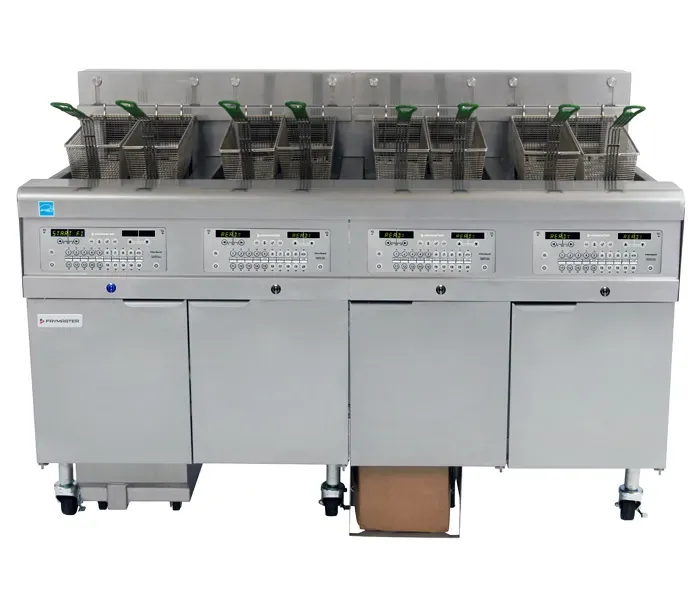
2. Best Technology (Oil Saver): Frymaster FilterQuick
- Best For: Chains (McDonald’s uses them) and cost-conscious owners.
- Why It Wins: Automated filtration built-in. It tracks your oil life. It uses 40% less oil than a standard 50lb fryer because the frypot is shallower but wider.
- ROI: It pays for itself in oil savings in 18 months.
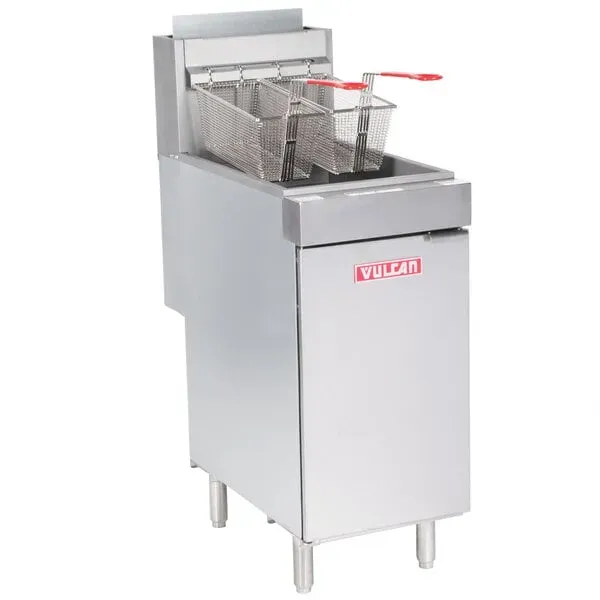
3. Best Value (The Reliable): Vulcan LG Series
- Best For: General Fast Casual.
- Why It Wins: A straightforward, no-nonsense fryer. Parts are available everywhere. The door hinge is stronger than cheap imports.
- Performance: Excellent heat recovery for the price point.
Frequently Asked Questions (FAQ)
Q: What is the difference between Tube and Open Pot fryers? A: Tube Fryers have a large “Cold Zone” for sediment, perfect for breaded foods (Chicken). Open Pot fryers have no obstacles, perfect for frozen foods (Fries) but poor sediment handling.
Q: Why is my oil smoking at 325°F? A: The oil has broken down due to Hydrolysis (water/ice crystals) or salt. It is time to change the oil immediately.
Q: Does boiling out really help? A: Yes. It removes carbon buildup on the tubes that insulates the heat. Clean tubes transfer heat faster, saving gas and recovering temp quicker.
Final Summary
If you fry Fresh Breaded food, get the Pitco (Deep Cold Zone). If you fry Frozen food and care about oil costs, get the Frymaster.