The Charbroiler is the heart of the grill station. It is primitive. It is just fire and iron. But managing that fire distinguishes a line cook from a Chef.
If you buy the wrong broiler, you will have “Cold Spots” where the burgers boil instead of sear. In this guide, I will explain the war between Lava Rocks and Radiants, why you need 1-inch gas lines, and how to create “Zones” to handle a Friday night rush.
Southbend Range is famous for their high-heat infrared broilers that sear steaks in seconds, effectively replacing the old lava rock style.
1. Heat Source: Lava Rocks vs. Radiants
Lava Rocks (The Old School)
- Mechanism: Gas burners heat a bed of ceramic porous rocks. The rocks radiate heat to the grate.
- The Flavor: Fat drips onto the hot rocks and vaporizes instantly. This creates that “Charcoal Smoke” flavor.
- The Nightmare: Cleaning.
- The rocks soak up grease like a sponge.
- Eventually, they catch on fire (Flare-ups). You have a 3-foot fireball in your face.
- You have to flip the rocks weekly and replace them monthly. It is a messy, dusty job.
- Verdict: Obsolete. Avoid unless you are a low-volume BBQ joint.
Stainless Steel Radiants (The Modern Standard)
- Mechanism: A heavy steel “Tent” sits over the burner.
- Physics: The steel absorbs the heat and radiates it upwards.
- The Benefit: Grease hits the angled tent and slides off into the drip tray. It does not pool.
- Flare-Ups: Minimal.
- Cleaning: You take the radiants out and power wash them.
- Verdict: Mandatory for high-volume kitchens.
2. Burner Power: BTU Density
Not all burners are equal.
- Standard Duty: 15,000 BTU every 6 inches.
- Result: Good for chicken and thin burgers.
- Heavy Duty / Steakhouse: 20,000 - 30,000 BTU every 6 inches.
- Result: Hits 700°F+. This is needed for the “Chicago Style” char on a 2-inch thick Ribeye.
Infra-Red (IR) Broilers:
- Some high-end units (Vulcan VTEC) use IR burners.
- Physics: It uses pure radiation (light), not hot air.
- Benefit: Zero flare-ups. Even heat.
- ROI: Expensive upfront, but saves gas.
3. Zoning: The Professional Technique
You do not run the whole grill on HIGH. That is amateur hour. You need Zones.
The Setup (36” Grill):
- Zone 1 (Far Left): “SCORCH” (100% Power).
- Use: Initial sear. Marking the diamond pattern.
- Zone 2 (Middle): “COOK” (70% Power).
- Use: Finishing the burger to Medium Rare. Cooking chicken.
- Zone 3 (Far Right): “REST” (Low Power).
- Use: Holding heavy steaks while the heat distributes.
Why Zone? If you cook a thick steak on 100% heat the whole time, the outside will be charcoal and the inside will be raw. You must move the product.
4. Grates: Cast Iron vs. Steel Rods
Cast Iron (Reversible)
- Design: Most grates are reversible.
- Side A (Flat): Wide bars. Good for fish (less sticking).
- Side B (Sloped): Narrow fins. Gives sharp grill marks. Grease runs into a trough.
- Maintenance: Must be seasoned like a skillet. Wire brush daily.
Floating Steel Rods
- Design: Round stainless steel bars that roll or float.
- Expansion: They expand when hot without warping.
- Marking: Creates a very specific “branding” grill mark (thin lines).
5. Cleaning Protocol: The “Burn Off”
End of Night Procedure:
- Crank it: Turn all burners to MAX.
- Cover it: Put a sheet pan over the crates (Carefully!) to trap the heat.
- Wait: Let it run for 10 minutes. The grates will turn to gray ash.
- Brush: Scrub vigorously with a heavy wire brush.
- Oil: Wipe down with an oil-soaked rag to prevent rust overnight.
- Trays: Empty the grease trays. WARNING: Grease trays are fire hazards. Empty them every shift.
Top 3 Commercial Charbroiler Recommendations
If you want those perfect diamond grill marks without the fireballs, these are the machines I trust.
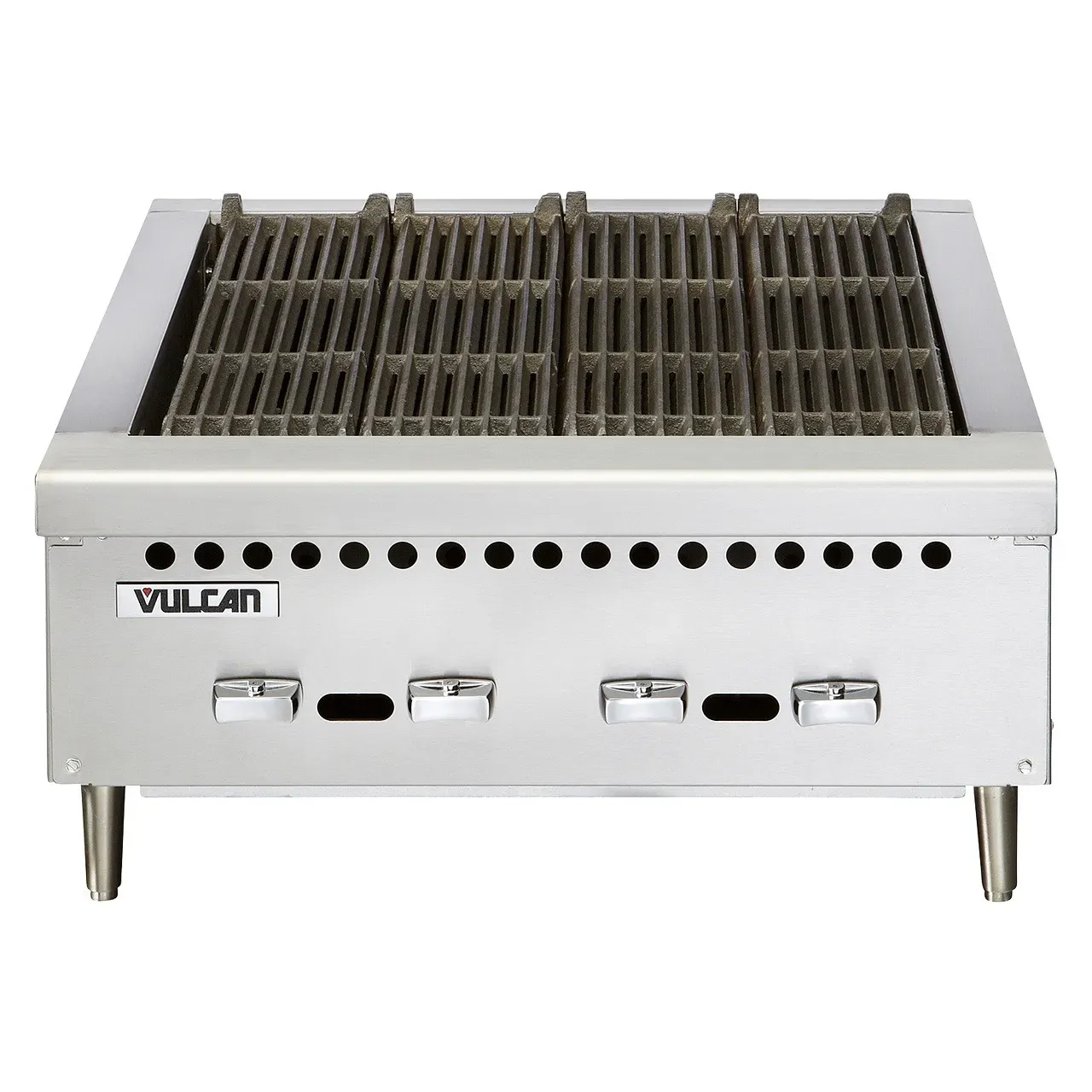
1. Best Overall (The Workhorse): Vulcan VCR Series
- Best For: High-volume burger joints, steakhouses.
- Why It Wins: It uses heavy-duty Cast Iron Radiants (not flimsy steel). They retain heat longer and create a more even searing zone. The build quality involves fully welded chassis, not screws that rattle loose.
- The Feature: Understanding “zoning” is easy with its precise knob control.
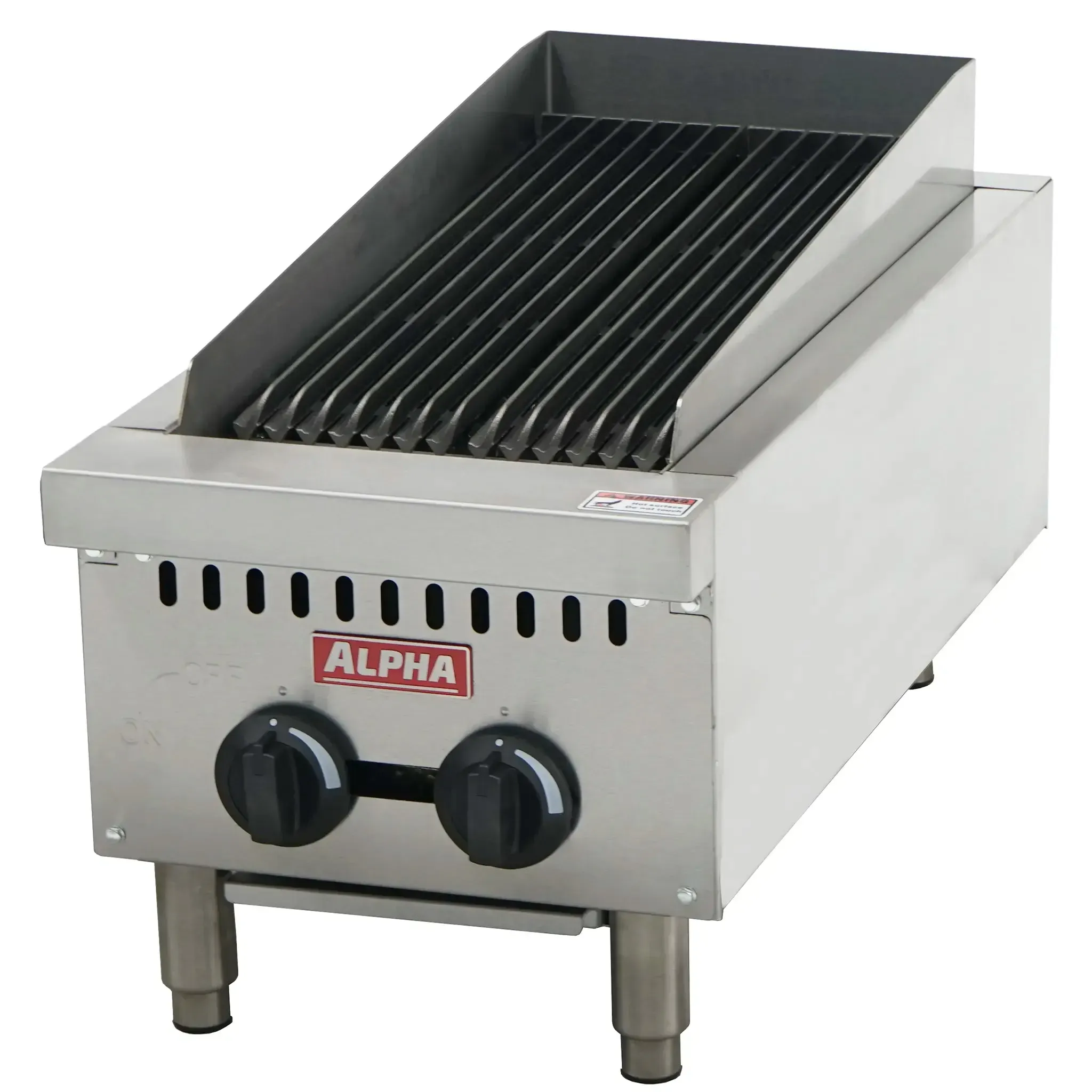
2. Best High-End (The Steakhouse Beast): Southbend 400 Series
- Best For: Prime steakhouses charging $60+ per steak.
- Why It Wins: It offers massive BTU output. This machine doesn’t just cook; it carbonizes the exterior while keeping the interior juicy. It is a tank.
- Warning: You need serious ventilation (make-up air) to run this. It sucks oxygen out of the room. Always consult NFPA 96 guidelines.
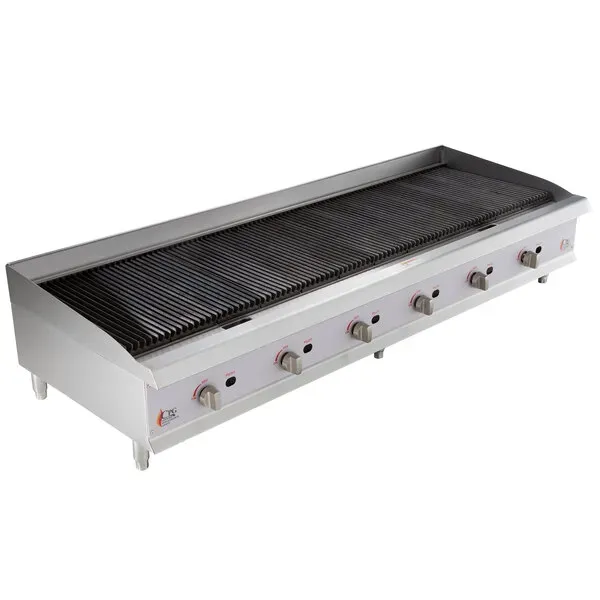
3. Best Value (Budget): Cooking Performance Group (CPG) Radiant
- Best For: Pubs, Cafes, Lunch spots.
- Why It Wins: It allows you to get into the charbroiler game for half the price of a Vulcan. It uses standard stainless steel radiants.
- The Trade-off: It won’t last 20 years, and the heat recovery is slower than a Southbend, but for cooking 50 burgers a day, it is perfect.
Frequently Asked Questions (FAQ)
Q: What is the difference between Lava Rocks and Radiants? A: Lava Rocks provide smoky flavor but act as grease sponges and cause flare-ups. Radiants (steel tents) deflect grease into the tray, reducing flare-ups and cleaning time.
Q: Why do I need a 1-inch gas line? A: Charbroilers are gas hogs. If you use a standard 1/2-inch hose, the unit will “starve” for fuel, resulting in weak heat and poor searing.
Q: How do I clean cast iron grates? A: Perform a “Burn Off” by cranking heat to MAX and covering with a sheet pan for 10 minutes to turn grease to ash. Then scrub with a wire brush.
Final Summary
Gas volume matters. Check your gas hose size. If you hook these beasts up to a thin 1/2-inch hose, they will starve. Use a 3/4-inch or 1-inch hose to get the full sear.