If you walk into any bakery, school cafeteria, or hotel banquet kitchen in America, you will see a silver box with two doors and a fan inside. The Convection Oven.
It is the Toyota Camry of the kitchen. It is not sexy (like a Wood Fired Pizza Oven). It is not high-tech (like a Combi Oven). But it is the backbone of the industry. It bakes cookies. It roasts turkeys. It braises short ribs.
If your convection oven goes down, your menu goes down. In this guide, I will break down the differences between the titans (Blodgett vs. Vulcan), explain why “Bakery Depth” matters, and teach you how to fix the doors when they inevitably jam.
Deep Dive: What is “Convection”?
A standard oven (getting rare now) is “Radiant heat.” The burner is at the bottom, and heat rises.
- The Problem: The top shelf is 400°F. The bottom shelf is 350°F. If you bake 5 racks of cookies, the top burns and the bottom is raw.
A Convection Oven has a massive fan in the back wall.
- The Physics: The fan circulates the air constantly.
- The Benefit: Every inch of the oven is exactly 350°F. You can bake 5 racks of cookies, and they will all look identical.
- The Speed: Moving air transfers heat faster. You cook at 325°F (Convection) to get the same result as 350°F (Radiant). Rule of thumb: Drop the temp by 25°F.
The Contenders: Brand Comparison (Blodgett vs. Vulcan)
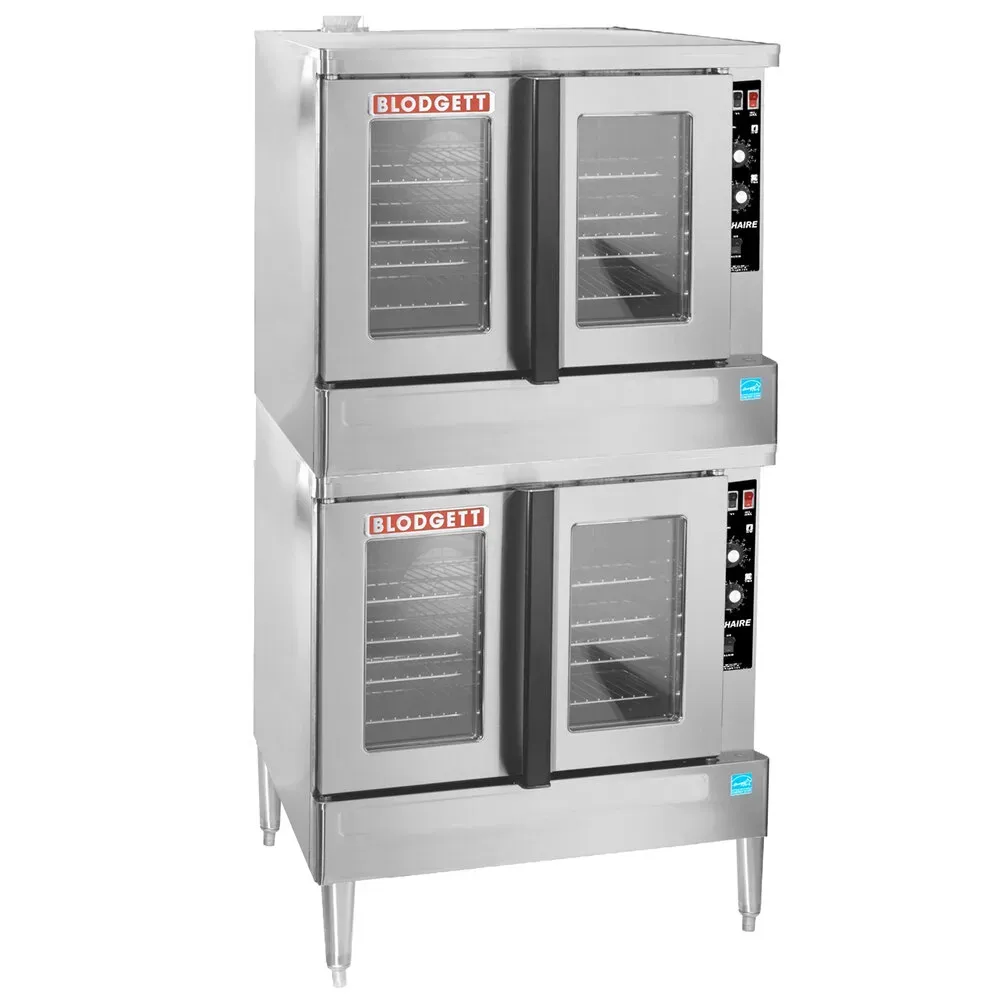
1. Blodgett (The “Zephaire”)
Blodgett is the undisputed King.
- The Build: They use a full angle-iron frame. You can drop this oven off a truck, and it will still work.
- The Doors: They use a heavy-duty turnbuckle mechanism.
- Longevity: I have cooked on Blodgett ovens from 1985 that are still running perfectly.
- Best For: High-volume bakeries.
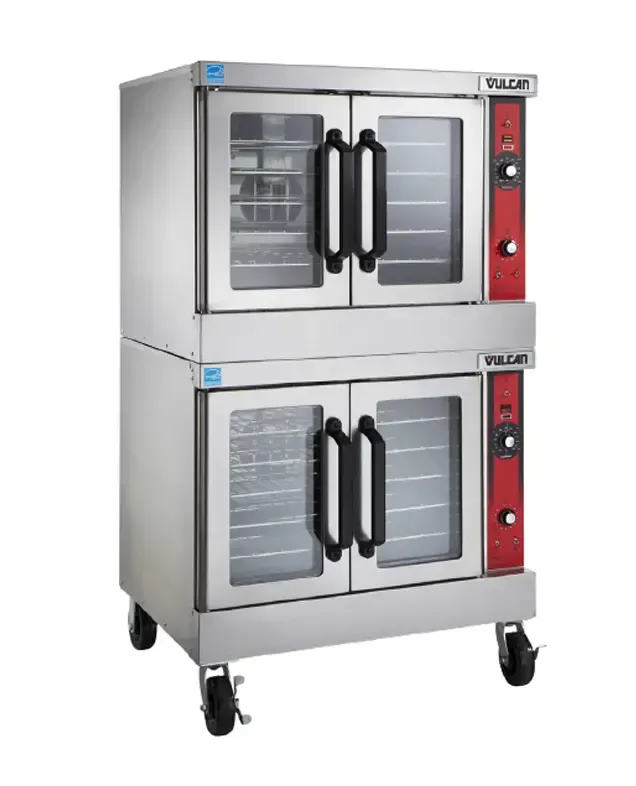
2. Vulcan (The “VC” Series)
The close runner-up.
- Efficiency: Their “VC5” series is incredibly gas-efficient.
- Doors: They use a chain-driven mechanism (cool because you grab one handle and both doors open).
- Best For: Restaurants and Hotels.
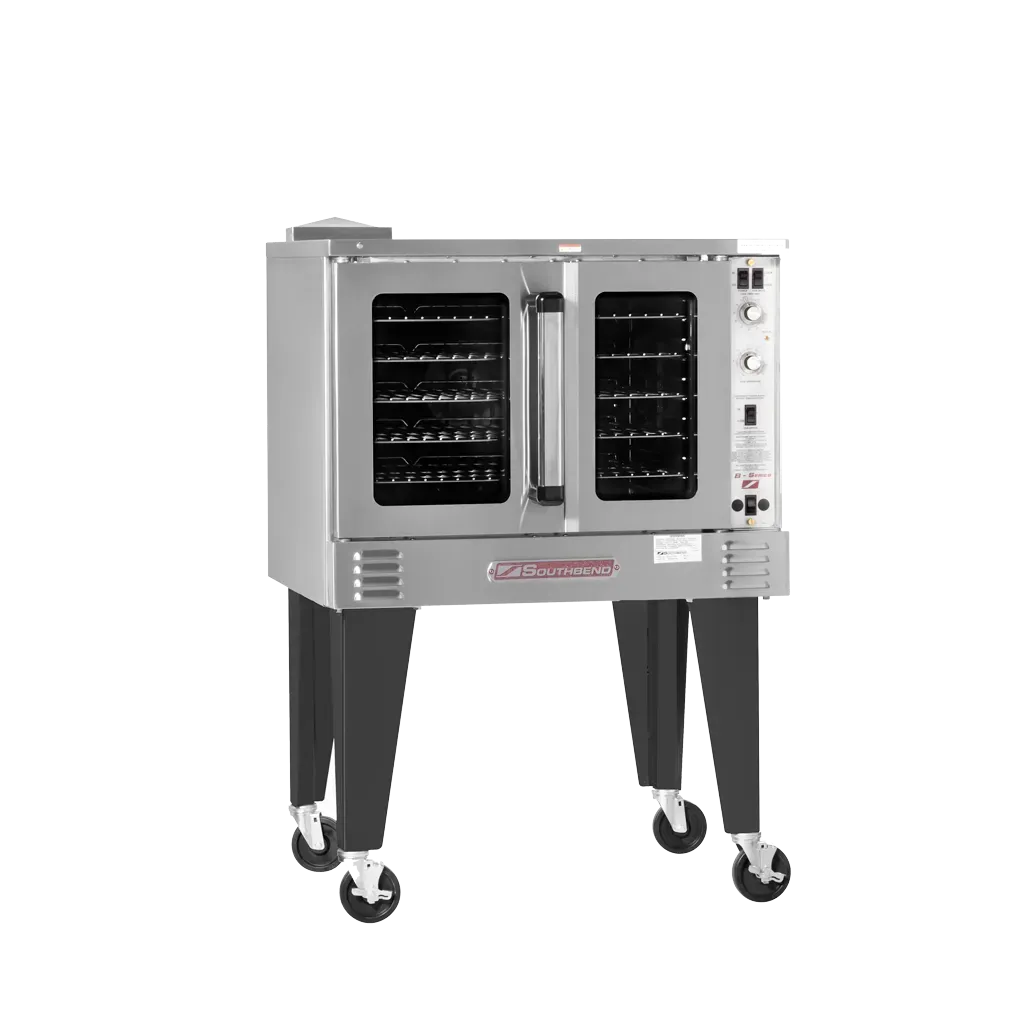
3. Southbend (The Budget Beast)
- Value: Generally cheaper than Blodgett.
- Performance: Excellent sear.
- Cons: The door hinges tend to wear out slightly faster than Blodgett (in my experience).
Sizing Guide: Standard vs. Bakery Depth
This is the #1 mistake buyers make.
Standard Depth
- Interior: roughly 20-21 inches deep.
- Capacity: It holds a standard 18”x26” sheet pan inserted Left-to-Right (Long way).
- Problem: You cannot put the pan in Front-to-Back.
Bakery Depth (Deep Depth)
- Interior: roughly 27-29 inches deep.
- Capacity: You can load sheet pans Front-to-Back.
- Why it matters: Airflow. When you load a pan lengthwise (Standard), it blocks the airflow from the sides. When you load it Front-to-Back (Bakery), the air circulates better around the sides.
- Verdict: If you are a bakery, Buy Bakery Depth. It cooks more evenly.
Critical Feature: Steam Injection
Many new bakeries mistake “Convection” for “Crust Creation”. Convection ovens dry things out.
- The Problem: Baguettes and crusty breads need moisture to form a crackling crust. A standard convection fan blows that moisture away.
- The Fix: You need a model with “Steam Injection” (e.g., Blodgett Mark V with steam kit) OR you need to upgrade to a Combi Oven.
- Warning: Do not throw ice cubes in your convection oven floor. You will warp the metal and void the warranty. Use a spray bottle if you must.
Single Stack vs. Double Stack
Ovens are modular.
- Single Stack: One oven on legs.
- Double Stack: Two ovens bolted together.
- The Math: A Double Stack takes up the same “footprint” (floor space) but doubles your output.
- Chef’s Tip: In a double stack, I typically keep one oven at 350°F (General) and one at 400°F (Roasting) during service.
”When to Upgrade” (rack Ovens)
If you are baking more than 500 loaves of bread or 100 sheet pans of cookies a day, a double stack is too small.
- The Next Step: Look for a Single Rack Oven (e.g., Baxter or Revent). You roll the entire speed rack into the oven.
- ROI: It replaces 4 convection ovens and creates perfectly even rotation.
The “Chef’s ROI” Calculator
Gas vs. Electric Ovens.
Scenario: A Bakery running ovens 12 hours a day.
| Metric | Gas (Natural Gas) | Electric (208v/3Ph) |
|---|---|---|
| Upfront Cost | Higher ($4,000+) | Lower ($3,000+) |
| Recovery Time | Faster (Violent Heat) | Slower (Gentle) |
| Monthly Bill | Cheaper (Gas is cheap) | Expensive (Electricity costs more) |
| Moisture | Gas combustion releases water vapor (Moist heat). | Electric is “Dry Heat.” |
| Verdict | Buy Gas for Roasting/General. | Buy Electric for delicate Macarons/Meringues. |
Troubleshooting Guide: “It’s Not Hot!“
1. The Fan Runs but No Heat
- Cause: The “Sail Switch” (Microswitch).
- Physics: The burner will NOT turn on unless the fan is spinning (to prevent explosion). The “Sail Switch” senses the wind from the fan. If the switch is broken (or fan is slow), the burner stays off.
- Fix: Call a tech. It’s a safety device.
2. The Doors Won’t Close
- Cause: Cooks leaning on the doors.
- Result: The hinges bend. Heat escapes. The kitchen gets hot.
- Fix: You need a “Door Adjustment.” It takes 20 minutes with a wrench.
3. Uneven Baking (Right side dark, Left side light)
- Cause: Thermostat or Fan calibration.
- Fix: Check that the convection fan is actually spinning. Sometimes the motor capacitor dies.
Quick Reference: Common Error Codes
If you have a digital panel (not dials), you might see these.
| Code | Meaning | What to do |
|---|---|---|
| Hi-Limit | Oven got too hot (Safety trip). | Reset the red button behind the kick plate. If it persists, call a tech. |
| Ignition / IG | Gas burner didn’t light (3 tries). | Check if gas is on. Check if “Sail Switch” is dirty. |
| Fan | Motor is overheating or jammed. | Turn it off. Let it cool. Check for obstructions. |
| Prob / Err | Temperature Probe failure. | The thin metal stick inside the oven is broken. Needs replacement. |
Maintenance Guide: Don’t Kill Your Oven
- Vacuum the Fan Guard: Flour dust gets sucked into the back fan guard. If it clogs, airflow stops. Vacuum it weekly.
- Oil the Door Hinges: Use high-temp food-grade grease.
- Calibrate the Thermostat: Buy a $10 oven thermometer. Put it in the center. If dial says 350°F and thermometer says 325°F, pull the knob off and adjust the set-screw.
Frequently Asked Questions (FAQ)
Q: Can I stack a Gas oven on top of an Electric oven? A: No. You generally cannot mix fuel types in the same stack because the flue venting is incompatible. You must stack Gas/Gas or Electric/Electric.
Q: Why are my cakes lopsided? A: The fan speed is too high (blowing the batter) OR the oven is not level. Use “Pulse Fan” mode if available for delicate batter.
Q: What is “Bakery Depth”? A: Extra deep interior (27-29 inches) allowing sheet pans to be loaded front-to-back. This improves airflow around the sides for more even baking.
The Convection Oven is the workhorse of the bakery and the roast station. It is simple: A fan blows hot air. This fan destroys the “Thermal Boundary Layer” of cold air around food, cooking it 25% faster than a standard oven.
The Blodgett Oven Company has been building these tanks since the 1800s. Their Zephaire series is practically the definition of the category.
This guide compares the legendary Blodgett Zephaire against the modern Vulcan VC series.
Top 3 Commercial Convection Oven Recommendations
Buy the right oven, and it lasts 20 years. Buy the wrong one, and you’re buying hinges every 6 months.
1. Best Overall (The King): Blodgett Zephaire (Gas/Electric)
- Best For: High-volume bakeries, schools.
- Why It Wins: It is the industry benchmark. The iron frame is welded, not screwed. The doors use a tri-seal gasket that rarely leaks.
- Value: It holds its resale value better than any other brand.
2. Best Efficiency (The Runner Up): Vulcan VC5 Series
- Best For: Restaurants, Hotels.
- Why It Wins: It is Energy Star certified and uses a “Grab-and-Go” door handle that feels solid. The interior lighting is superior to Blodgett, making it easier to check on soufflés.
- Features: The control panel is accessible and easy to repair.
3. Best Technology (Baker’s Choice): Southbend B-Series (Bronze)
- Best For: Delicate baking (Macarons, Meringues).
- Why It Wins: Uses “Soft Heat” technology (in-shot burners) that eliminates the blast of hot air that can warp delicate pastries.
- Trade-off: The door mechanism is slightly less robust than Blodgett, but the bake quality is elite.
Final Summary
If you are a Bakery, you buy Blodgett. If you are a Restaurant needing efficiency, buy Vulcan. If you are baking delicate pastries, look at Southbend.