By Chef Marco
An ice machine is the most service-intensive appliance in the building. It runs 24/7. It deals with water, electricity, and freezing temperatures. It WILL break.
According to Scotsman Ice Systems, 70% of machine failures are due to lack of cleaning. If you don’t descale it, it dies.
In this guide, I explain the difference between Modular vs. Undercounter units and why “Nugget Ice” (Sonic Ice) requires a special machine.
But you cannot live without it. Americans love ice. If you serve a lukewarm Coke, you have lost a customer for life. A bar without ice is just a warm liquor closet.
In this guide, I will save you thousands of dollars by explaining why you should Never Buy a Water-Cooled Machine (unless you are in a desert), and how to pick the right ice shape for your profit margin.
Deep Dive: Air Cooled vs. Water Cooled
This is the most expensive mistake new owners make.
1. Water Cooled (The “Money Pit”)
In the old days, everyone bought water-cooled machines.
- How it works: It uses cold tap water to cool the condenser coil, then dumps that water down the drain.
- The Consumption: A standard 500lb machine can waste 100 gallons of water per day just for cooling. That water never becomes ice. It goes straight to the sewer.
- The Cost: Your water bill will skyrocket. In cities like NYC or LA, a water-cooled machine costs an extra $2,000 - $3,000 a year to operate.
- When to Buy: ONLY if your kitchen is 110°F+ and has zero ventilation (like a basement closet) where an air-cooled unit would overheat.
2. Air Cooled (The “Standard”)
- How it works: Fans blow room air over the coils (like a car radiator).
- Water Usage: Zero waste. All water goes into the ice (or flush cycle).
- The Downside: It dumps heat into your kitchen. It’s basically a space heater.
- The Fix: Remote Condenser. Even better. You put the noisy, hot compressor on the roof. The ice maker stays inside, silent and cool. This is the Gold Standard.
Chef’s Verdict: Buy Air Cooled. If you can afford it, buy Remote Air Cooled. Do not buy Water Cooled unless you have no choice.
Ice Shapes: It affects your Profit
The shape of the ice dictates how much liquor you pour.
1. Half Dice / Half Cube (The “Profit Maker”)
- Shape: Small rectangular slices.
- Displacement: Excellent. They pack tightly into a glass.
- The Math: Tighter pack = Less liquid needed to fill the glass.
- Best For: Soft drinks, mixed drinks, high-volume bars.
2. Full Dice / Cube (The “Slow Melt”)
- Shape: Large square cube.
- Displacement: Poor. Big gaps between cubes.
- Best For: Scotch, bagging your own ice.
3. Nugget / Pearl / Chewblet (The “Sonic Ice”)
- Shape: Soft, chewable pellets.
- Cult Following: People go to Sonic just for this ice. Hospitals use it because it prevents choking.
- The Downside: It melts fast. It waters down cocktails instantly. Do not use for Whiskey.
- Best For: Healthcare, Fast Casual sodas, Tiki drinks.
4. Flake (The “Fish Preserver”)
- Shape: Shaved snow.
- Best For: Salad bars, fish displays. Not for drinks (it melts instantly).
5. Gourmet / Clear Ice (The “Upsell”)
- Shape: Massive 2” cubes or spheres. Crystal clear (no air bubbles).
- The ROI: You charge $18 for a “Smoked Old Fashioned”.
- The Physics: Massive cubes melt extremely slowly. The drink stays cold but undiluted for 20 minutes.
- Brands: Hoshizaki (Sphere) or Scotsman (Gourmet Cube).
Sizing Guide: You Need More Than You Think
Nothing kills a Friday night vibe faster than the bartender yelling “NO ICE!” You end up buying bags from 7-Eleven. It looks unprofessional.
The Golden Rules of Consumption (Per 24 Hours):
| Business Type | Usage Rule | Example (100 Seats) |
|---|---|---|
| Restaurant | 1.5 lbs per customer | 150 lbs / day |
| Bar / Cocktail Lounge | 3.0 lbs per seat | 300 lbs / day |
| Hotel | 5.0 lbs per room | 500 lbs / day |
| Starbucks / Cafe | 12 oz per drink | Variable |
The “20% Buffer”: Ice machines are rated at “70°F Air / 50°F Water.” Your kitchen is likely 90°F. In reality, a “500lb Machine” only produces 400lbs in a hot kitchen.
- Rule: Calculate your need, then add 20%.
Configuration: Undercounter vs. Modular Head
| Type | Capacity (lbs/24hr) | Best For |
|---|---|---|
| Undercounter | 50 - 300 lbs | Small Bars, Cafes. (All-in-one unit). |
| Modular Head | 300 - 3,000 lbs | Hotels, High Volume. (Requires separate bin). |
| Remote Cooled | 500+ lbs | Silent Kitchens. Compressor is on the roof. |
Top 3 Commercial Ice Machine Recommendations
Your choice depends on your specific ice shape needs.
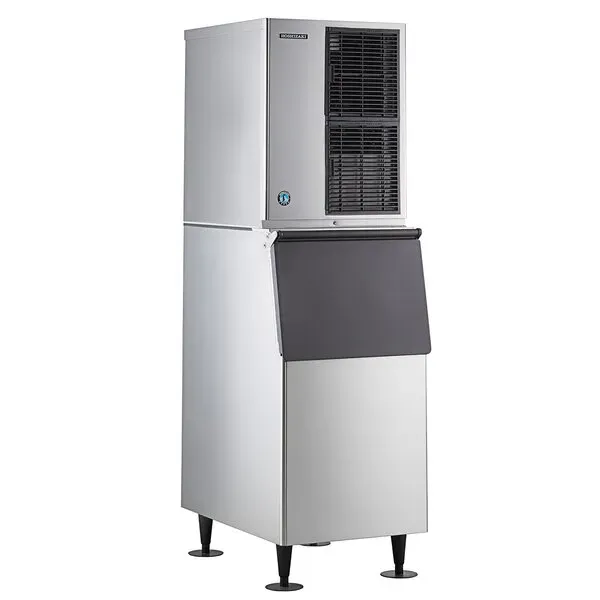
1. Best Overall (The Workhorse): Hoshizaki KM Series
- Best For: Bars, Restaurants, Nightclubs.
- Why It Wins: The stainless steel evaporator plate is virtually indestructible. It produces the “Crescent Cube” which melts slowly and saves you money on liquor pours (excellent displacement).
- Reliability: It is widely considered the most durable machine on the market.
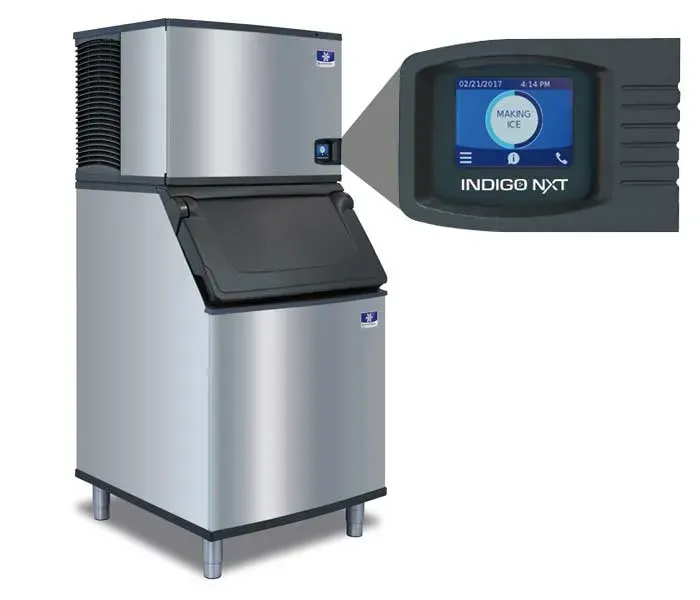
2. Best Technology (The Smart Choice): Manitowoc Indigo NXT
- Best For: Kitchens with high staff turnover.
- Why It Wins: The touchscreen display tells you exactly what is wrong (e.g., “Water Filter Clogged”).
- Maintenance: The entire front panel swings open for easy cleaning. It is the most “Service Friendly” machine.
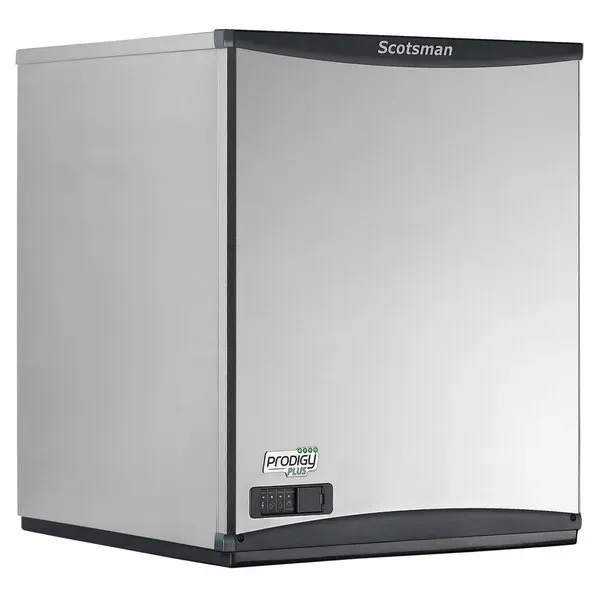
3. Best Nugget Ice (The Crowd Pleaser): Scotsman Prodigy Plus
- Best For: Hospitals, Sonic-style Drive-ins, Tiki Bars.
- Why It Wins: Scotsman invented the “Nugget” (Chewblet). If your customers demand soft, chewable ice, this is the only machine to buy.
Final Summary
For Cocktails, buy Hoshizaki. For Ease of Use, buy Manitowoc. For Chewable Ice, buy Scotsman.
Maintenance: The “Pink Slime” Warning
Ice is defined as a Food Product by the FDA. If a health inspector sees mold in your ice bin, it is a critical violation.
The Cause: Yeast and mold spores from the air (bakery flour, beer yeast) land in the wet, dark ice bin. The Result: Pink/Black slime grows inside the drop zone.
The Fix:
- Empty and Sanitize: Every 6 months.
- Use Nickel Safe Cleaner: The evaporator plates are plated with nickel (Manitowoc). If you use harsh acid, you strip the nickel. The machine is ruined ($2,000 part). YOU MUST USE SPECIFIC CLEANER.
- Scoop Discipline: Never leave the scoop in the ice. The handle touches your dirty hand, then touches the ice. Keep the scoop in a holster.
Frequently Asked Questions (FAQ)
Q: Why is my ice cloudy/white instead of clear? A: Water Quality. The cloudiness is trapped minerals and air bubbles. You need a better water filter (or reverse osmosis).
Q: Why is the machine making a high-pitched squeal? A: The water pump bearing is failing. It will seize soon. Order a replacement pump ($300).
Q: Can I just pour bleach in the bin to clean it? A: NO. Bleach can damage the nickel plating on the evaporator and might linger in the ice. Use “Nickel-Safe Ice Machine Cleaner” only.
Final Word
Your ice machine is the silent workhorse.
- Don’t buy water-cooled (unless you hate money).
- Don’t undersize it (buy the bigger bin).
- Do clean it.
If you are a high-volume bar, buy a Hoshizaki KM Series. The crescent ice fits perfectly in a pint glass, maximizes liquid displacement, and saves you money on every pour.